BMW Bike Arrives for Uber Ride, Surprises Mumbai Founder
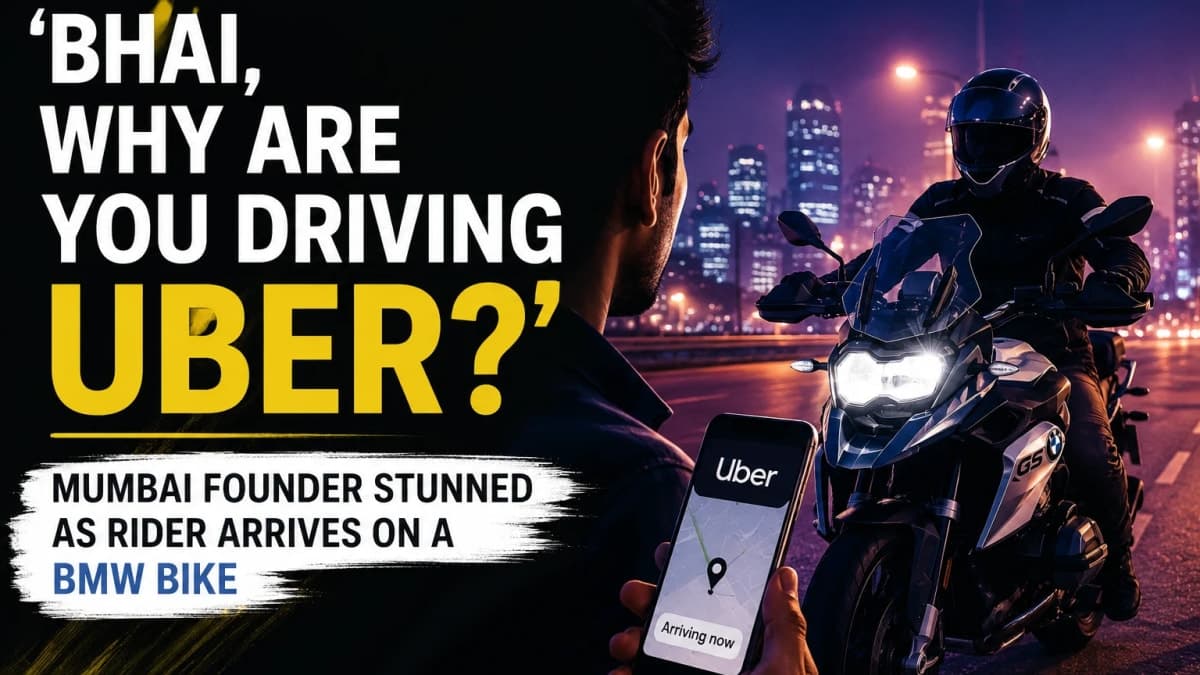
A routine ride booking in Mumbai turned into an unexpected encounter when a founder found his assigned rider arriving on a BMW motorcycle.
The unusual sight immediately raised a question. Seeing a premium motorcycle associated with a regular app-based ride, the surprised passenger reportedly reacted along the lines of: “Bhai, why are you driving Uber?”
The encounter stands out because it clashes with a common stereotype surrounding gig work: that people providing app-based rides must necessarily have limited financial resources or access only to inexpensive vehicles.
Why the BMW Bike Drew Attention
BMW motorcycles are generally associated with the premium end of India's two-wheeler market, although the company sells machines across several price categories.
BMW Motorrad's authorised Mumbai dealer currently lists motorcycles ranging from models priced below ₹5 lakh to premium machines costing more than ₹30 lakh. That wide range means merely identifying a motorcycle as a BMW does not reveal its owner's financial position or the exact value of the vehicle.
Still, seeing the brand being used for an app-based ride is unusual enough to create instant curiosity.
A Viral Moment That Challenges Assumptions
The larger appeal of the episode lies less in the motorcycle itself and more in the contrast it represents.
Gig-economy platforms have made flexible work accessible to people with very different motivations. While earnings may be the primary reason for many workers, others can potentially participate for additional income, flexible working hours or personal reasons.
Without a verified account from the rider, however, it would be misleading to speculate about why this particular individual was driving for Uber.
The BMW motorcycle alone cannot establish his income, profession, financial background or motivation.
India's Gig Economy Is Changing How Work Is Viewed
App-based mobility has become part of everyday transportation in major Indian cities. Such platforms allow riders and drivers to choose work schedules with considerably more flexibility than many conventional jobs.
That flexibility also means gig workers cannot easily be placed into a single economic or professional category.
The Mumbai encounter therefore offers a simple reminder: the vehicle someone owns or rides does not necessarily define why they choose a particular form of work.
Premium Vehicle Doesn't Always Mean Financial Wealth
The incident also highlights another problem with judging financial circumstances from visible possessions.
A premium motorcycle could be purchased outright, financed through a loan, bought second-hand, borrowed or acquired under any number of arrangements. None of those circumstances can be determined simply by looking at the vehicle.
Similarly, participating in gig work does not automatically indicate financial hardship.
The surprise surrounding the BMW rider arguably says as much about society's assumptions regarding gig workers as it does about the rider himself.
Why This Story Matters
At first glance, the episode is simply an entertaining Mumbai encounter: someone books a bike ride and unexpectedly gets picked up on a BMW.
But it also reflects a broader shift in perceptions around employment.
Digital platforms have blurred traditional boundaries between full-time employment, entrepreneurship, freelancing and supplementary income. People increasingly have the ability to combine different sources of earnings rather than defining themselves through one occupation.
The Mumbai BMW rider episode captures that changing landscape in a particularly eye-catching way.
Balanced Analysis
The founder's surprise is understandable. BMW is widely perceived as a premium automotive brand, while app-based bike rides are generally associated with affordable urban transportation.
Putting those two images together naturally creates an unusual contrast.
At the same time, conclusions about the rider's wealth or reasons for working should be avoided unless he has publicly explained them.
Ultimately, the story's most interesting takeaway may be straightforward: appearances provide very little information about someone's profession, financial priorities or reasons for working.
What looked like an unlikely combination—a BMW motorcycle and an Uber ride—became a small example of how India's evolving gig economy continues to challenge conventional ideas about work and status.