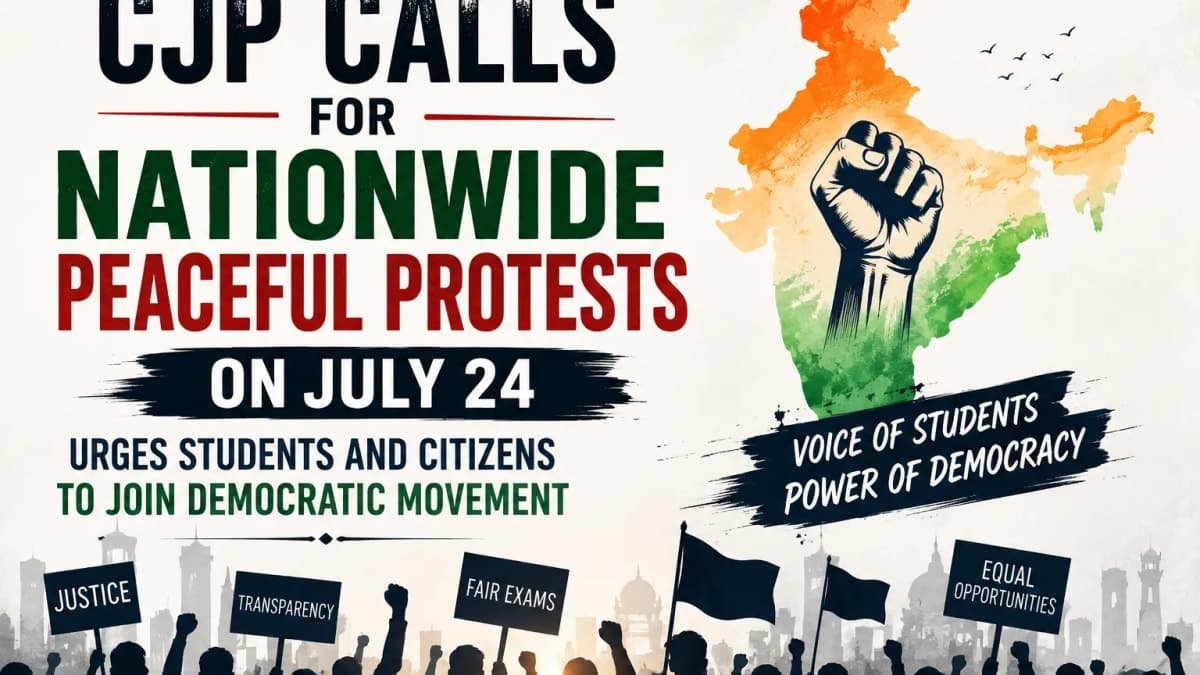
CJP Calls for Nationwide Peaceful Protests on July 24, Appeals for Public Participation
Introduction
The CJP has announced a nationwide protest campaign scheduled for July 24, urging students, educators, and citizens across India to participate in peaceful demonstrations. According to the organization, the movement is intended to draw attention to concerns surrounding examination-related issues and broader questions about accountability in the education system.
Organizers have appealed to participants to maintain discipline and ensure that all demonstrations remain peaceful and within the framework of democratic protest.
Peaceful Demonstrations Planned Across Multiple Cities
CJP stated that coordinated protests are expected to take place in several cities and educational hubs across the country. The organization has encouraged supporters to gather peacefully, carry out demonstrations responsibly, and avoid any form of violence or disruption.
The call comes amid growing public discussion over examination transparency, student welfare, and confidence in recruitment and education systems. Student groups and activists have increasingly sought stronger institutional accountability and timely action on issues affecting young aspirants.

Why the Protest Has Been Organized
According to CJP, the nationwide mobilization aims to amplify concerns raised by students and to encourage authorities to respond more effectively to issues impacting examinations and educational governance.
The organization maintains that peaceful civic participation is an essential part of democratic engagement and has appealed to citizens from different backgrounds to support the movement through lawful and non-violent means.
Background: Rising Focus on Examination Integrity
In recent months, examination-related controversies have become a major topic of national debate. Allegations surrounding paper leaks, delays, and administrative lapses have prompted protests in several regions, with students demanding greater transparency and stronger safeguards.
The growing public attention has also led to increased political discussion, judicial scrutiny in some cases, and calls for comprehensive reforms aimed at protecting the credibility of competitive examinations.
Against this backdrop, student organizations and advocacy groups have continued organizing demonstrations to keep education-related concerns in the public spotlight.
Why This Matters
Competitive examinations play a critical role in determining educational and career opportunities for millions of students in India. Any concerns over fairness or transparency can significantly affect public confidence in these systems.
Peaceful demonstrations provide citizens with an opportunity to express concerns collectively while encouraging dialogue between stakeholders and policymakers. The response of authorities to such movements could influence future discussions on education reforms, examination security, and institutional accountability.
Balanced Analysis
Supporters of the protests argue that public demonstrations are necessary to highlight student concerns and maintain pressure for meaningful reforms. They believe sustained civic engagement can encourage faster policy responses and greater transparency.
At the same time, government authorities have emphasized that maintaining law and order remains a priority during public gatherings. Officials generally urge organizers and participants to ensure demonstrations remain peaceful and comply with legal requirements while ongoing administrative and investigative processes continue.
The success of the movement is likely to depend not only on participation levels but also on whether constructive dialogue emerges between policymakers, educational institutions, and student representatives.
Conclusion
The CJP's nationwide call for peaceful protests on July 24 reflects the continuing national conversation around examination integrity and educational accountability. As demonstrations take place across various locations, attention will remain focused on public participation, official responses, and whether the movement contributes to meaningful discussions on strengthening India's education and recruitment systems.