Delhi Creator’s ‘Safai Vlog’ Goes Viral as Protesters Leave Protest Site Cleaner Than Before
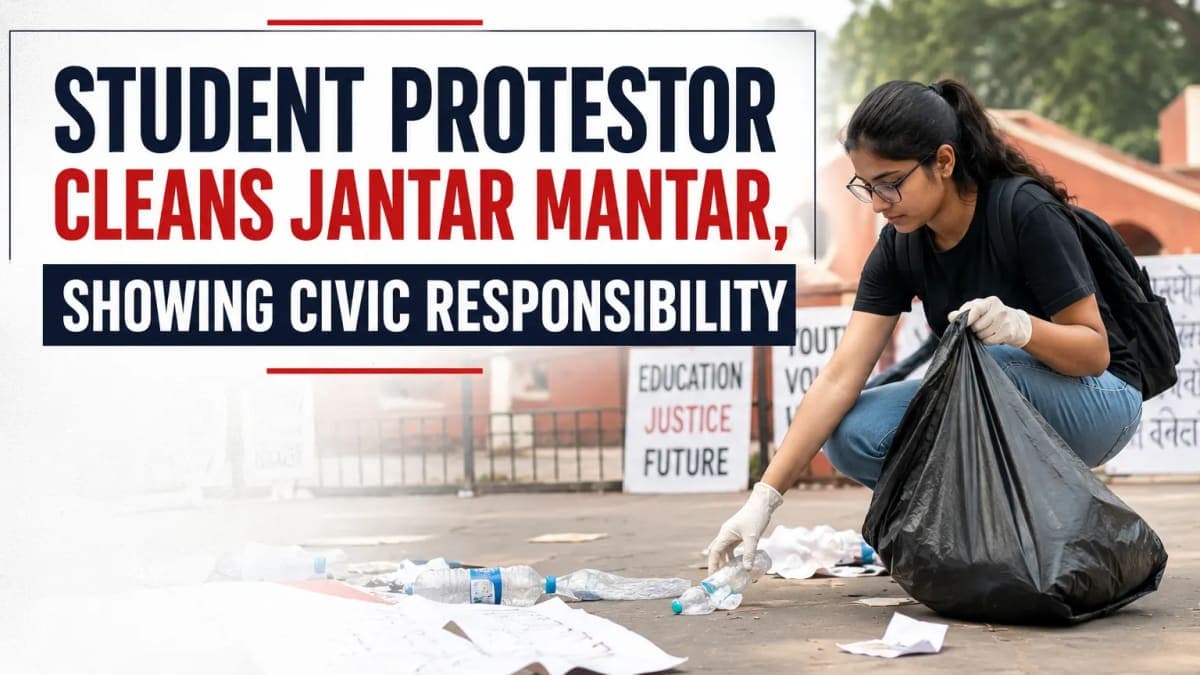
A video recorded by a Delhi-based digital creator has become a talking point online after documenting protesters cleaning the demonstration site instead of leaving behind litter. The clip, widely shared across social media platforms, captures volunteers gathering discarded bottles, banners, paper cups, and other waste before leaving the venue.
The footage has prompted many internet users to applaud the participants, with several describing the clean-up effort as an example of responsible public behavior. Numerous social media reactions praised what they viewed as a growing awareness of civic duties among younger participants, with comments suggesting that "Gen-Z knows civic sense."
A Different Ending to a Public Demonstration
Public demonstrations often attract attention not only because of the issues being raised but also because of their impact on public spaces. In many instances, large gatherings leave behind significant waste that local civic bodies must later remove.
The viral "Safai Vlog" presented a contrasting image. Instead of ending with litter scattered across the venue, the video highlighted participants voluntarily collecting waste, placing it into bags, and ensuring the area was left in a cleaner condition.
For many viewers, the cleanup became as noteworthy as the protest itself.
Social Media Responds Positively
The video's comment sections quickly filled with appreciation for the initiative. Many users argued that the act demonstrated respect for public property and showed that civic responsibility can accompany public activism.
Others noted that regardless of political opinions or the purpose of a protest, maintaining cleanliness in shared spaces reflects consideration for fellow citizens and municipal workers.
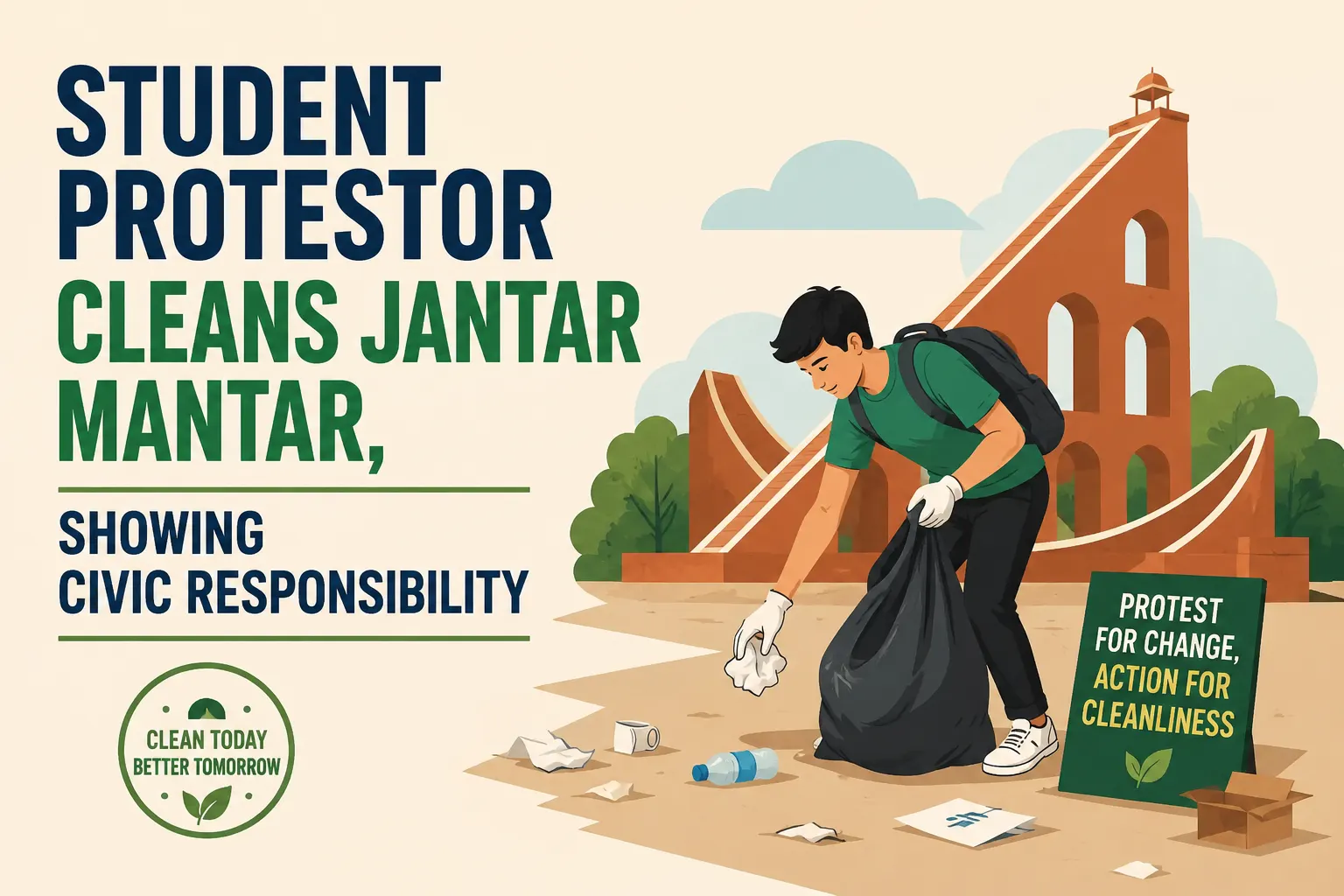
Several users also remarked that such behavior challenges stereotypes often associated with youth-led movements, suggesting younger participants are increasingly conscious of environmental and civic issues.
Why the Video Resonated
The viral clip gained attention because it shifted the conversation away from confrontation and toward community responsibility.
In recent years, discussions around sustainability and responsible public behavior have become increasingly common. Campaigns encouraging waste segregation, recycling, and cleaner public spaces have contributed to greater public awareness.
Against this backdrop, protesters voluntarily cleaning the venue offered an example of how civic engagement can extend beyond raising demands to also caring for shared spaces.
The Broader Importance of Civic Responsibility
Clean public spaces remain an ongoing challenge in many Indian cities, especially after large gatherings, festivals, and demonstrations.
Municipal agencies frequently deploy sanitation workers to restore affected areas, often requiring additional public resources. Voluntary cleanup efforts can reduce that burden while encouraging a culture of shared responsibility.
Experts on civic participation have long argued that maintaining public spaces is a collective responsibility involving citizens, local authorities, event organizers, and community groups alike.
A Balanced Perspective
While the viral video has received widespread praise, observers caution against drawing sweeping conclusions from a single incident. Every public gathering differs in terms of organization, crowd size, and available waste management facilities.
Nevertheless, many believe the footage serves as a positive reminder that civic awareness can complement democratic participation. Peaceful demonstrations and responsible environmental practices are not mutually exclusive, and initiatives like voluntary cleanup may encourage similar practices at future public events.
Whether viewed as a symbolic gesture or a practical example of responsible citizenship, the "Safai Vlog" has sparked a broader discussion about how collective action can leave a positive impact both socially and environmentally.
Why This Story Matters
Highlights civic responsibility during public demonstrations.
Encourages responsible waste disposal in public spaces.
Demonstrates how social media can promote positive civic behavior.
Inspires discussions about sustainable and respectful public participation.
Reinforces the idea that activism can coexist with environmental responsibility.