
From Extra Work After a Day Job to Entrepreneurship
The journey of two business partners who eventually built a multi-crore startup began under circumstances far removed from conventional stories of well-funded entrepreneurship.
According to the details available, one of the entrepreneurs worked a regular job and then drove for Ola afterward. Taking on additional work meant extending his working day beyond his primary employment, highlighting the financial pressures and persistence that shaped the early stages of his journey.
At the same time, his future business partner had experienced a substantial financial setback, losing ₹20 lakh.
Rather than allowing their circumstances to end their entrepreneurial plans, the two eventually joined forces and went on to establish a startup that grew into a multi-crore business.
Partner Faced ₹20 Lakh Loss
The ₹20 lakh loss faced by one of the partners represents a significant element of their entrepreneurial story.
Large personal or business losses can make starting another venture considerably more difficult. Apart from reducing available capital, such setbacks can affect an entrepreneur's willingness and ability to take additional financial risks.
In this case, however, the setback did not prevent the partners from continuing their business journey.
The experience also illustrates a reality often missing from highly visible startup success stories: entrepreneurship does not always begin with large investments, established networks or immediate access to capital.
Ola Driving Became Part of the Early Struggle
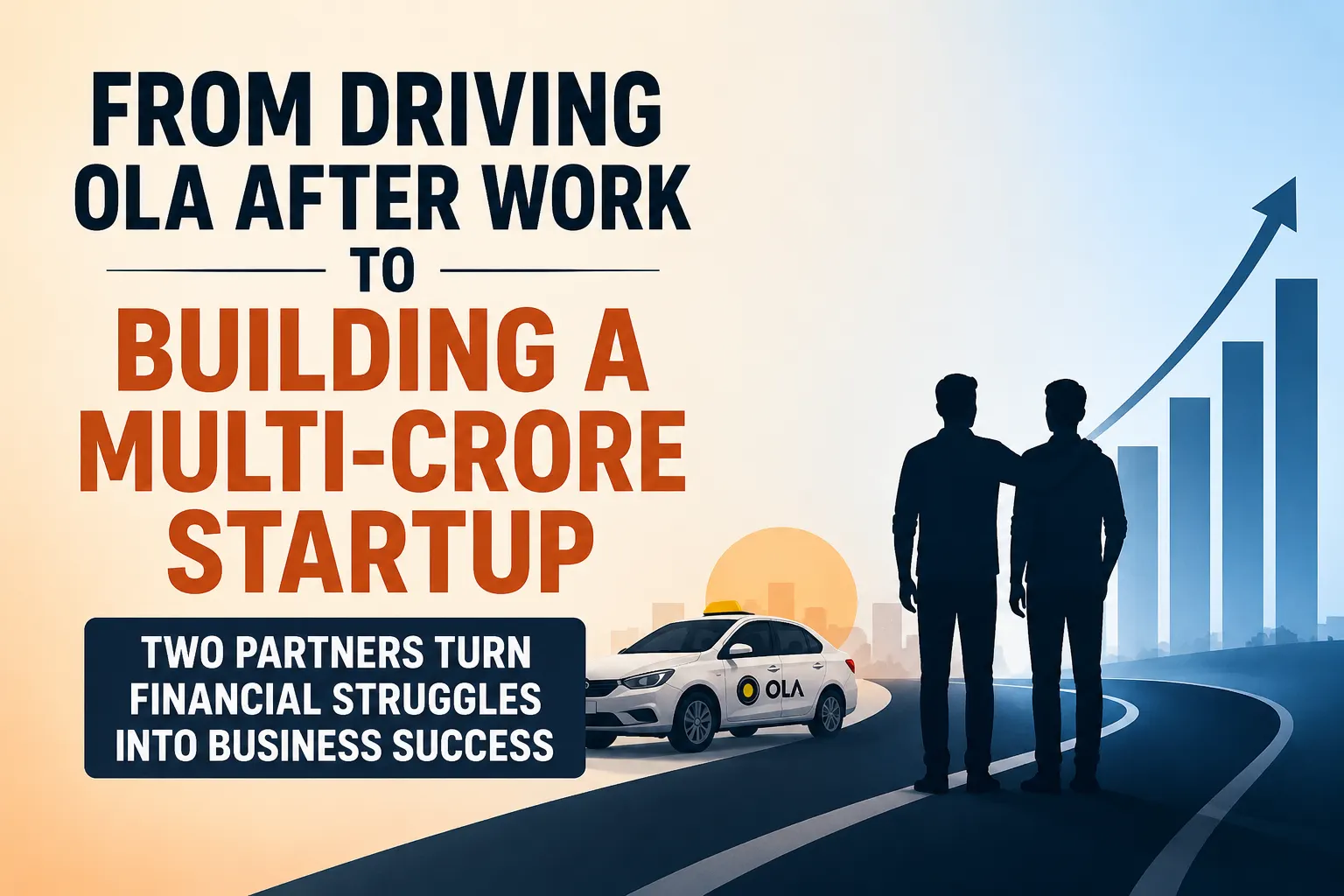
For the other partner, driving for Ola after completing his regular job reflected a different kind of challenge.
Holding a primary job while taking on additional work can provide supplementary income but also demands considerable time and effort. His experience shows how some aspiring entrepreneurs rely on multiple sources of income before reaching a point where they can focus on building a business.
The contrast between those early circumstances and the partners' eventual multi-crore venture has made their journey notable.
From Financial Pressure to a Multi-Crore Business
The most significant development in their story is the transformation from financial difficulty to running a startup operating at a multi-crore scale.
While the available facts do not specify the company's exact valuation, revenue, industry or present financial position, its reported growth indicates a substantial change in the founders' circumstances.
Their experience reflects how entrepreneurship can sometimes develop gradually rather than through an immediate breakthrough.
Behind a successful startup can be years of employment, additional jobs, financial losses, failed attempts and repeated efforts to find a sustainable business model.
Why Their Story Matters
India's startup ecosystem is frequently associated with major funding rounds, high valuations and rapidly expanding technology companies. However, not every founder begins with institutional investment or significant personal capital.
Stories involving founders who initially depend on salaries or additional work highlight another side of entrepreneurship—the period before a company becomes financially established.
The experience of these two partners also demonstrates the distinction between a founder's early financial circumstances and the eventual scale of a successful venture.
A difficult beginning does not guarantee later success, but it also does not necessarily determine how far a business can eventually grow.
A Broader Lesson From the Startup Journey
The story can be viewed as an example of persistence, but it also offers a more practical lesson about entrepreneurship.
Building a company involves financial risk, and previous losses can influence future decisions. Similarly, working multiple jobs may provide necessary income during an early entrepreneurial phase, but it can bring significant personal and professional pressure.
For aspiring entrepreneurs, therefore, the story should not necessarily be interpreted as evidence that hardship automatically produces success. Rather, it demonstrates that challenging financial circumstances can sometimes be overcome when founders are able to adapt, continue working and eventually develop a viable business.
From Setbacks to Scale
The two partners' path—from one driving for Ola after his regular job and the other dealing with a ₹20 lakh loss to eventually running a multi-crore startup—captures the less glamorous side of building a business.
Their journey underscores that successful companies can emerge from periods of financial uncertainty and demanding work.
While the details behind the startup's growth are not included in the available information, the transformation itself offers a striking example of how dramatically an entrepreneur's circumstances can change over time.