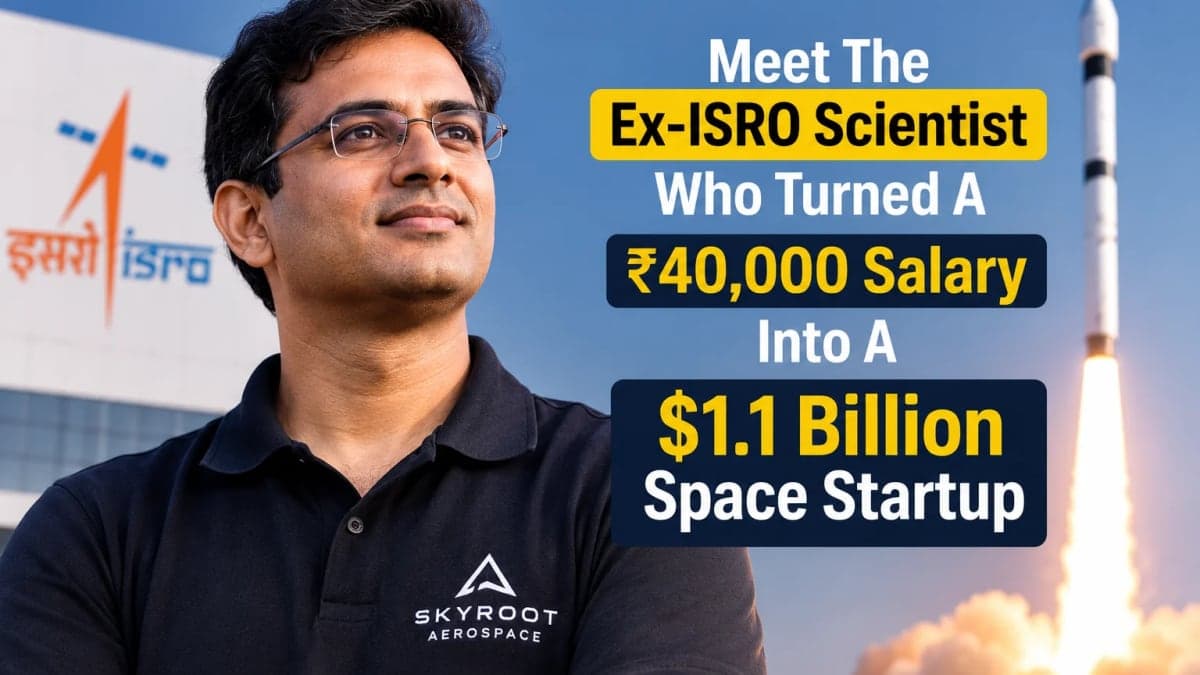
Pawan Kumar Chandana's journey from a government scientist to the co-founder of India's first space-tech unicorn has become one of the country's most inspiring entrepreneurial success stories. After working at the Indian Space Research Organisation (ISRO), Chandana left the security of a government job to establish Skyroot Aerospace in 2018 alongside fellow former ISRO scientist Naga Bharath Daka, aiming to make satellite launches more accessible and affordable.
Before becoming an entrepreneur, Chandana worked on launch vehicle programmes at ISRO, gaining hands-on experience in rocket engineering. Despite the stability of his government career, he believed India's newly opening private space sector offered an opportunity to build innovative launch solutions for commercial customers worldwide. That vision led to the creation of Skyroot Aerospace, headquartered in Hyderabad.
Skyroot quickly emerged as one of India's fastest-growing space startups, attracting major domestic and international investors. In 2026, the company raised fresh funding that pushed its valuation to approximately $1.1 billion, making it India's first space-tech unicorn. The funding strengthened the company's plans to expand launch capabilities and accelerate commercial operations in the global space market.
A major breakthrough came in 2022 when Skyroot successfully launched Vikram-S, becoming the first private Indian company to launch a rocket. The achievement demonstrated the growing capabilities of India's private aerospace industry and paved the way for more ambitious orbital missions. The milestone also showcased how private companies could complement India's national space programme while serving commercial customers.
The company's next landmark achievement arrived with Vikram-1, India's first privately developed rocket to successfully reach orbit. Carrying multiple commercial payloads for Indian and international customers, the mission highlighted Skyroot's growing technological maturity and reinforced India's position in the rapidly expanding global launch services market. The successful mission marked a significant step forward for India's private space ecosystem and demonstrated the country's increasing capability in commercial spaceflight.
Skyroot's growth has been supported by India's space sector reforms, which opened greater opportunities for private participation in satellite launches, launch vehicle development, and space technology innovation. Industry analysts believe these reforms have encouraged startups to compete internationally while helping expand India's share of the global space economy.
Pawan Kumar Chandana's transition from an ISRO scientist to the leader of a billion-dollar aerospace company reflects the growing strength of India's innovation ecosystem. His journey demonstrates how technical expertise, entrepreneurial ambition, and supportive policy reforms are reshaping the country's role in the global space industry.