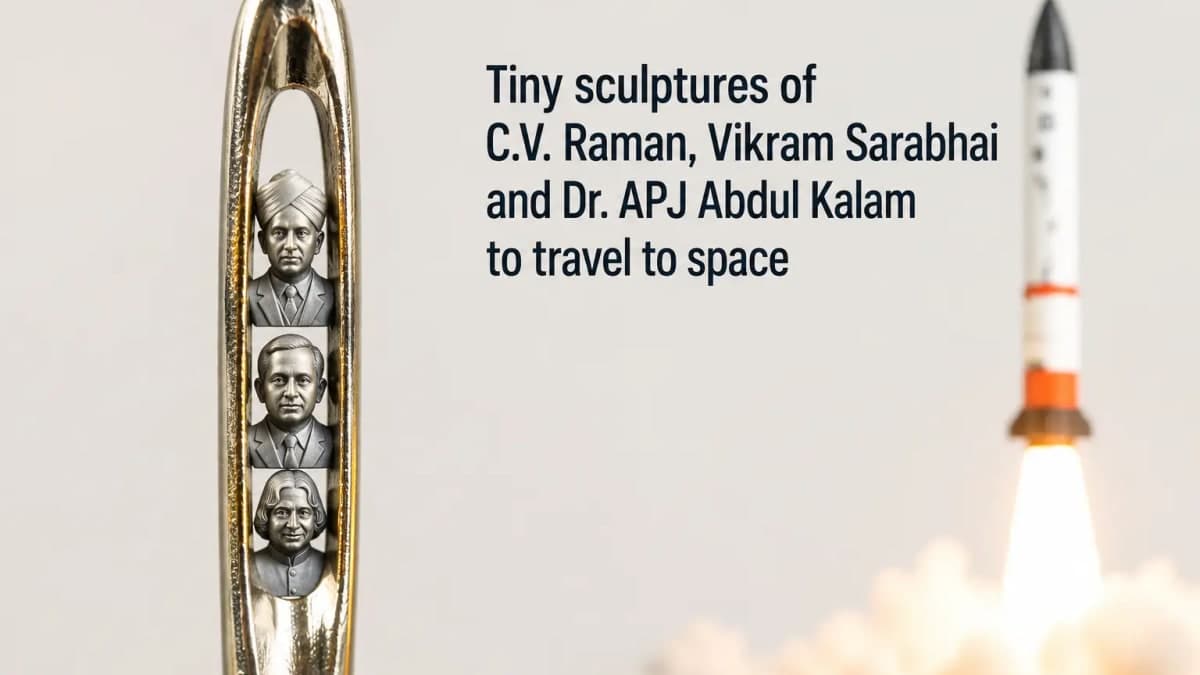
India's rapidly expanding space sector is about to carry an extraordinary artistic tribute into orbit. Internationally recognised micro artist Ajay Kumar Mattewada from Telangana has created microscopic sculptures of Nobel laureate Sir C.V. Raman, space pioneer Dr. Vikram Sarabhai, and former President Dr. A.P.J. Abdul Kalam, which are scheduled to fly aboard Skyroot Aerospace's Vikram-1 rocket.
The sculptures are so tiny that they have been sculpted inside the eye of a sewing needle and can only be viewed clearly through a high-powered microscope. Measuring roughly 800 microns in height, each artwork demonstrates exceptional craftsmanship while paying tribute to three scientists whose contributions helped shape India's scientific and space ambitions.
The miniature artwork has been designed as part of Vikram-1's payload, creating a symbolic connection between India's scientific heritage and the country's growing commercial space programme. The mission, named Mission Aagaman, will be the maiden orbital flight of Skyroot Aerospace's privately developed Vikram-1 launch vehicle from the Satish Dhawan Space Centre in Sriharikota.
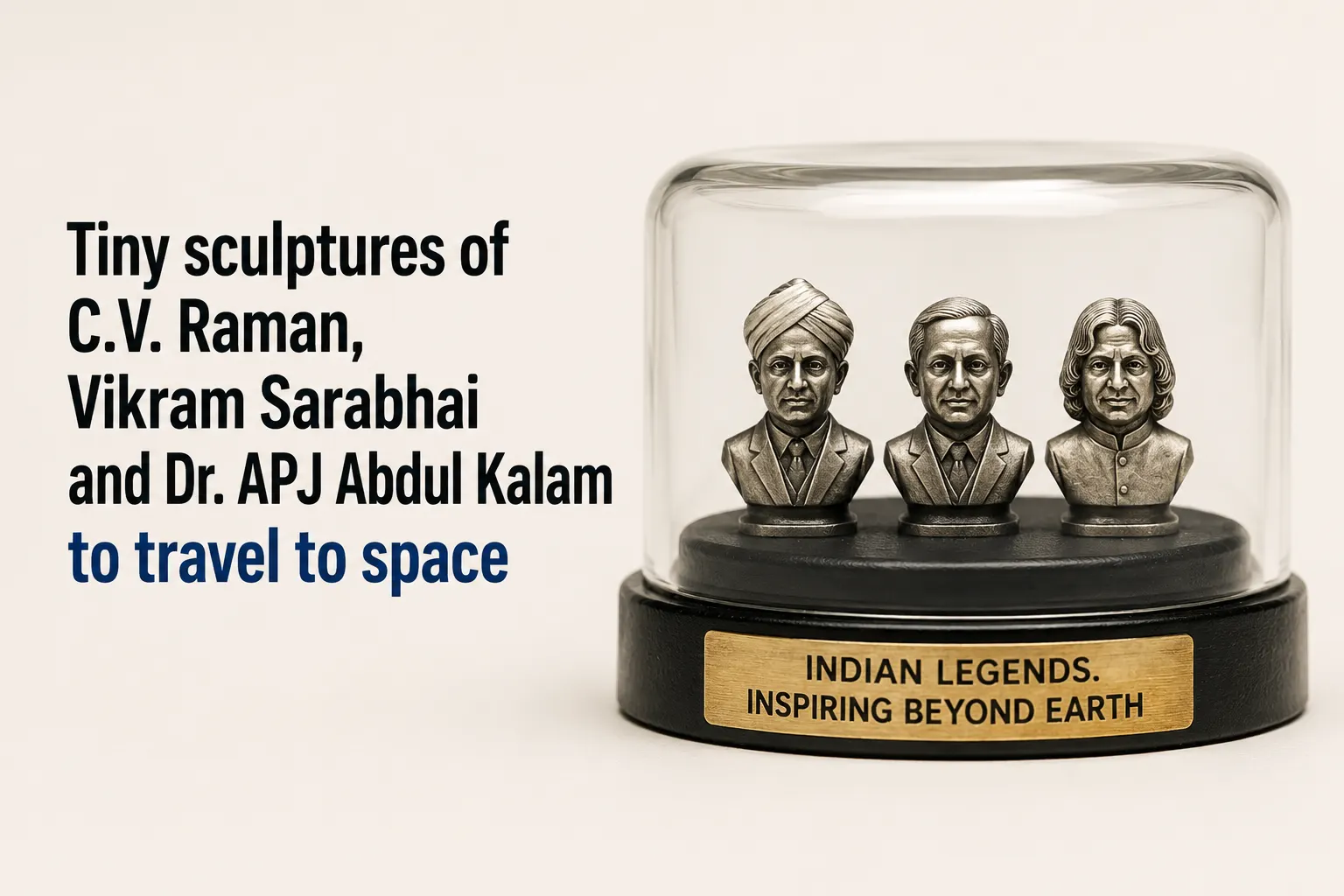
According to mission details, the micro sculptures are crafted within an 18-karat gold miniature rocket. Alongside scientific and technology demonstration payloads, the artistic tribute highlights how commercial space missions are increasingly becoming platforms for cultural and educational initiatives in addition to technological innovation.
Ajay Kumar Mattewada is internationally known for creating ultra-miniature artworks using specialised techniques that require extreme precision and patience. His latest creation reportedly took around 140 hours to complete, reflecting the complexity involved in producing sculptures that are smaller than a grain of rice while maintaining intricate facial details. The project demonstrates how art and engineering can come together to celebrate scientific excellence in an entirely new way.
The three personalities featured in the artwork represent different chapters of India's scientific journey. Sir C.V. Raman received the Nobel Prize in Physics for the Raman Effect, Dr. Vikram Sarabhai is widely regarded as the architect of India's space programme, and Dr. A.P.J. Abdul Kalam inspired generations through his work in aerospace, missile technology, and public service. Their inclusion aboard the mission serves as a tribute to the foundations of India's scientific achievements.
If the mission proceeds successfully, Vikram-1 could become the first Indian rocket to carry micro art into space, marking a unique milestone that combines scientific innovation, artistic creativity, and national pride. The launch also reflects the expanding role of India's private space companies in showcasing both technological capability and cultural expression on the global stage.