Marriage Allegedly Unravels on the First Night
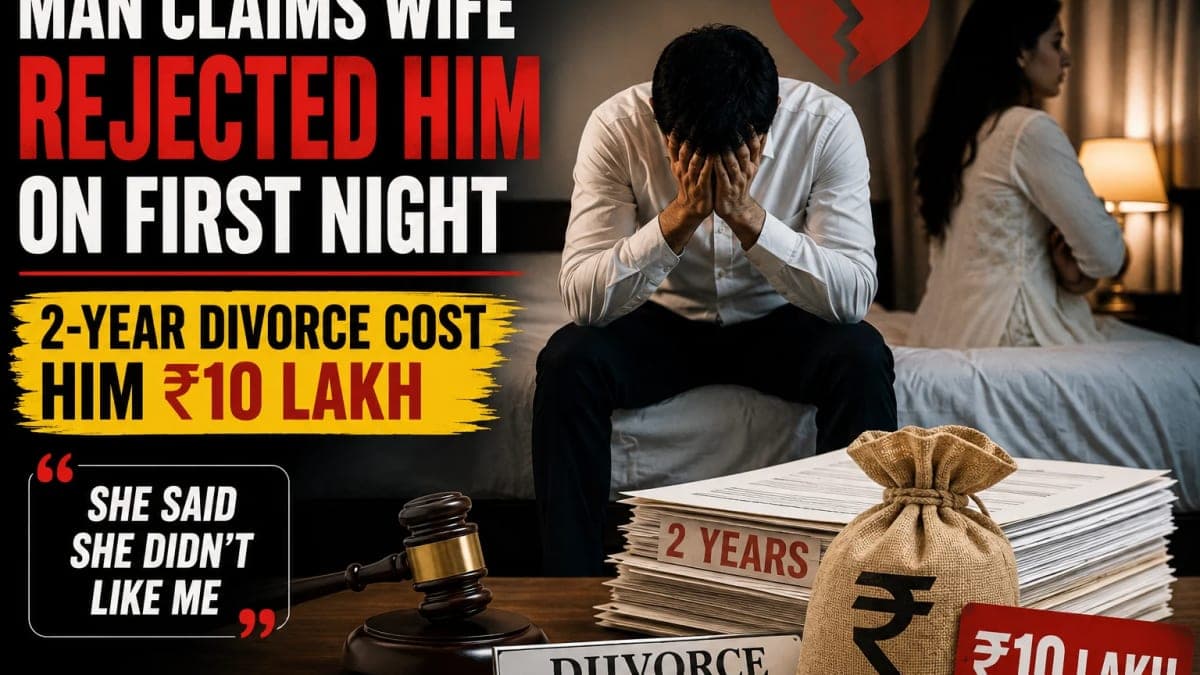
What was expected to mark the beginning of married life reportedly became the start of a prolonged separation for one man, who has claimed that his wife rejected the relationship on their wedding night.
According to the account circulating online, the man said his wife told him she did not like him. The statement reportedly came immediately after their marriage, leaving him facing questions about why the wedding had proceeded if one partner was unwilling to continue the relationship.
The marriage ultimately ended in divorce, but the legal separation was allegedly far from immediate.
The man claims the process lasted around two years and that he spent roughly ₹10 lakh during the course of the dispute.
Because the publicly circulating story largely reflects one side of the marital breakdown, the circumstances surrounding the wife's decision and her perspective remain important missing pieces.
Why the Story Has Attracted Attention
The account touches on a sensitive issue surrounding marriage in India: the difference between formally agreeing to a wedding and being emotionally prepared for married life.
Arranged marriages can involve families playing a significant role in introductions and decision-making. However, the success of any marriage ultimately depends on the willingness and consent of the two people entering the relationship.
A person also retains the right to withdraw from intimacy or a relationship even after marriage. At the same time, when serious doubts about compatibility exist before a wedding, honest communication can potentially prevent emotional distress and complicated disputes afterward.
The viral account therefore raises broader questions about how openly prospective couples discuss attraction, expectations and compatibility before making a lifelong commitment.
Two-Year Divorce Process Adds Another Dimension
The man's allegation that the divorce took approximately two years has also become a major part of the discussion.
A marriage that reportedly encountered problems almost immediately still required a lengthy process before the parties legally separated, according to his account.
He further claims that the experience cost him around ₹10 lakh. Without independently verified details breaking down that amount, however, it would be inappropriate to assume the entire sum represented legal fees or a payment made directly to his former wife.
Divorce-related expenses can potentially include lawyer fees, court-related costs, travel and other financial arrangements depending on the circumstances of an individual case.
Consent Remains Essential After Marriage
One important distinction can easily become lost when discussing a story involving rejection on a wedding night.
Marriage does not create an automatic entitlement to physical intimacy.
Consent remains necessary within marriage, and either partner can refuse sexual or physical contact. Therefore, the central issue raised by the man's account is not simply that his wife allegedly rejected intimacy, but whether the couple entered the marriage with fundamentally different expectations or levels of willingness.
If one person was already certain that they did not want the relationship, earlier communication could potentially have prevented considerable distress for both sides.
Pressure Before Marriage Can Have Consequences
The case also highlights the importance of allowing people enough space to make independent decisions before marriage.
In situations where family expectations are influential, individuals may sometimes struggle to communicate uncertainty or incompatibility openly. That does not establish what happened in this particular marriage, but it illustrates why genuine consent before a wedding is as important as consent afterward.
Prospective couples discussing finances, careers, living arrangements, children, family responsibilities and emotional expectations before marriage can reduce the chances of major surprises later.
Physical attraction and emotional compatibility can be equally difficult but necessary subjects.
Social Media Stories Need Careful Interpretation
Personal accounts of failed marriages frequently generate strong reactions online because they involve issues such as money, family relationships, gender expectations and divorce laws.
But viral narratives also have limitations.
Unless both parties' accounts or reliable legal documents are publicly available, readers usually receive only a partial picture. A husband's description of his marriage represents his experience, just as a wife's account could contain additional circumstances that substantially change how the dispute is understood.
Turning an individual marital conflict into sweeping conclusions about husbands, wives or India's divorce system would therefore go beyond what the available information establishes.
Balanced Analysis: A Personal Story With a Wider Lesson
The most meaningful takeaway from the episode is less about assigning blame and more about what can happen when two people enter marriage without sufficient compatibility or mutual commitment.
If the husband's account is accurate, spending approximately two years ending a marriage that effectively collapsed at its beginning would understandably have been financially and emotionally difficult.
At the same time, the wife's alleged refusal of intimacy cannot itself be considered wrongdoing. Every person retains autonomy over physical and emotional relationships after marriage.
The unanswered question is why the relationship reached the wedding stage despite the apparent lack of acceptance described by the husband.
Without the former wife's perspective or verified legal records, that question cannot responsibly be answered.
The episode nevertheless offers a broader reminder: honest conversations before marriage may be uncomfortable, but discovering fundamental incompatibility before a wedding is generally far less damaging than confronting it afterward.
This article is based on reporting published by News18.