## Mumbai Police Orders Inquiry Into Alleged Threat Against Student Protesters
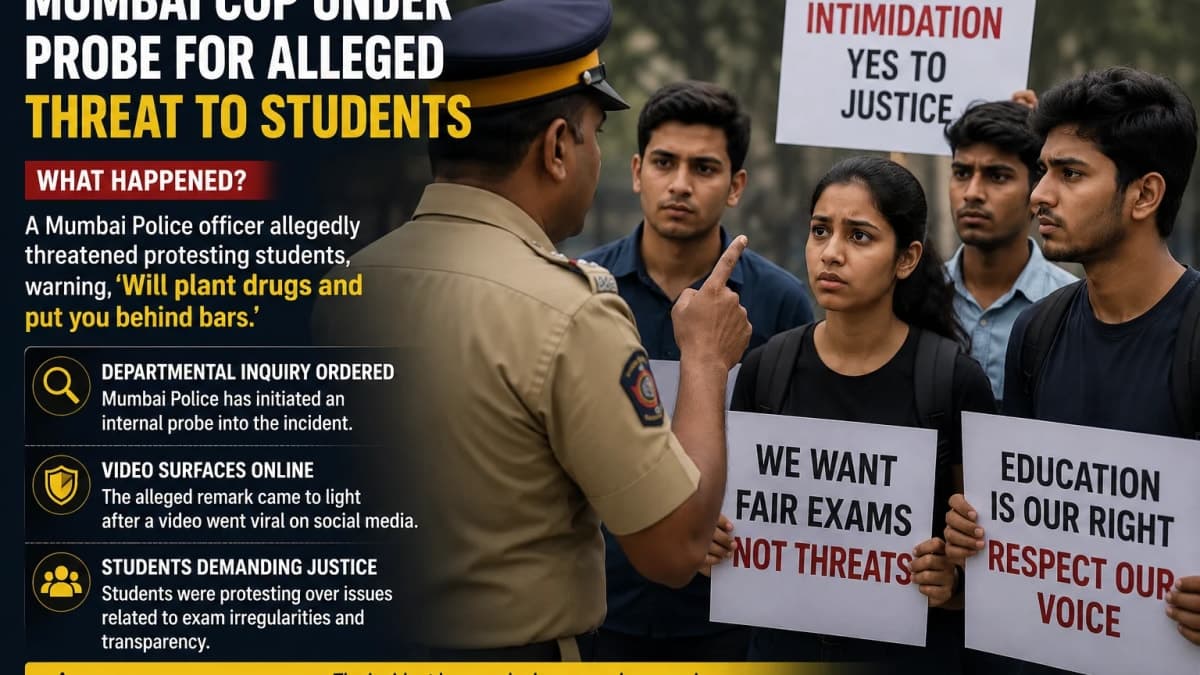
Mumbai Police has initiated an internal investigation after an officer was accused of threatening students participating in a protest. The controversy emerged after a video and eyewitness accounts allegedly showed the officer warning demonstrators that they could be falsely implicated in a narcotics case.
The incident has drawn widespread attention, prompting questions about policing standards, the protection of peaceful protesters, and accountability within law enforcement agencies.
### What Happened?
The incident reportedly took place during a student demonstration in Mumbai, where protesters had gathered to raise concerns over issues related to education and examination reforms.
According to accounts shared by participants, a police officer allegedly warned students that they could face fabricated drug-related allegations if they continued protesting. Videos circulating online brought the matter into the public spotlight, leading to calls for an independent inquiry.
Following the emergence of the allegations, Mumbai Police confirmed that the matter had been taken seriously and that a departmental probe had been ordered to establish the facts surrounding the incident.
### Background
Student-led demonstrations have been taking place across several parts of the country in recent weeks, with participants demanding greater transparency in examinations, stronger safeguards against alleged irregularities, and accountability from authorities.
As these protests have expanded, interactions between demonstrators and law enforcement have increasingly come under public scrutiny. Authorities have generally maintained that their responsibility is to preserve public order while allowing peaceful protests within the framework of the law.
The latest controversy has added another dimension to the ongoing discussion by focusing on police conduct during public demonstrations.
### Why This Matters
The incident is significant because it touches on fundamental democratic principles, including the right to peaceful protest and public confidence in law enforcement institutions.
If the allegations are substantiated through the inquiry, they could raise important questions regarding professional conduct, accountability, and safeguards against misuse of authority.
At the same time, the departmental investigation will play a key role in determining the accuracy of the claims before any conclusions are drawn.
### Statements and Reactions
Student participants alleged that the officer attempted to intimidate protesters through the reported remarks. They called for accountability and demanded that the matter be investigated impartially.
Mumbai Police acknowledged the controversy and confirmed that an internal departmental inquiry had been initiated. Officials indicated that appropriate action would depend on the findings of the investigation.
Civil society groups and legal observers have also highlighted the importance of ensuring that both the allegations and the officer's conduct are examined fairly and transparently.
### Balanced Analysis
The allegations have generated strong public reactions because they involve the relationship between citizens exercising their right to protest and the conduct expected from law enforcement officers.
However, the reported remarks remain the subject of an official inquiry. While students have presented their allegations publicly, the investigation is expected to determine the authenticity of the claims, the context in which the statements were made, and whether departmental rules were violated.
Until the inquiry is completed, the findings remain subject to official verification.
### Conclusion
The departmental investigation ordered by Mumbai Police represents an important step toward clarifying the circumstances surrounding the alleged threat made to student protesters.
The outcome of the inquiry is likely to influence broader discussions about policing standards, accountability, and the protection of constitutional rights during public demonstrations. Observers will now await the investigation's findings and any subsequent administrative action.