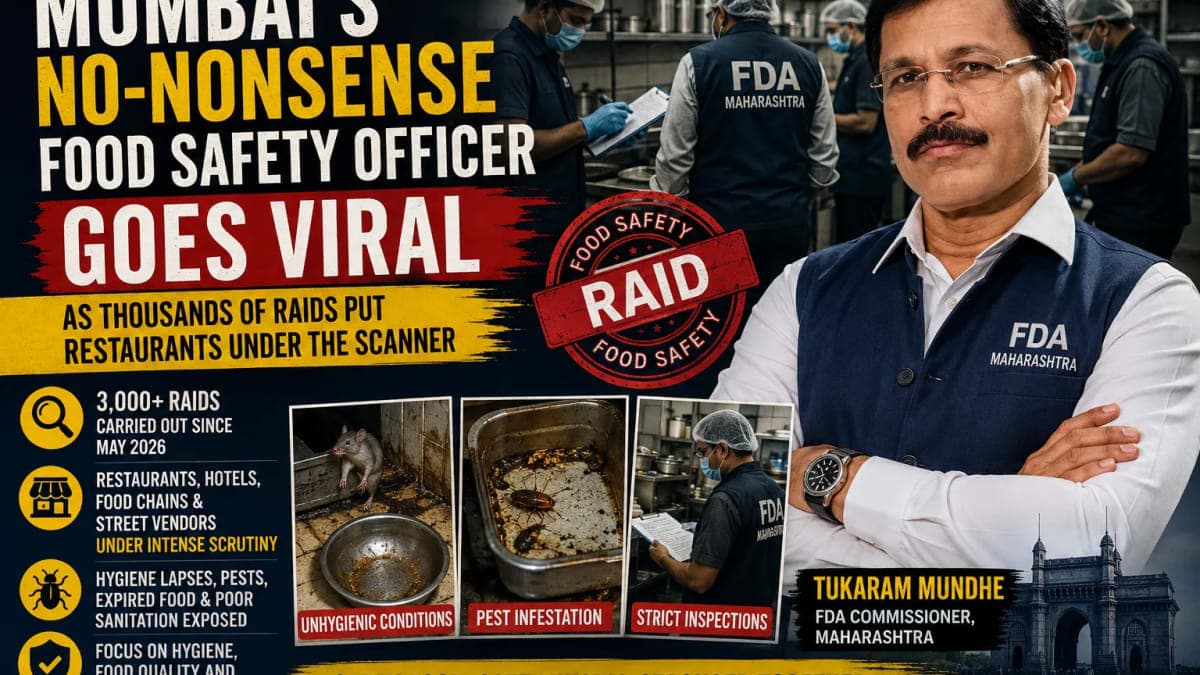
Mumbai’s Food Scene Faces a Reckoning as Tukaram Mundhe’s Raids Put Restaurants Under the Scanner
Mumbai’s celebrated food culture is facing one of its most intense regulatory tests in years.
From popular restaurant kitchens and international fast-food chains to clubs, hotels, canteens and roadside vendors, food businesses across the city are being subjected to heightened inspections under Maharashtra FDA Commissioner Tukaram Mundhe.
Since taking charge as Maharashtra’s food safety chief in May 2026, Mundhe has led a campaign involving more than 3,000 raids, according to reports published on August 24. The scale of the operation — and disturbing images emerging from some inspections — has helped turn an administrative enforcement drive into a nationwide conversation about what really happens behind restaurant kitchen doors.
From Restaurant Kitchens to Major Food Chains
The crackdown has not been restricted to small or relatively unknown establishments.
Recent enforcement has included well-known restaurants, hotels, cricket clubs and major fast-food outlets. Four Domino’s outlets and one Pizza Hut outlet have had food permits suspended in recent weeks as authorities stepped up enforcement. Earlier inspections cited issues including insect infestations, grease residue and inadequate information about expiry dates.
The message emerging from the campaign is significant: brand recognition or the reputation of an establishment does not automatically guarantee exemption from regulatory scrutiny.
That could ultimately have consequences beyond the businesses directly inspected. Consumers often associate established restaurant brands with standardized hygiene procedures, meaning enforcement against prominent names can make diners more conscious of food-safety practices across the entire industry.
Rats, Cockroaches and Hygiene Problems Raise Alarm
Some recent findings have demonstrated why the campaign has attracted so much attention.
During one statewide inspection operation involving 31 food establishments, authorities reported serious hygiene violations, including rodents in a Mumbai hotel kitchen and inadequate sanitation and waste-management arrangements. Five licences were suspended, while 22 establishments received improvement notices.
Separate inspections have resulted in action over flies, cockroaches and other sanitation concerns at prominent Mumbai establishments.
Such discoveries transform food regulation from an abstract compliance issue into an immediate consumer concern. Diners generally cannot see storage areas, preparation surfaces or kitchens before ordering a meal, making regulatory inspections an important layer of public-health protection.
Why Tukaram Mundhe’s Campaign Has Gone Viral
Strict food inspections are not new, but the visibility surrounding the current campaign is unusual.
Photographs and details released following raids have circulated widely, showing conditions ranging from stained or poorly maintained areas to pests and expired food. The images have helped make Mundhe’s enforcement approach a social-media phenomenon and generated significant public support.
The reaction also reflects a deeper concern about food quality in India.
Government data cited by Reuters shows that inspectors have examined more than 100,000 food samples annually since 2020, with roughly 20% found to be unsafe, substandard or inadequately labelled. Nearly 8,000 food-business licences were cancelled nationally over the previous three years.
Mumbai’s crackdown therefore sits within a much broader food-safety challenge.
Street Vendors Are Feeling the Pressure Too
The effects appear to be spreading beyond establishments that have already been inspected.
During visits to 25 Mumbai restaurants and street vendors, Reuters found businesses making changes amid concern about possible FDA action. Examples included replacing artificial colouring, changing cooking oil more frequently and introducing gloves and head coverings for workers.
Even Mumbai’s iconic vada pav has entered the regulatory conversation. In June, Mundhe prohibited the practice of using newspapers to package food — a familiar sight at many street-food stalls.
This preventive effect may prove to be one of the campaign’s most important outcomes. Regulators cannot inspect every kitchen every day, so lasting improvement ultimately depends on businesses adopting safer practices before an inspector arrives.
But the Crackdown Has Also Faced Legal Pushback
The campaign has not been free of controversy.
Some businesses and critics have questioned whether immediate closures are always proportionate, particularly when establishments could be given an opportunity to correct less serious deficiencies.
That debate has reached the courts. The Bombay High Court has stayed or reversed licence suspensions in several cases, examining whether immediate closure without prior warning was justified by a genuine health threat.
This creates an important distinction in the broader debate.
Serious hazards — contaminated food, major pest infestations or conditions presenting an immediate threat to consumers — can justify strong intervention. At the same time, regulators must ensure enforcement remains proportionate, consistent and procedurally fair when violations are less severe.
Why This Crackdown Matters Beyond Mumbai
Mumbai is one of India’s largest restaurant and street-food markets, making developments in the city influential far beyond Maharashtra.
If sustained inspections lead businesses to invest more heavily in sanitation, pest control, safe storage, staff training and transparent food handling, the impact could extend beyond individual licence suspensions.
The campaign may also alter consumer expectations.
Customers increasingly exposed to photographs of restaurant kitchens may begin demanding the same level of transparency about hygiene that they already expect regarding menus, prices and online ratings.
For food businesses, cleanliness could consequently become not merely a regulatory obligation but a competitive advantage.
The Bigger Challenge: Making Food Safety Routine
The ultimate test for Maharashtra’s FDA will not simply be the number of raids conducted or licences suspended.
It will be whether the current enforcement drive creates permanent changes.
Thousands of surprise inspections can generate immediate compliance, but long-term food safety requires regular monitoring, adequately trained inspectors, clear standards and businesses that maintain those standards even when regulators are nowhere nearby.
Mundhe’s highly visible approach has already succeeded in putting restaurant hygiene at the centre of public discussion. The next challenge is converting that attention into a culture where safe food handling becomes routine rather than something businesses urgently address when they fear an inspection.
For Mumbai’s millions of diners, that outcome would matter considerably more than the viral photographs themselves.
This article is based on reporting published by The Economic Times.