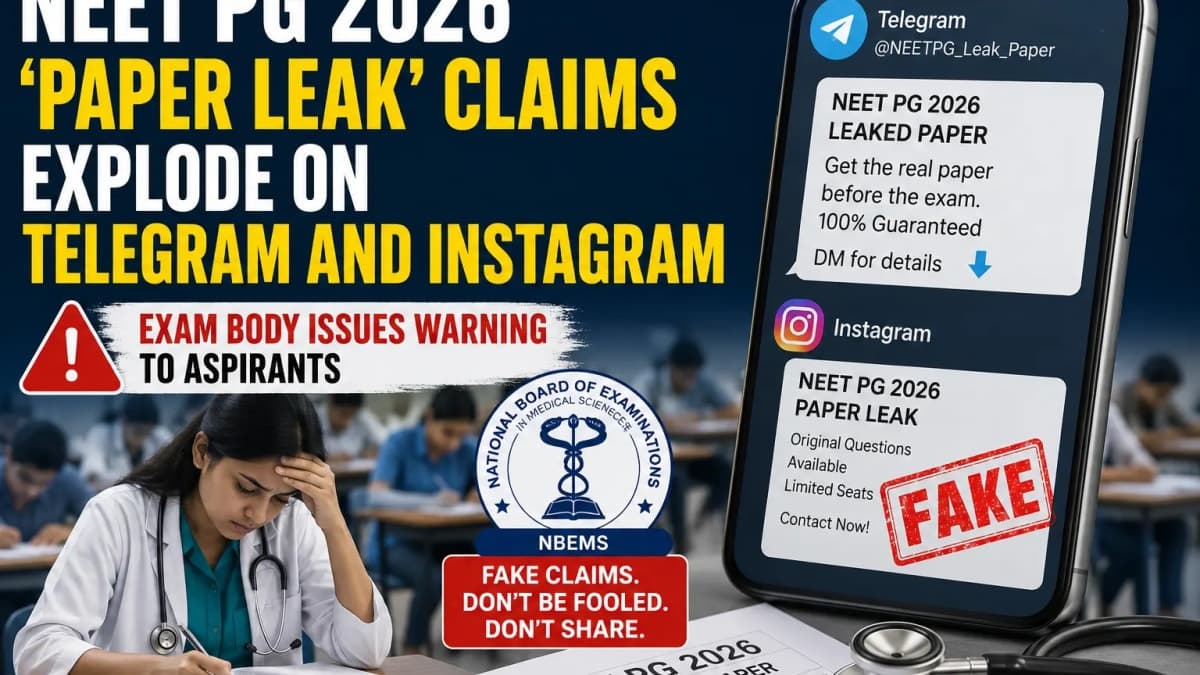
NEET PG ‘Paper Leak’ Buzz Triggers Concern Ahead of Exam
Anxiety among NEET PG 2026 aspirants has intensified after posts and messages claiming to offer advance access to the examination question paper surfaced on social media.
Telegram groups, Instagram accounts and messages circulating through other platforms have promoted alleged “leaked” papers or exam-related material. However, NBEMS, the body responsible for conducting NEET PG, has stepped in with a clear warning: candidates should not believe such claims.
The examination authority has described the supposed leak offers as false, fraudulent and designed to mislead aspirants.
The timing has made the issue particularly sensitive. NEET PG 2026 is scheduled for August 30, meaning candidates are now in the final stage of preparation for one of India's most important postgraduate medical entrance examinations.
What Has NBEMS Said?
NBEMS has urged candidates to remain alert when encountering social media handles, advertisements or messages claiming to possess NEET PG 2026 question papers before the examination.
The board's advisory makes an important distinction: viral claims on social media should not be treated as proof that the examination paper has actually been compromised.
According to NBEMS, the claims currently circulating online are bogus and intended to deceive candidates. Aspirants have been advised to depend on authorised NBEMS communication rather than rumours or unofficial accounts.
That clarification is crucial because the phrase “paper leak” can quickly create panic online even when the underlying posts are fraudulent attempts to exploit candidates.
Telegram and Instagram Become Key Channels for Fake Claims
The latest episode also highlights how quickly exam-related misinformation can spread through social platforms.
Private groups and messaging channels can make unverified information appear exclusive or credible, particularly when posts claim to possess confidential material that is supposedly unavailable elsewhere.
For students facing a highly competitive examination, such promises can be especially tempting. They may also create a financial risk if fraudsters demand payment in exchange for alleged papers or other supposedly confidential material.
Candidates should therefore treat any person or group promising guaranteed access to the NEET PG 2026 question paper with extreme suspicion.
Why the Warning Matters
NEET PG is a high-stakes examination that determines admission to postgraduate medical courses, making the integrity of the examination process critical for thousands of aspiring doctors.
Even an unsubstantiated leak claim can cause disruption.
Students may begin questioning whether months of preparation will be fairly rewarded. Rumours can spread faster than official clarifications, while fraudulent operators can use that uncertainty to target anxious candidates.
The NBEMS warning therefore serves two purposes: rejecting the current leak claims and discouraging candidates from engaging with individuals or groups attempting to exploit the situation.
NEET PG 2026 Scheduled for August 30
NEET PG 2026 is scheduled to take place on Sunday, August 30. According to information reported ahead of the examination, NBEMS plans to conduct the test in a single shift across more than 1,300 examination centres in approximately 340 cities.
With such a large nationwide examination approaching, candidates are likely to encounter a growing volume of last-minute information concerning admit cards, exam centres, timings and examination procedures.
NBEMS has therefore advised aspirants to rely on official communication for genuine updates.
Social Media Rumours vs Verified Information
The episode demonstrates a broader challenge surrounding competitive examinations: distinguishing between a claim that becomes viral and an allegation supported by evidence.
Screenshots, Telegram messages or advertisements claiming that a paper is available do not by themselves establish that an actual examination paper has been leaked.
In the present case, NBEMS has explicitly rejected the circulating NEET PG 2026 leak claims as fraudulent. Unless credible evidence or an official investigation establishes otherwise, these social media claims should not be presented as a confirmed paper leak.
That distinction is particularly important for responsible reporting because inaccurate headlines suggesting a confirmed leak could unnecessarily alarm candidates.
Background: Similar Fake Claims Have Surfaced Before
This is not the first time the examination authority has had to address alleged NEET PG leak material circulating online.
Ahead of NEET PG 2024, NBEMS issued an official notice denying claims associated with a Telegram channel that purported to offer leaked examination material and cautioned applicants against such fraudulent activity.
The recurrence shows how high-profile competitive examinations can attract online scams, particularly during the final days before a test when candidates are under maximum pressure.
Balanced Analysis: Why Candidates Should Stay Cautious Without Panicking
The appearance of paper-leak claims naturally deserves attention. Examination authorities must take allegations involving security seriously, while suspicious accounts and financial solicitations should be scrutinised appropriately.
At the same time, viral posts cannot automatically be treated as evidence of a genuine security breach.
Based on the information currently available, NBEMS has categorically rejected the NEET PG 2026 leak claims circulating on social media. No credible evidence cited in the board's warning establishes that the actual examination paper has been compromised.
For aspirants, the practical response is straightforward: avoid paying anyone claiming to possess confidential examination material, ignore unverified messages and check important information through official NBEMS channels.
As August 30 approaches, verified information—not viral speculation—will remain essential for candidates already dealing with the pressure of a major national examination.
This article is based on reporting published by India Today.