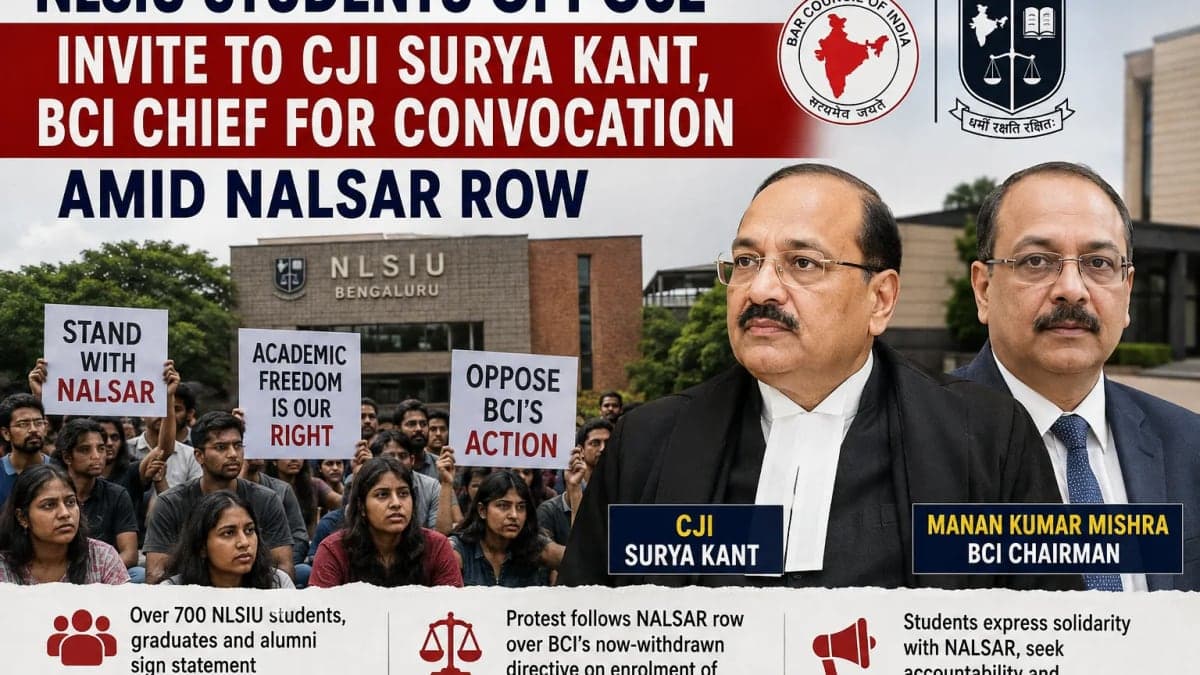
NLSIU Students and Alumni Raise Objections
A section of the NLSIU community has objected to the proposed presence of CJI Surya Kant and BCI Chairman Manan Kumar Mishra at the institution’s convocation.
In a statement dated August 15, the signatories included 165 graduating students from the Class of 2026, 409 current students and 128 alumni, bringing the number of supporters to more than 700. Their statement expressed solidarity with students of NALSAR University of Law and criticised the BCI’s handling of the recent controversy there.
The development has turned what would ordinarily be a ceremonial academic occasion into part of a wider debate over student dissent, institutional autonomy and the relationship between legal education institutions and professional regulatory authorities.
What Happened in the NALSAR Controversy?
The NLSIU statement comes shortly after a dispute at NALSAR University of Law in Hyderabad.
Students there had objected to CJI Surya Kant’s proposed participation in their convocation. The controversy subsequently escalated when the Bar Council of India directed State Bar Councils not to enrol graduates of NALSAR’s 2026 batch as advocates.
The BCI directive attracted significant criticism and was subsequently withdrawn. The episode nevertheless triggered a larger discussion within the legal community about whether professional consequences should ever follow from students expressing disagreement over decisions concerning university events.
NLSIU Community Expresses Solidarity With NALSAR
The NLSIU students and alumni condemned the withdrawn BCI directive and expressed support for their counterparts at NALSAR.
Their intervention suggests that the dispute is no longer confined to one law university. Instead, it has developed into a broader conversation among law students about the freedom to question institutional decisions and the limits of regulatory authority.
The signatories have also sought accountability over the episode, including an apology from the BCI in connection with its actions against the NALSAR graduating batch.
BCI Chairman Issues Apology
Amid the growing criticism, BCI Chairman Manan Kumar Mishra issued an apology to law students. In his Independence Day message, Mishra expressed regret over remarks or communications that may have caused hurt and supported students’ right to express their views through peaceful means.
The apology represents an effort to reduce tensions after the controversy, although the NLSIU statement shows that questions surrounding the episode continue to resonate within the law-school community.
Why the NLSIU Protest Matters
The controversy carries significance beyond the question of who attends a university convocation.
Law universities occupy a distinctive position in higher education because their students are preparing to enter a profession closely connected with constitutional rights, courts and public institutions. Debate and disagreement are therefore often viewed as important components of legal education.
At the same time, senior judges and representatives of professional bodies regularly participate in academic ceremonies, providing students with opportunities to engage with leading figures in the justice system.
The current dispute highlights the challenge of maintaining that engagement while preserving space for students to question institutional choices without fearing professional repercussions.
Balanced Analysis
Supporters of the students’ position are likely to view their objections as an exercise of academic freedom and legitimate dissent. From this perspective, students should be able to question guest invitations or regulatory decisions, particularly within institutions dedicated to studying constitutional rights and the rule of law.
Another perspective is that disagreements over ceremonial invitations should not necessarily prevent dialogue between students and senior members of the judiciary or legal profession. Convocations can themselves provide opportunities for engagement across differing viewpoints.
The withdrawal of the BCI directive and Mishra’s subsequent apology have reduced one immediate source of tension. However, the NLSIU response indicates that the controversy has opened a broader debate about accountability, institutional autonomy and how disagreement between students and powerful legal institutions should be handled.
Conclusion
The opposition from more than 700 NLSIU students and alumni marks another significant development in the controversy that began at NALSAR. What started as disagreement surrounding a convocation invitation has evolved into a wider discussion about student expression, professional regulation and accountability within India’s legal ecosystem.
How universities, students, regulators and judicial figures respond to such disagreements could influence the relationship between India’s leading law schools and the institutions their graduates will eventually serve.