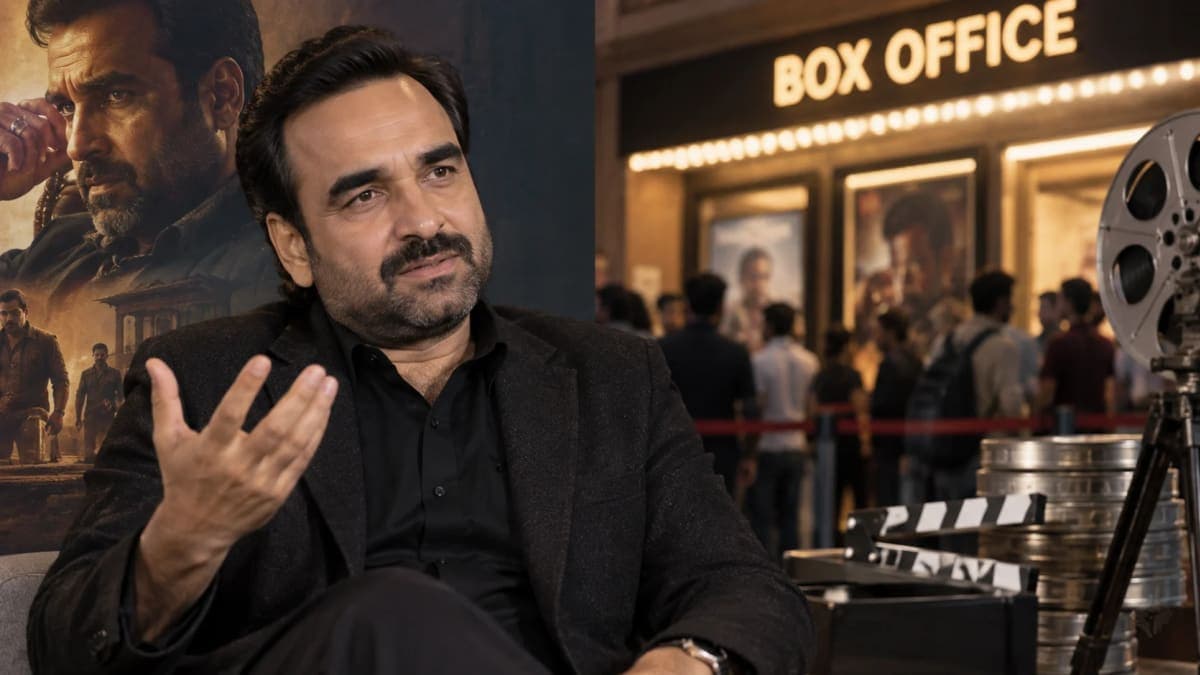
Pankaj Tripathi has spoken about a part of modern Bollywood that is now almost impossible to ignore: the daily box-office numbers that take over social media whenever a big film arrives in theatres.
As Mirzapur: The Movie continues its strong theatrical run, Tripathi says producer Ritesh Sidhwani took a noticeably different approach. According to the actor, the cast was never pushed to turn every new collection milestone into a social-media celebration. The idea was to let audiences talk about the film and allow word of mouth to do the work.
That may sound like a small decision, but it says something about the way films are marketed today. Box-office figures are no longer just trade information. They have increasingly become part of a movie’s publicity campaign, with every opening-day figure, weekend total and new milestone turned into promotional material.
What Pankaj Tripathi said about the numbers
Tripathi credited Ritesh Sidhwani for the way the team handled the film’s commercial performance after its September 4 theatrical release.
Talking about the collections, Tripathi said:
“Even as we crossed milestones, there was zero pressure from his end to project or showcase numbers across social media.”
He said it was Sidhwani’s decision to allow the success of the film to spread naturally through word of mouth rather than repeatedly promoting collection figures online.
There is an important distinction here. Tripathi is not saying box-office numbers are irrelevant.
Before the movie was released, he had already acknowledged that people involved with a film naturally keep an eye on how it performs commercially. His point appears to be that watching the numbers and constantly using them to sell a movie are two different things.
This wasn’t something Tripathi said only after the film succeeded
His latest comments carry more weight because he had expressed a similar view before Mirzapur: The Movie opened in cinemas.
In an interview published on September 3, Tripathi was asked whether the enormous popularity of the Mirzapur franchise created pressure around the movie’s opening.
He referred to the Bhagavad Gita’s idea of concentrating on your work rather than becoming consumed by the result. For him, an actor’s main job is to perform the role properly. He acknowledged that the team would obviously look at the collections, but said the final box-office result should not become the actor’s main concern.
That interview happened before audiences had delivered their verdict.
So his current comments are not simply a relaxed response after a commercially successful release. He had already been making the same distinction between acting and box-office pressure before anyone knew how the movie would perform.
So how much has Mirzapur: The Movie actually earned?
This is where things get slightly complicated.
Different box-office trackers are reporting different figures, and those numbers should not be mixed together without explaining what they represent.
Bollywood Hungama’s tracker lists the film at ₹192.31 crore in India after its second week. Its figures include ₹24.47 crore on the opening day, ₹90.95 crore during the opening weekend and ₹143.57 crore by the end of the first week.
A PTI report published on September 13, meanwhile, cited Sacnilk figures showing ₹171.86 crore India net and ₹204.87 crore domestic gross at that point.
Those figures are not necessarily contradictory.
India net, domestic gross and worldwide gross are different measurements. On top of that, box-office tracking services can use different estimates and reporting methods.
That is why simply saying a film “earned ₹200 crore” can be misleading without explaining what the number refers to.
What can safely be said is that Mirzapur: The Movie has enjoyed a substantial theatrical run since arriving in cinemas on September 4.
Turning Mirzapur from a streaming hit into a theatrical film was a gamble
The movie did not arrive like a normal standalone Bollywood release.
Mirzapur began as a streaming series in 2018 and went on to run for three seasons. By the time the movie arrived, characters such as Kaleen Bhaiya were already familiar to a large audience. Pankaj Tripathi returned as Akhandanand Tripathi, or Kaleen Bhaiya, alongside familiar faces including Ali Fazal and Divyenndu.
That gave the film a major advantage: it did not need to introduce its world from scratch.
But it also created a problem.
If audiences felt they needed to watch three seasons of the series before understanding the film, the potential theatrical audience would immediately become smaller.
Tripathi summed up the makers’ approach simply: “Kirdaar wohi hain, kahani nayi hai”—the characters are familiar, but the story is new.
The challenge was to give existing fans enough of the Mirzapur they already knew while still making the movie accessible to someone walking into a theatre without having followed every episode of the series.
Its box-office performance therefore matters beyond this one franchise. It gives the Indian entertainment industry another example of what can happen when a popular streaming property moves to the big screen.
It does not mean every successful streaming show can automatically become a theatrical hit. Mirzapur entered cinemas with years of brand recognition and well-established characters, advantages that many other shows would not have.
Why Bollywood keeps talking about box-office numbers
Tripathi’s comments also touch on a wider change in film promotion.
Once a movie is released, its collections can become advertising material of their own.
A strong opening-day number generates headlines. Those headlines create a sense that the film is popular. That popularity can encourage more people to buy tickets. If the collections rise again, another milestone is announced and the cycle repeats.
In other words, box-office numbers do not just describe how a film has performed. They can also help sell more tickets.
That explains why actors, producers and official film accounts often share collection posters throughout a theatrical run.
According to Tripathi, the Mirzapur team did not face that kind of pressure from Sidhwani. This does not mean the film’s collections were kept private—trade publications continued reporting them. The difference is that, in Tripathi’s account, the actors themselves were not expected to keep pushing those numbers through their personal social-media accounts.
There is another problem with box-office figures
The obsession with numbers becomes even more complicated because Indian box-office reporting does not always produce one universally accepted figure.
Different publications and tracking services may report India net, India gross or worldwide collections. Their estimates can also differ.
That means two headlines about the same film can carry different numbers without either necessarily referring to exactly the same measurement.
For readers, the better question is not simply, “How many crores did the film make?”
It is: Which figure is this—India net, India gross or worldwide gross? What period does it cover? And who is reporting it?
Those details matter even more when collection numbers are being used as promotional tools.
Tripathi seems increasingly comfortable stepping away from the race
The comments also fit with what Tripathi has been saying about his career more broadly.
Mirzapur is only one of several successful franchises associated with him. His work includes Stree, OMG and Criminal Justice, in addition to his role as Kaleen Bhaiya.
Yet Tripathi has said he is now deliberately slowing down and working on one project at a time. He has linked that freedom to the trust he has built with audiences and to being in a more financially secure position than earlier in his career.
Seen in that context, his remarks about box-office promotion do not feel like a standalone complaint about social media.
They fit a larger approach: do the work, pay attention to the result, but do not allow the numbers around the work to become the work itself.
The bigger Mirzapur story may go beyond its final collection
Eventually, Mirzapur: The Movie will finish its theatrical run and the industry will have a final set of collection estimates to debate.
But its longer-term significance may lie elsewhere.
The film is testing whether audiences who discovered a franchise at home are willing to pay to continue that relationship inside a cinema. If that model proves commercially sustainable, producers may look more seriously at other streaming properties with strong characters and established fan bases.
Still, Mirzapur should be treated as a specific case rather than a formula that can simply be copied. It already had recognizable characters, years of audience familiarity and a large cultural footprint before entering theatres.
And Tripathi’s comments add an interesting twist to that success.
One of Indian streaming’s most recognizable franchises has moved onto the big screen and generated substantial box-office business. Yet according to its leading actor, the producer did not ask the cast to turn those earnings into a daily promotional campaign.
For Tripathi, apparently, that absence of pressure was worth noticing.