Rajnath Singh Says Opposition Is Using Student Protests for Political Gain Amid Growing Debate
Introduction
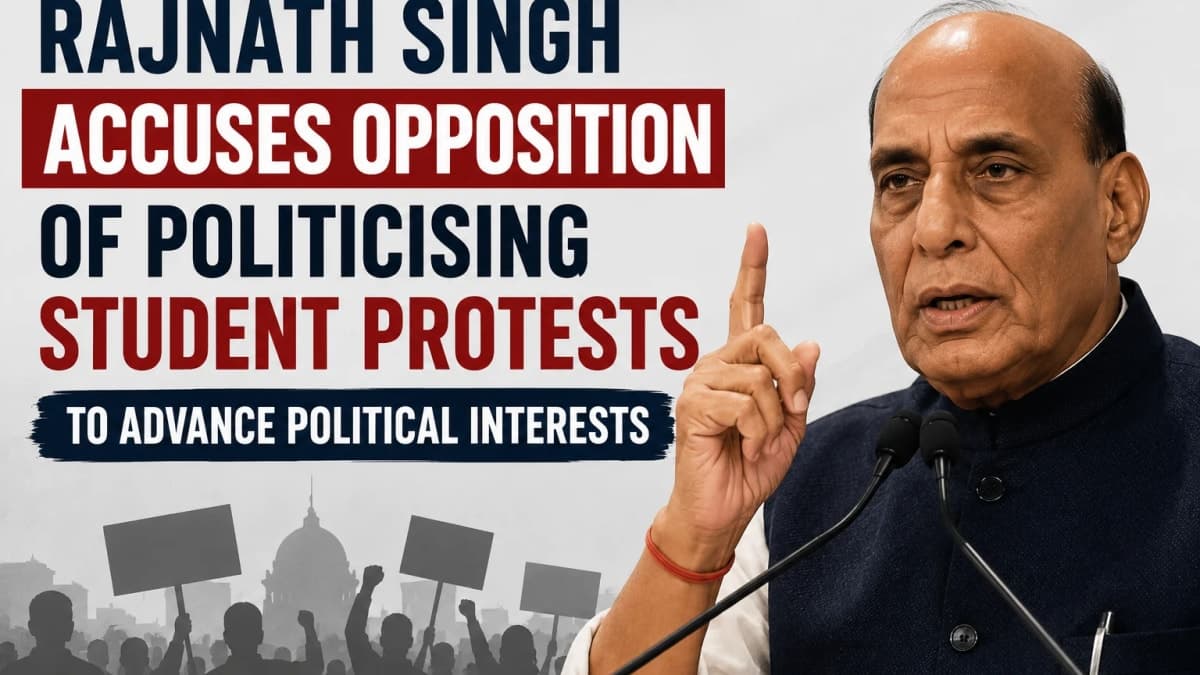
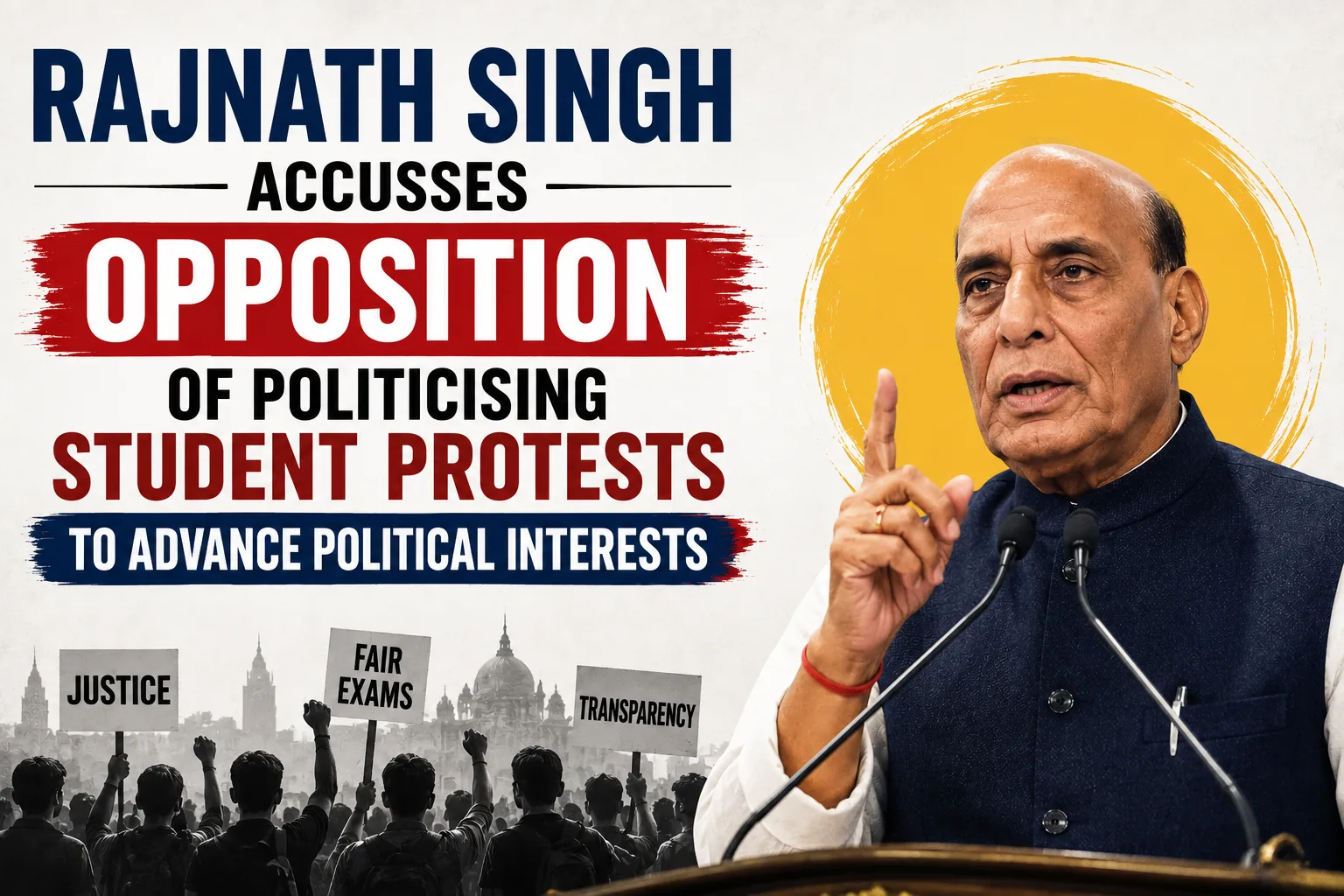
Defence Minister Rajnath Singh has accused Opposition parties of using ongoing student protests as a political instrument to further their own interests rather than focusing on resolving the concerns raised by students. His comments come as demonstrations linked to education and examination-related issues continue to attract nationwide attention.
The statement has added a fresh political dimension to an issue that has already generated widespread public discussion, with both the government and Opposition presenting sharply different interpretations of the protests.
Rajnath Singh's Remarks
Addressing the issue, Rajnath Singh argued that the Opposition was attempting to derive political advantage from student-led demonstrations instead of contributing constructively to solutions. According to him, sensitive public issues should not become platforms for political competition.
He emphasized that student concerns deserve serious attention but suggested that political parties should avoid influencing or exploiting such movements for electoral or partisan objectives.
Political Debate Intensifies
The Defence Minister's comments come at a time when protests by students and youth groups have expanded in several parts of the country. Opposition leaders have expressed support for demonstrators, arguing that public dissatisfaction reflects genuine concerns regarding examination processes, transparency, and accountability.
Government leaders, however, have maintained that while peaceful democratic expression is respected, political parties should refrain from using public protests to advance their own agendas.
The differing viewpoints have further intensified political exchanges over how the demonstrations should be interpreted.
Background: Student Protests Remain in National Focus
Student protests have gained momentum in recent weeks over issues related to competitive examinations and the functioning of educational institutions. Many participants have called for greater transparency, improved safeguards, and stronger accountability mechanisms.
The developments have drawn attention from political leaders, civil society groups, and educational stakeholders, making the issue one of the most closely watched public debates in the country.
As demonstrations continue, both government representatives and Opposition leaders have increasingly linked the protests to broader discussions about governance, education policy, and public trust.
Why This Matters
Student-led movements often influence national policy discussions because they reflect concerns affecting millions of young people preparing for higher education and employment opportunities.
Political reactions to such protests can shape public perception, impact legislative debates, and influence future education reforms. Whether viewed primarily as civic activism or as an issue receiving political backing, the demonstrations have become an important part of the broader national conversation on education and governance.
Balanced Analysis
Supporters of the government's position argue that genuine student concerns should remain independent of political agendas and that solutions are more likely to emerge through institutional dialogue than political confrontation.
On the other hand, Opposition parties maintain that supporting public demonstrations is a legitimate democratic responsibility, particularly when citizens seek accountability from authorities. They argue that political support does not necessarily diminish the authenticity of student grievances.
The differing perspectives underscore the challenge of balancing democratic political engagement with the independence of citizen-led movements. As discussions continue, the focus is expected to remain on both the concerns raised by students and the government's response to those issues.
Conclusion
Rajnath Singh's remarks have added another layer to the ongoing debate surrounding student protests and examination-related concerns. While the government argues that the Opposition is politicising the movement, Opposition leaders continue to defend their support for demonstrators. As the issue evolves, public attention is likely to remain on both policy responses and the broader political discourse surrounding education reforms.