Introduction
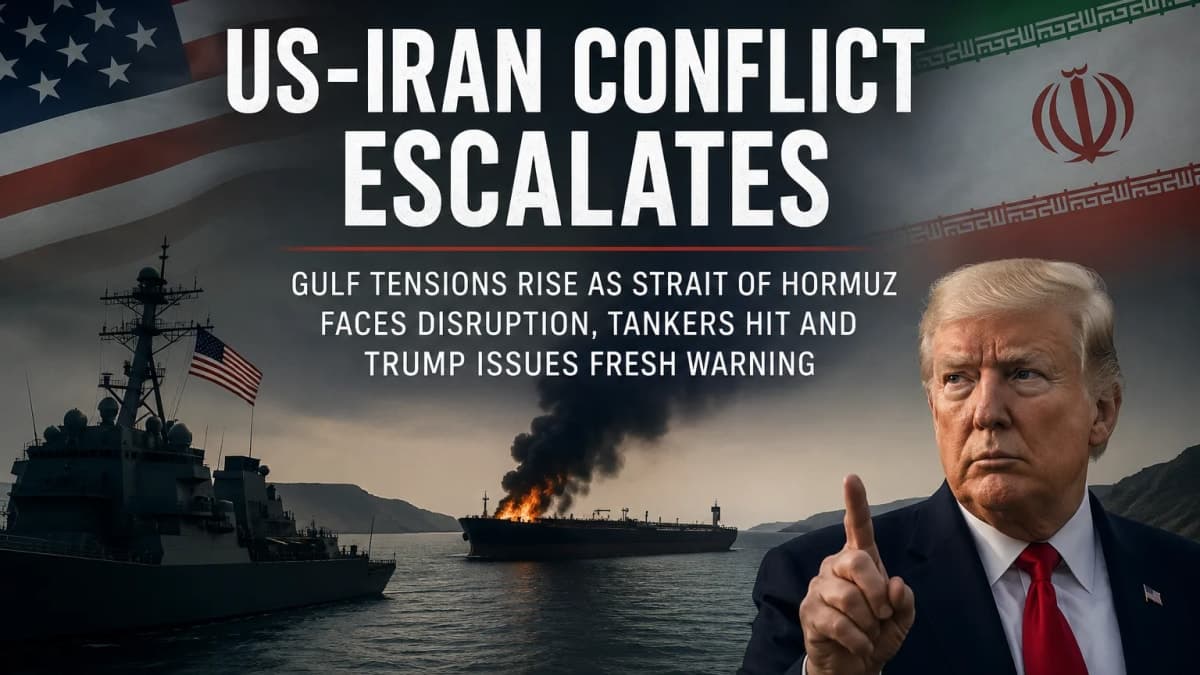
The confrontation between the United States and Iran has entered another dangerous phase following renewed military strikes, attacks on commercial vessels, and mounting threats to one of the world's most important energy corridors—the Strait of Hormuz. The latest developments have increased fears of wider regional instability while raising concerns over global oil markets, maritime security, and diplomatic efforts to prevent further escalation.
Five Major Developments Shaping the Crisis
1. Commercial Tankers Targeted Near the Strait of Hormuz
Multiple commercial vessels operating near the Strait of Hormuz have reportedly come under attack during the latest wave of hostilities. Some ships sustained damage, while fires were reported aboard at least two tankers, prompting renewed concerns about the safety of one of the world's busiest maritime trade routes. Shipping companies are closely monitoring the security situation as insurance costs and operational risks continue to rise.
2. Strait of Hormuz Faces Renewed Pressure
The Strait of Hormuz remains central to the conflict, with military activity threatening the free movement of oil tankers. Roughly one-fifth of global oil supplies normally transit through the narrow waterway, making any disruption significant for international energy markets.
Continued instability has pushed governments and shipping firms to review contingency plans while energy traders closely monitor developments for potential supply disruptions.
3. Trump Warns Tehran Following Escalation
US President Donald Trump has warned Iran that further attacks against American personnel or interests would trigger additional military responses. The administration has maintained that its operations are intended to protect US forces and safeguard international shipping, while also stating that diplomatic options remain available if Iran chooses to reduce tensions.
4. Regional Military Activity Expands
The latest round of hostilities has extended beyond the immediate US-Iran confrontation. Reports indicate missile and drone activity affecting several Gulf states that host American military facilities, adding to fears that the conflict could involve more regional actors.
Several countries have increased defensive measures while monitoring the rapidly changing security environment.
5. Oil Markets and Global Shipping Feel Immediate Impact
Growing security concerns in the Gulf have already influenced energy markets. Oil prices have reacted to fears that prolonged disruption in the Strait of Hormuz could reduce global crude exports and increase transportation costs.
Shipping companies continue to reassess routes and security procedures as uncertainty persists across the region.
Why This Matters
The Strait of Hormuz is one of the world's most strategically important maritime chokepoints. A significant portion of global crude oil and liquefied natural gas exports passes through this narrow passage every day.
Any sustained disruption could:
Increase global fuel prices.
Raise shipping and insurance costs.
Affect energy-importing nations worldwide.
Increase inflationary pressures.
Heighten geopolitical uncertainty across the Middle East and beyond.
Because of its global economic importance, developments in the Gulf are closely watched by governments, financial markets, and multinational businesses alike.
Background
Relations between Washington and Tehran have remained tense for years over regional security issues, military activity, sanctions, and Iran's nuclear program. Periodic confrontations have included missile strikes, maritime incidents, and attacks involving regional proxy groups.
The latest escalation follows renewed military operations and reciprocal strikes that have significantly increased tensions throughout the Gulf region, while diplomatic efforts continue to seek ways to prevent a broader conflict.
Balanced Analysis
The United States maintains that its military operations are aimed at protecting its forces and ensuring freedom of navigation through international waterways. Washington argues that secure shipping lanes are essential for global trade and energy stability.
Iran, meanwhile, has repeatedly stated that it is responding to military actions directed against its territory and national interests. Tehran continues to criticize US military involvement in the region while insisting that external pressure will not alter its security policies.
Independent analysts caution that continued military exchanges increase the risk of miscalculation. They note that even limited attacks on shipping or regional infrastructure can have disproportionate economic consequences due to the Gulf's critical role in global energy markets.
Outlook
Diplomatic channels remain active, but the security situation continues to evolve rapidly. Much will depend on whether both sides can avoid further military escalation while protecting commercial shipping and regional stability.
International observers are closely watching developments in the Strait of Hormuz, where any prolonged disruption could have consequences extending far beyond the Middle East.