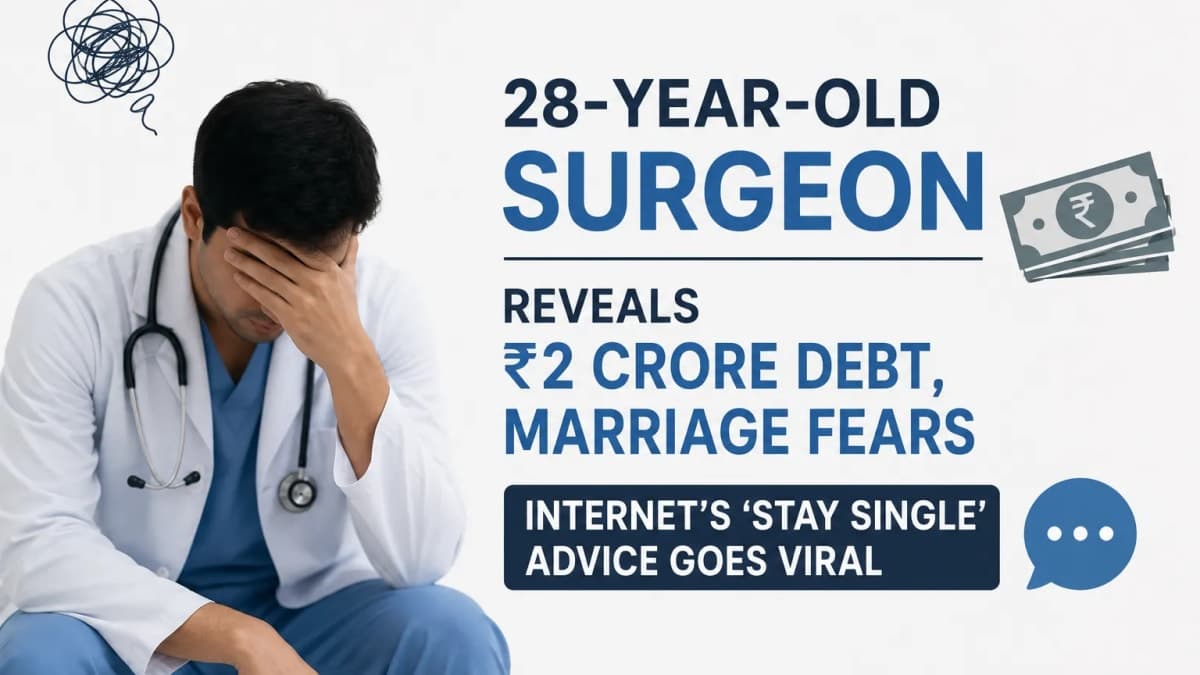
A viral social media post by a 28-year-old surgeon has ignited conversations across online platforms after the doctor revealed carrying an estimated ₹2 crore debt while expressing uncertainty about getting married amid mounting financial responsibilities. The post resonated with thousands of users, many of whom shared similar experiences of balancing professional ambitions with long-term financial commitments.
According to the viral post, the surgeon described feeling anxious about entering marriage while managing substantial debt, questioning whether it would be financially responsible to take on additional personal commitments before achieving greater financial stability. The post quickly gained attention, with users discussing the realities of medical education costs, years of specialized training, and the delayed financial rewards often associated with the profession.
Many commenters emphasized that becoming a medical specialist frequently requires significant investment in education, training, and practice setup before doctors begin earning enough to comfortably manage large loans. Others argued that high debt does not necessarily reflect poor financial decisions but can be a consequence of pursuing advanced medical qualifications.
A large number of social media users advised the surgeon to prioritize clearing debt and strengthening financial security before making major life decisions, leading to the widely shared "stay single for now" responses that quickly went viral. While some viewed the advice as practical, others suggested that personal relationships should not be determined solely by financial circumstances and that supportive partners often navigate such challenges together.
The discussion also expanded beyond one individual's experience, highlighting broader concerns faced by many young professionals in fields requiring expensive education. Rising tuition costs, long training periods, housing expenses, and career uncertainty have increasingly become topics of public debate, particularly among professionals entering their late twenties and early thirties.
Financial planners participating in the online conversation encouraged focusing on structured debt repayment, emergency savings, and long-term financial planning rather than comparing personal timelines with peers. Several users pointed out that every financial journey is different and that major life decisions should consider both personal readiness and financial realities.
Although the post reflects one individual's personal experience, it has sparked a broader conversation about debt, career sacrifices, marriage expectations, and financial planning among young professionals. The widespread response illustrates how discussions around money and relationships continue to resonate with people navigating similar life stages and economic challenges.