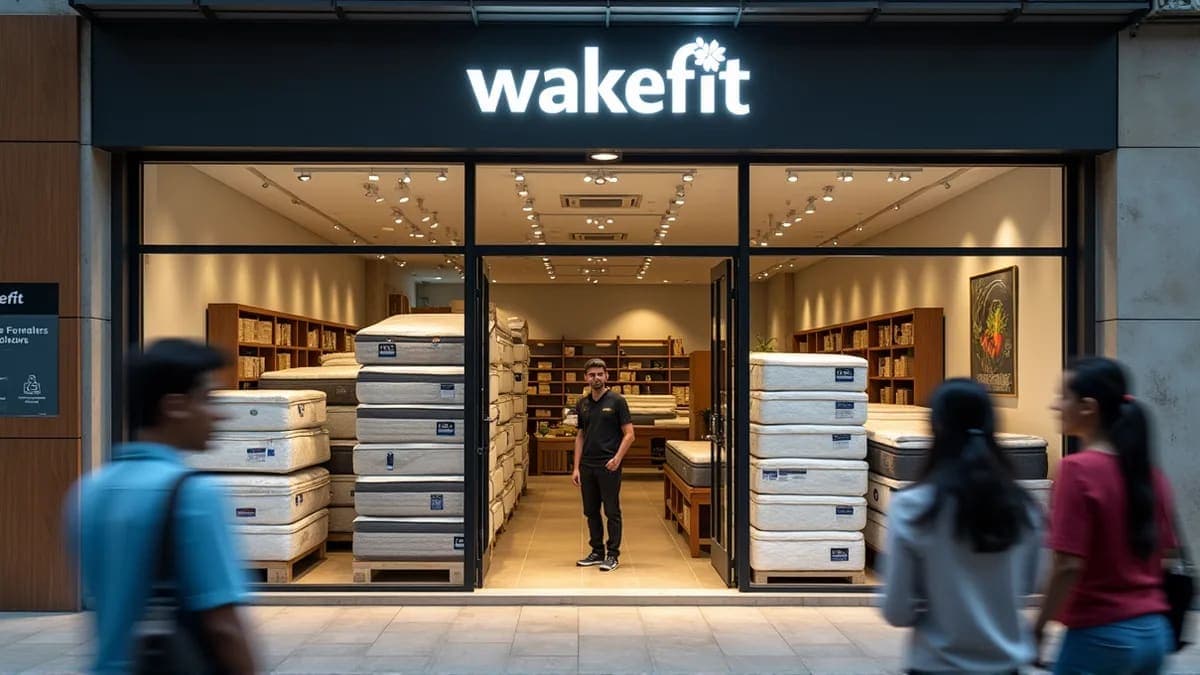
Wakefit, the Indian omni‑channel retailer of mattresses, furniture and home accessories, opened its fiscal year 2027 with a stronger top line and deeper earnings, even as the cost of core raw materials surged after geopolitical tensions in the Middle East.
The company’s results matter to a broad set of stakeholders: investors tracking the fast‑growing home‑goods sector, suppliers of polyol and TDI chemicals, franchise partners operating in its multi‑brand network, and the millions of Indian consumers who rely on Wakefit’s direct‑to‑consumer pricing model.
What Is Actually Going On
For the quarter ending June 2026, Wakefit’s revenue from operations climbed to Rs 404.9 crore, a 16.6% increase over the same period a year earlier. The uplift stemmed largely from its own sales channels, which grew 20.5% year‑on‑year and now represent more than 70% of total turnover.
Profit after tax rose to Rs 23.4 crore, up 19.2% from the prior year. The headline figure was tempered by a one‑time deferred tax charge of Rs 7.3 crore, linked to the partial reversal of tax assets recognised in the previous quarter.
Operating efficiency also improved. Reported EBITDA—a measure of earnings before interest, tax, depreciation and amortisation—jumped 25.2% to Rs 56.4 crore, pushing the EBITDA margin to 13.9% from 13.0% a year ago. When lease‑adjustments, employee‑stock‑option‑plan (ESOP) costs and other non‑recurring items are stripped out, operating EBITDA surged 49.7% to Rs 36.8 crore.
Gross profit, the difference between sales and the direct cost of goods sold, expanded to Rs 231.1 crore, with the gross margin rising to 57.1% from 55.8%. The improvement reflects modest price hikes that Wakefit introduced after supply disruptions drove up the cost of polyol and toluene‑di‑isocyanate (TDI), two chemicals essential to polyurethane foam used in mattresses.
How It Works
Wakefit’s ability to protect margins amid raw‑material inflation rests on a three‑step pricing and distribution framework:
Channel‑driven pricing: The firm monitors cost changes in its own e‑commerce and brick‑and‑mortar stores more closely than external partners, allowing quicker price adjustments.
Selective price pass‑through: When polyol or TDI prices spike, Wakefit applies calibrated increases to its premium product lines, preserving the affordability of entry‑level offerings.
Retail‑network leverage: Expansion of company‑owned stores—27 added in the quarter, taking the total to 165—creates higher‑margin sales points that offset lower margins in third‑party outlets.
These steps are supported by a capital‑expenditure plan of roughly Rs 100‑120 crore for FY27, with about 80% earmarked for opening new stores and upgrading existing locations.
Who This Affects
Investors gain a clearer picture of Wakefit’s growth trajectory. The company’s share of own‑channel revenue—now above 70%—signals a shift away from reliance on external retailers, which historically command lower margins. For shareholders, the rise in operating EBITDA and the narrowing of deferred‑tax liabilities suggest a more predictable earnings stream.
Suppliers of polyol and TDI see Wakefit’s pricing response as a market signal. By absorbing some cost pressure through modest price hikes rather than wholesale price cuts, Wakefit helps stabilise demand for these chemicals, which have faced volatility since the Middle East supply shock.
Consumers benefit from the brand’s focus on repeat purchases; 36.7% of the quarter’s revenue came from returning customers. The company’s ability to keep price increases modest while expanding its store footprint means shoppers can still access competitively priced mattresses and furniture across 701 cities.
What It Does Not Mean
The earnings uplift does not guarantee that raw‑material inflation is fully under control. Wakefit’s executives warned that the full impact of higher polyol and TDI costs is expected to materialise in the first half of FY27, implying that future quarters could face tighter margins if price adjustments are insufficient.
Similarly, a stronger gross margin does not equate to unlimited pricing power. The Indian home‑goods market remains price‑sensitive, and aggressive hikes could erode the brand’s value proposition, especially in the highly competitive mattress segment where online rivals often launch deep‑discount campaigns.
Common Questions
Why did Wakefit’s profit rise despite a large deferred tax charge?
The operating profit grew enough to offset the one‑time Rs 7.3 crore tax reversal, resulting in a net profit increase of 19.2% year‑on‑year.
How much of Wakefit’s revenue comes from its own stores versus third‑party outlets?
Own channels generated roughly 72.3% of total sales in the June quarter, while external channels contributed the remaining 27.7%.
What are polyol and TDI, and why do they matter to Wakefit?
Polyol and toluene‑di‑isocyanate are key raw materials for polyurethane foam, the core component of most mattresses. Price spikes in these chemicals directly affect manufacturing costs.
Will Wakefit continue to open new stores at the same pace?
The company plans to add about 80 company‑owned outlets during FY27, maintaining a rapid expansion rhythm supported by a Rs 100‑120 crore capex budget.
The Bottom Line
Wakefit’s June‑quarter performance demonstrates that a disciplined pricing strategy, aggressive retail rollout, and a focus on high‑margin own channels can offset raw‑material volatility. While the brand’s gross margin improvement and operating EBITDA growth are encouraging, the looming impact of polyol and TDI inflation means that investors and analysts should monitor the second half of FY27 closely.
For consumers, the news translates into a brand that remains financially healthy enough to sustain product innovation and store expansion, while still offering competitive pricing on core sleep solutions.
This article is based on reporting published by Yourstory.