The Incident
For customers entering an upscale cafe, expectations often extend beyond the taste of the food. Ambience, service, cleanliness, presentation and attention to detail all contribute to the overall experience.
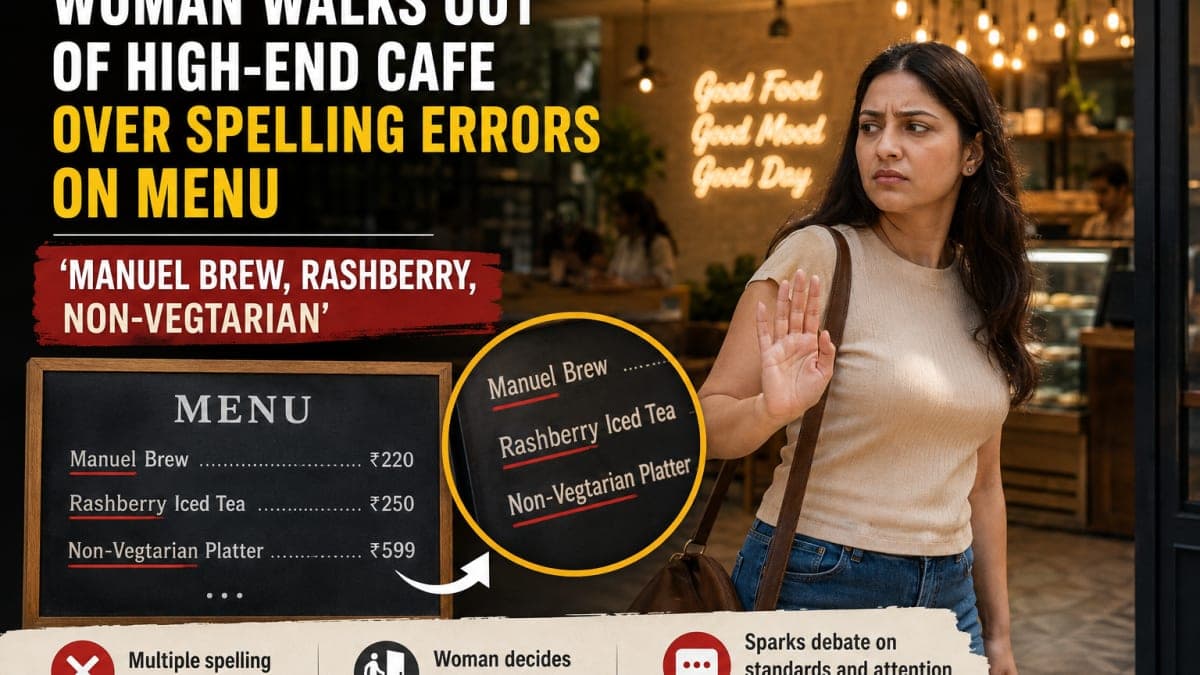
In this case, a woman reportedly chose not to continue her visit after encountering multiple spelling mistakes on the cafe’s menu. Among the unusual terms that caught her attention were “Manuel Brew,” “Rashberry” and “Non-Vegtarian.”
The errors apparently made enough of an impression that she decided to walk out rather than place an order.
While spelling mistakes may seem minor compared with the quality of food or service, the incident highlights how small presentation issues can influence a customer’s perception of an establishment—particularly when that establishment positions itself in the premium segment.
Why Menu Accuracy Matters for Restaurants
A menu serves several purposes beyond simply displaying available dishes. It communicates a restaurant or cafe’s identity, pricing, ingredients and overall level of professionalism.
Customers visiting expensive or high-end establishments generally expect polished presentation. When obvious mistakes appear in prominent customer-facing material, some diners may question whether the same lack of attention extends to other aspects of the business.
That does not necessarily mean spelling errors reflect poor food quality or hygiene. A typo can result from a printing mistake, rushed editing or inadequate proofreading. However, customers often form opinions before tasting anything, making menu design an important part of the dining experience.
Social Media Has Made Small Mistakes More Visible
The rise of social media has dramatically increased the visibility of unusual restaurant experiences. A menu error that might once have been noticed by only a handful of diners can now become a talking point among thousands of internet users.
Unusual spellings, confusing descriptions and awkward translations regularly attract attention because they are easy to photograph and share.
For hospitality businesses, this means seemingly minor errors can quickly become part of their public image.
Was Walking Out Justified?
The episode also raises a subjective question: Should spelling mistakes be enough to abandon a restaurant or cafe?
There is no universal answer.
Some customers may consider such mistakes harmless and focus entirely on food, service and value for money. Others may see a poorly proofread menu as inconsistent with the standards expected from an establishment charging premium prices.
Both reactions reflect different priorities rather than an objective measure of the cafe’s overall quality.
Importantly, spelling mistakes alone do not establish that the establishment had problems with food preparation, safety or service. Without evidence of broader shortcomings, conclusions about those areas would go beyond what the incident itself demonstrates.
Why the Incident Matters
The episode offers a simple lesson for hospitality businesses: details contribute to brand perception.
Premium restaurants and cafes do not sell food alone. Customers also pay for atmosphere, presentation, service and a carefully designed experience. Something as basic as proofreading a menu can therefore become part of maintaining credibility.
At the same time, the incident demonstrates how quickly individual consumer experiences can shape online conversations. In an environment where customers can instantly share what they see, restaurants have an additional incentive to regularly review menus, signs and other customer-facing material.
Balanced Analysis
The cafe should not necessarily be judged solely on a handful of spelling mistakes. Typographical errors happen across businesses of every size, and they provide little evidence about the actual taste or quality of the food.
However, expectations change when a venue markets itself as high-end. Customers paying premium prices may reasonably expect stronger attention to detail.
The broader takeaway is less about whether one customer was right or wrong to leave and more about how presentation influences trust. For hospitality brands, even small details can become significant when they are part of the customer's first impression.