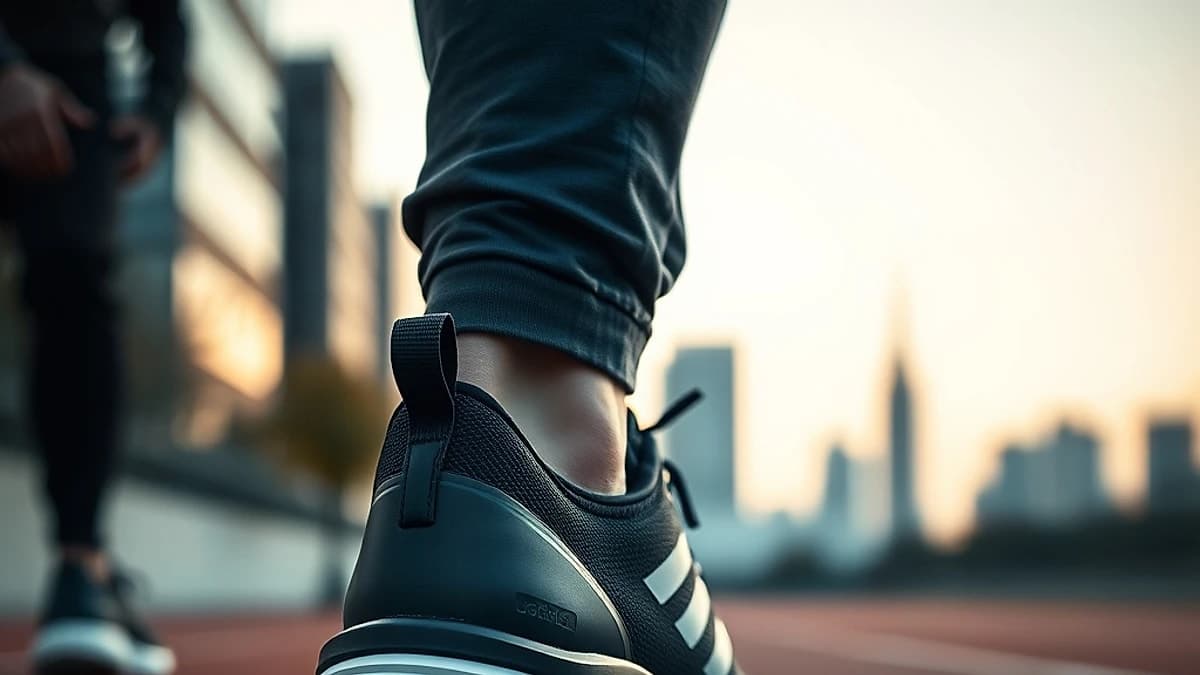
The new Adidas Hyperboost Edge arrives with a towering 45 mm heel stack, a proprietary Hyperboost Pro foam and a price that rivals elite racing models. Early testers say the shoe delivers plush cushioning and a springy feel without the stiffness of carbon plates, yet the high stack and premium cost raise questions about its everyday practicality.
At a retail price of ₹19,999, the Edge sits in a niche between budget daily trainers and top‑tier competition footwear. Its 255‑gram weight keeps it light for its volume, but the pronounced heel‑to‑toe drop and bulky silhouette may deter casual joggers who prefer a lower profile.
Overview
Adidas markets the Hyperboost Edge as a daily workhorse built around its new Hyperboost Pro foam. The foam promises maximum cushioning and energy return while staying light enough for long mileage. The shoe’s stack height measures 45 mm at the heel and 39 mm at the forefoot, creating a modest 6 mm drop that favors a heel‑first strike pattern.
Design cues are unmistakably performance‑oriented: a sleek, slightly aggressive upper, reflective detailing and a minimalist outsole that emphasizes propulsion. Despite the generous midsole, the shoe’s total mass is 255 grams, a figure that undercuts many similarly cushioned competitors.
The Detail
Hyperboost Pro foam is the core of the Edge’s engineering. Adidas claims the material delivers “high performance” cushioning without the trade‑offs of weight or sluggishness. Unlike many recent trainers that rely on a carbon fiber plate to stiffen the midsole and create a propulsive lever, the Edge lets the foam itself manage the gait cycle. The result is a shoe that feels soft yet responsive, avoiding the “mushy” sensation that can plague overly plush trainers.
In practice, the foam’s bounce becomes evident after the first few strides. Initial impressions may feel awkward because of the thick heel, especially when walking or climbing stairs. Testers reported a brief sense of instability as the ankle adjusts to the elevated heel, but the sensation fades once the runner settles into a steady cadence.
Running performance data from a week‑long trial shows the Edge delivering the fastest 10 km time for the reviewer, accompanied by noticeably reduced knee strain. The cushioning appears to absorb impact forces efficiently, allowing the runner to maintain a smoother stride without the harshness often associated with carbon‑plate shoes.
Durability remains a point of observation. The outsole features a rubber compound designed for high‑traction road use, but the emphasis on cushioning means the shoe may compress over extensive mileage. Adidas has not disclosed a specific mileage warranty, leaving long‑term wear patterns to be determined by real‑world users.
Fit and Comfort
The upper combines engineered mesh with synthetic overlays for a secure yet breathable fit. The tongue and collar are padded, helping to cradle the foot despite the high stack. However, the shoe’s pronounced heel height can cause a slight forward lean, prompting some wearers to adjust lacing techniques to secure the midfoot.
Overall, the Hyperboost Edge feels most at home during sustained runs rather than casual walks. The cushioning is generous enough to protect joints during high‑volume training, but the bulk makes it less suitable for everyday errands or office wear.
The Context
Running shoe technology has accelerated dramatically in the past five years, with carbon plates, zoom‑air units and ultra‑light foams redefining performance benchmarks. Brands such as Nike, Saucony and Hoka have built entire lineups around these innovations, often pricing them above ₹20,000 for elite models.
Adidas’ strategy with the Edge appears to diverge from the “plate‑first” trend. By focusing on foam alone, the company aims to capture runners who dislike the rigid feel of plates but still desire a high‑energy return. This aligns with a broader market segment that values comfort for high‑volume training over the marginal speed gains offered by stiff plates.
Pricing the Edge at ₹19,999 places it alongside premium racers like the Nike ZoomX Vaporfly, yet the Edge lacks the carbon plate that justifies those price points for many athletes. The decision signals Adidas’ confidence in foam technology to command a premium, betting that serious marathoners will prioritize cushioning longevity over the stiffness of a plate.
In India’s sneaker market, where price sensitivity remains high, the Edge’s cost may limit adoption to affluent enthusiasts and professional coaches. Competing models from local brands often provide comparable cushioning for a fraction of the price, though they may not match the Edge’s weight or brand cachet.
The Other Side
Critics point out that the Edge’s towering midsole can alter natural biomechanics, potentially increasing the risk of ankle twists during non‑running activities. The shoe’s aesthetic, while sporty, clashes with casual attire, reducing its versatility as an all‑day sneaker.
Moreover, the absence of a carbon plate means the shoe may not deliver the same level of energy efficiency for race‑day efforts. Runners seeking a performance edge in competitive settings might still gravitate toward plated models despite the Edge’s comfort advantages.
Unanswered questions remain about long‑term durability. The Hyperboost Pro foam’s compression resistance over 500‑plus kilometers has not been publicly quantified, leaving prospective buyers to rely on anecdotal reports.
Key Takeaways
The Hyperboost Edge uses a 45 mm heel stack of Hyperboost Pro foam, delivering plush cushioning without a carbon plate.
Weighing 255 grams, the shoe remains lightweight for its volume, supporting long‑distance comfort.
At ₹19,999, the price aligns with elite racers, yet the shoe is positioned as a daily trainer rather than a competition shoe.
Run‑specific performance improves, with reviewers noting faster 10 km times and reduced knee strain.
Casual use may feel awkward due to the high heel and aggressive silhouette, limiting everyday wearability.
Where This Goes
If Adidas continues to refine foam‑only designs, the Hyperboost Edge could herald a new sub‑category of high‑cushion, plate‑free trainers aimed at high‑volume marathoners. Future iterations may address the heel height and improve versatility, potentially lowering the price to attract a broader consumer base.
For now, the Edge stands as a premium option for runners who prioritize joint protection and comfort over the marginal speed gains of carbon plates. Its success will likely depend on how the market balances price, performance and everyday practicality.
This article is based on reporting published by livemint.