Mumbai, October 1, 2026: The Reserve Bank of India’s recent activity in the foreign-exchange market is having an important side effect: dollar funding has become comparatively cheaper for some Indian corporate borrowers.
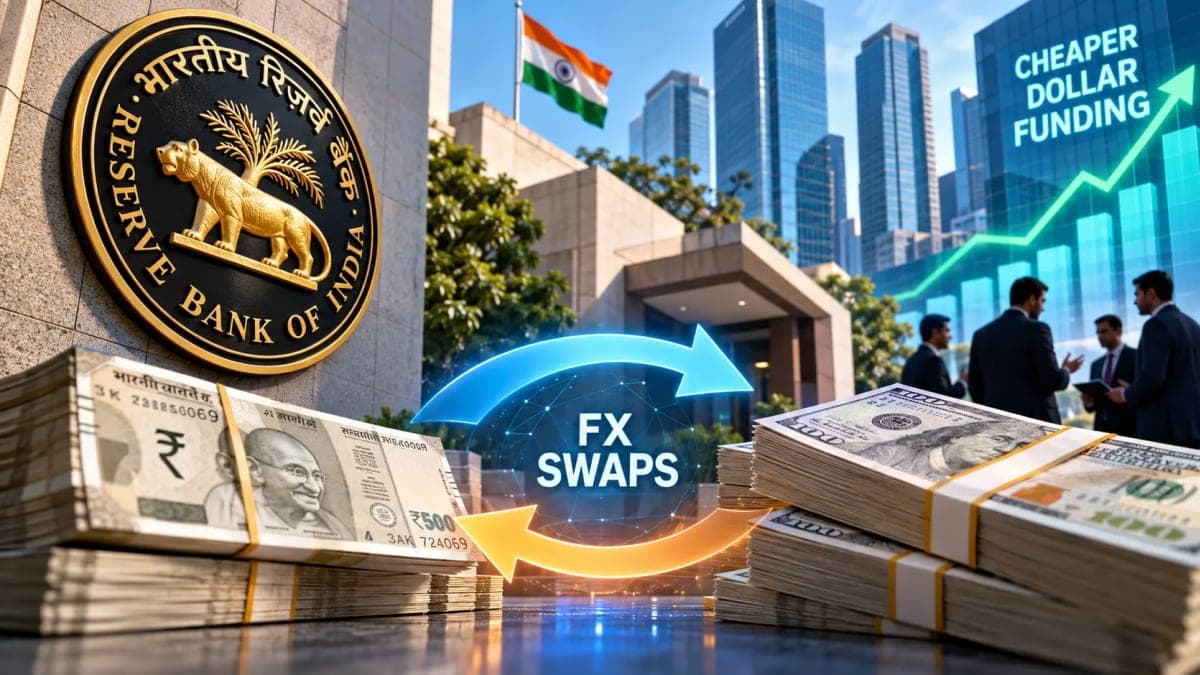
The RBI has been using dollar-rupee swaps as part of its effort to manage surplus rupee liquidity in the banking system. Those transactions have pushed foreign-exchange forward premiums higher across several maturities. According to Reuters, implied rates on two-, three- and five-year rupee-dollar swaps have risen by roughly 90 to 110 basis points.
That shift has altered the relative cost of borrowing in rupees versus borrowing dollars directly from overseas markets.
How Companies Can Turn Rupee Debt Into Dollar Funding
The structure being discussed by banks starts with an Indian company raising money domestically through instruments such as a rupee loan, commercial paper or non-convertible debentures.
The borrower can then enter into a cross-currency swap with a bank, exchanging the rupee-linked cash flows for dollar-linked obligations. Economically, the arrangement can transform a rupee liability into dollar exposure without requiring the company to raise the original loan directly from an overseas lender.
Banks are now approaching corporate borrowers with such structures, according to market participants cited by Reuters. Recent structures reviewed by the news agency indicated that the effective dollar cost could fall below prevailing direct dollar-funding rates, although the actual advantage depends on factors including maturity, credit quality and borrowing spreads.
Why the Opportunity Has Emerged Now
Two market developments have helped create the gap.
First, RBI swap operations have pushed forward premiums higher. Second, direct dollar borrowing has become more expensive as US Treasury yields have risen amid inflation concerns, oil-price pressures and expectations of further tightening by the US Federal Reserve.
The combination means a company capable of borrowing competitively in India's domestic market could potentially raise rupees first and then use the derivatives market to convert that funding into dollars at a more attractive overall cost.
A separate Mint report illustrated the changing economics: it said a five-year AAA-rated corporate might face dollar borrowing costs of roughly 6%-6.2% overseas, while certain rupee borrowing-and-swap structures could produce a lower effective dollar cost under current market conditions.
The precise saving, however, is not universal. It varies according to the company's credit rating, domestic and offshore borrowing spreads, swap pricing and maturity.
Which Companies Could Benefit?
The opportunity is particularly relevant to companies that genuinely need dollars—for example, businesses with overseas operations, foreign-currency expenses or dollar revenues.
Indian regulations allow qualifying companies with rupee liabilities to use currency swaps to transform those obligations into foreign-currency exposure, subject to applicable eligibility and risk-management requirements.
Companies with natural dollar income may also be better positioned to manage the resulting currency exposure than businesses whose revenues are almost entirely in rupees.
Corporate borrowers are generally examining structures of up to about three years, Reuters reported, while bank asset-liability management desks are also studying longer-dated structures for funding overseas and GIFT City operations.
Why RBI’s Role Matters
The RBI did not necessarily create these corporate structures directly. Instead, its operations have changed pricing in the foreign-exchange forward market.
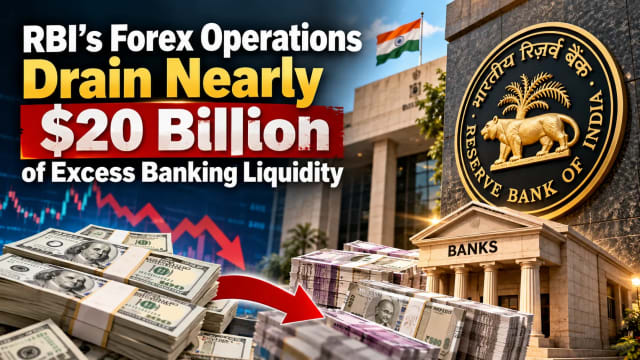
The central bank has recently been using sell-buy dollar-rupee swaps and other measures to absorb excess rupee liquidity. Reuters reported separately that RBI foreign-exchange operations helped drain nearly $20 billion worth of surplus liquidity, while also lifting forward premiums.
That market movement has produced a funding opportunity for companies and banks able to take advantage of the difference between domestic borrowing costs, overseas dollar rates and cross-currency swap pricing.
Cheaper Funding Does Not Mean Risk-Free Funding
The strategy comes with important qualifications.
Currency swaps are derivatives whose market value can change as interest rates, forward premiums and exchange rates move. Companies may therefore face mark-to-market fluctuations during the life of the transaction.
Accounting treatment can also matter. Mint reported that where a company cannot apply hedge accounting, mark-to-market gains or losses associated with the swap may flow through its quarterly profit-and-loss statement, potentially increasing reported earnings volatility.
Companies must therefore consider more than the headline borrowing rate. Credit spreads, swap counterparties, liquidity, accounting treatment, maturity mismatches and the company's underlying foreign-currency exposure can all influence whether the structure makes economic sense.
What It Means for India’s Corporate Funding Market
The development demonstrates how central-bank liquidity operations can affect financing conditions well beyond the immediate foreign-exchange market.
If the pricing advantage persists, companies with suitable foreign-currency requirements may have another route for diversifying funding instead of depending exclusively on conventional overseas dollar loans or bonds.
However, the opportunity is market-dependent. Forward premiums, Indian interest rates and US borrowing costs can all change, narrowing or even eliminating the advantage.
For now, elevated forward premiums combined with expensive direct dollar borrowing have created a window in which the rupee-borrowing-plus-swap route can be cheaper for certain Indian companies.
Balanced Analysis
The immediate benefit is potentially lower funding costs and greater flexibility for companies with legitimate dollar requirements. It could also encourage firms to compare domestic debt markets with international borrowing rather than treating them as completely separate funding channels.
But this should not be interpreted as universally cheap dollar financing for Indian companies. The economics depend heavily on credit quality, maturity, prevailing interest rates and swap pricing. Companies without natural foreign-currency exposure may also face greater risk from taking on dollar-linked liabilities.
The longer-term significance will therefore depend on whether elevated forward premiums persist and whether companies actually execute the structures now being marketed by banks.