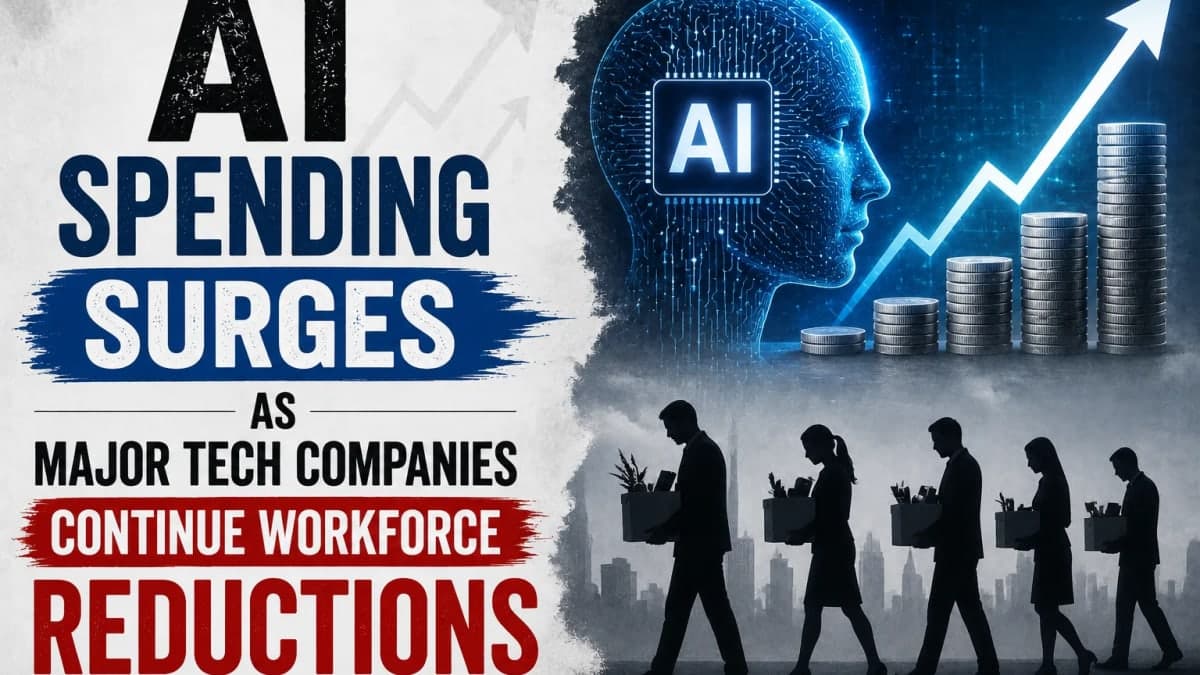
AI Spending Surges as Major Tech Companies Continue Workforce Reductions
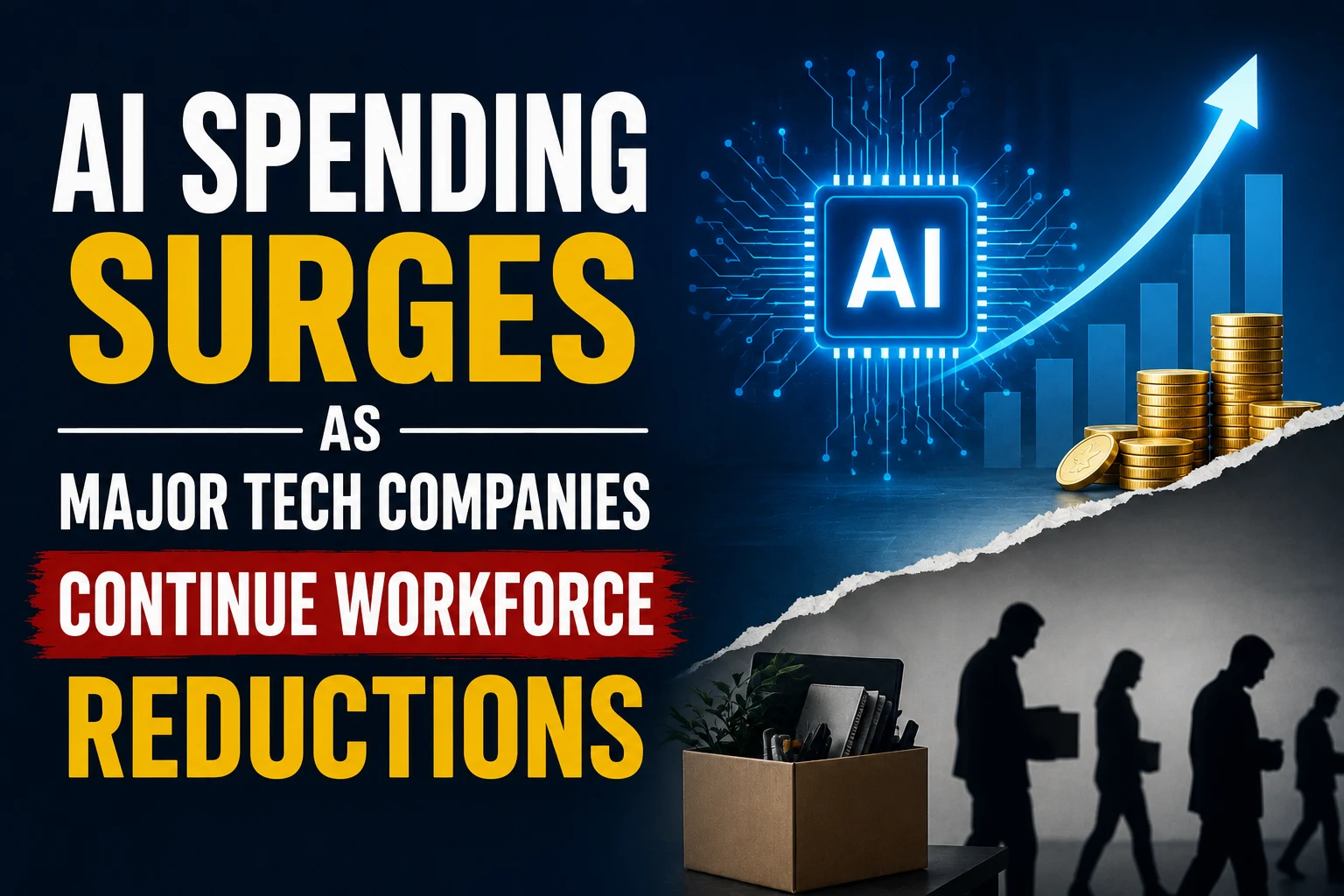
The world's largest technology companies are significantly increasing investments in artificial intelligence while simultaneously reducing thousands of jobs across different business units. The contrasting trend highlights the industry's strategic shift toward AI-driven growth, even as companies streamline operations and reassess workforce requirements.
Over the past two years, major technology firms have committed substantial resources to AI infrastructure, advanced computing systems, and next-generation software platforms. At the same time, several companies have continued workforce restructuring efforts, affecting employees across engineering, operations, sales, support, and administrative functions.
AI Becomes the Top Investment Priority
Artificial intelligence has emerged as the centerpiece of corporate technology strategies. Companies are allocating larger portions of their budgets toward building powerful AI models, expanding data centers, purchasing high-performance chips, and developing enterprise AI products.
Executives increasingly view AI as a long-term growth engine capable of improving productivity, creating new revenue opportunities, and strengthening competitiveness in an increasingly digital economy.
The race to deploy AI capabilities has also intensified competition among technology companies seeking leadership in cloud computing, generative AI, automation, and intelligent software services.
Job Cuts Continue Alongside AI Expansion
Despite record spending on AI initiatives, many technology firms have continued reducing headcount through restructuring programs. Companies have often described these layoffs as part of broader efforts to improve operational efficiency, simplify organizational structures, and redirect resources toward higher-priority business areas.
While some positions are being eliminated, organizations are also hiring specialists in machine learning, data science, AI infrastructure, cybersecurity, and semiconductor engineering, reflecting changing talent requirements rather than a complete slowdown in recruitment.
Why the Shift Matters
The simultaneous rise in AI investment and workforce reductions has become one of the defining trends in the technology industry. Businesses are increasingly adopting automation to streamline repetitive tasks while expecting employees to focus on more complex, strategic, and creative work.
For workers, this transformation reinforces the growing importance of developing AI-related skills and adapting to changing workplace demands. For businesses, success will depend not only on deploying AI technologies but also on effectively integrating them into existing operations.
Impact on the Broader Economy
The trend extends beyond technology companies. Financial institutions, healthcare providers, manufacturers, retailers, and professional services firms are also investing heavily in AI-powered tools designed to improve efficiency and reduce operational costs.
As AI adoption accelerates, economists expect continued shifts in workforce composition, with demand increasing for highly specialized technical roles while certain routine functions become increasingly automated.
Opportunities and Challenges
Supporters argue that AI investment will drive innovation, improve productivity, and create entirely new industries and employment opportunities over time. They believe automation can eliminate repetitive work while enabling employees to concentrate on higher-value responsibilities.
Critics, however, warn that rapid workforce reductions may outpace job creation, particularly for employees whose skills do not immediately align with emerging AI-focused roles. They emphasize the need for reskilling initiatives, workforce development programs, and responsible adoption strategies to ensure the benefits of AI are broadly shared.
Balanced Analysis
The technology industry's current trajectory reflects a major structural transition rather than a temporary trend. Increased AI spending demonstrates strong confidence in the technology's long-term commercial potential, while ongoing workforce restructuring illustrates how companies are reallocating resources to support that future.
Whether AI ultimately creates more jobs than it replaces will depend on how businesses, governments, and educational institutions prepare workers for evolving skill requirements. In the years ahead, investment in human capital may prove just as important as investment in artificial intelligence itself.