AU Small Finance Bank, Zaggle Enter Retail Credit Card Market
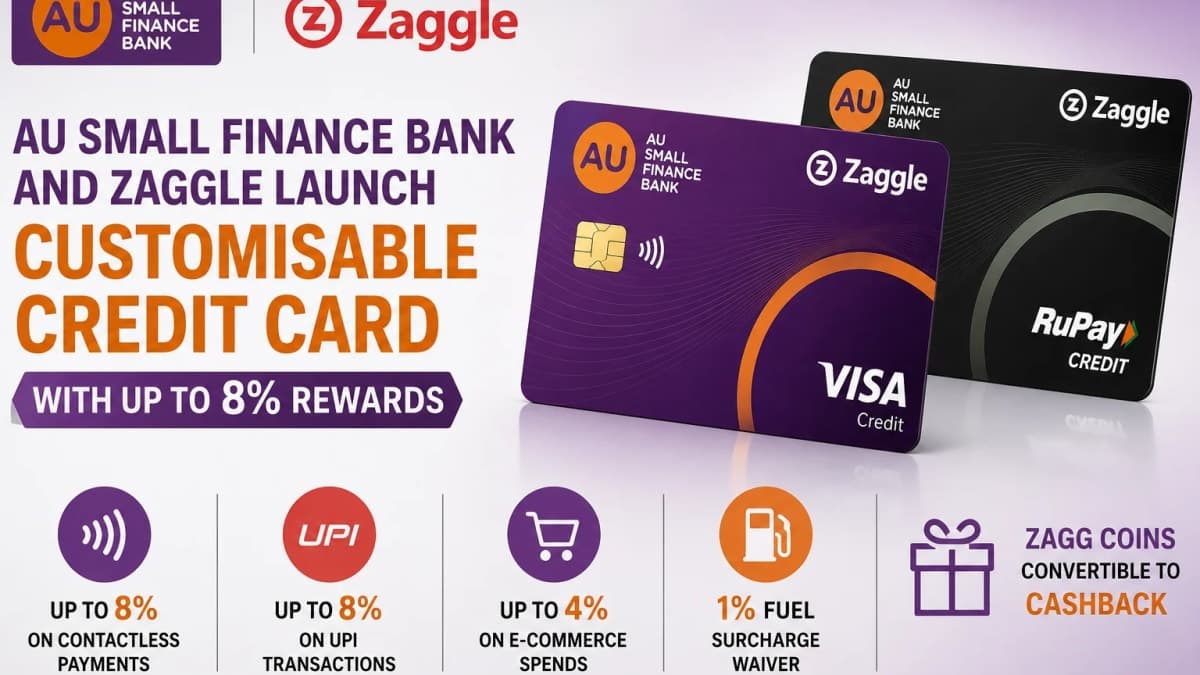
AU Small Finance Bank and Zaggle Prepaid Ocean Services Limited announced the launch of their co-branded retail credit card on July 9, 2026.
The new product combines AU Small Finance Bank’s credit-card infrastructure and risk-management capabilities with Zaggle’s digital rewards and customer-engagement technology. The companies are positioning the card as a flexible product for consumers who increasingly use UPI, contactless payments and e-commerce platforms for everyday spending.
Key Features of the AU Zaggle Credit Card
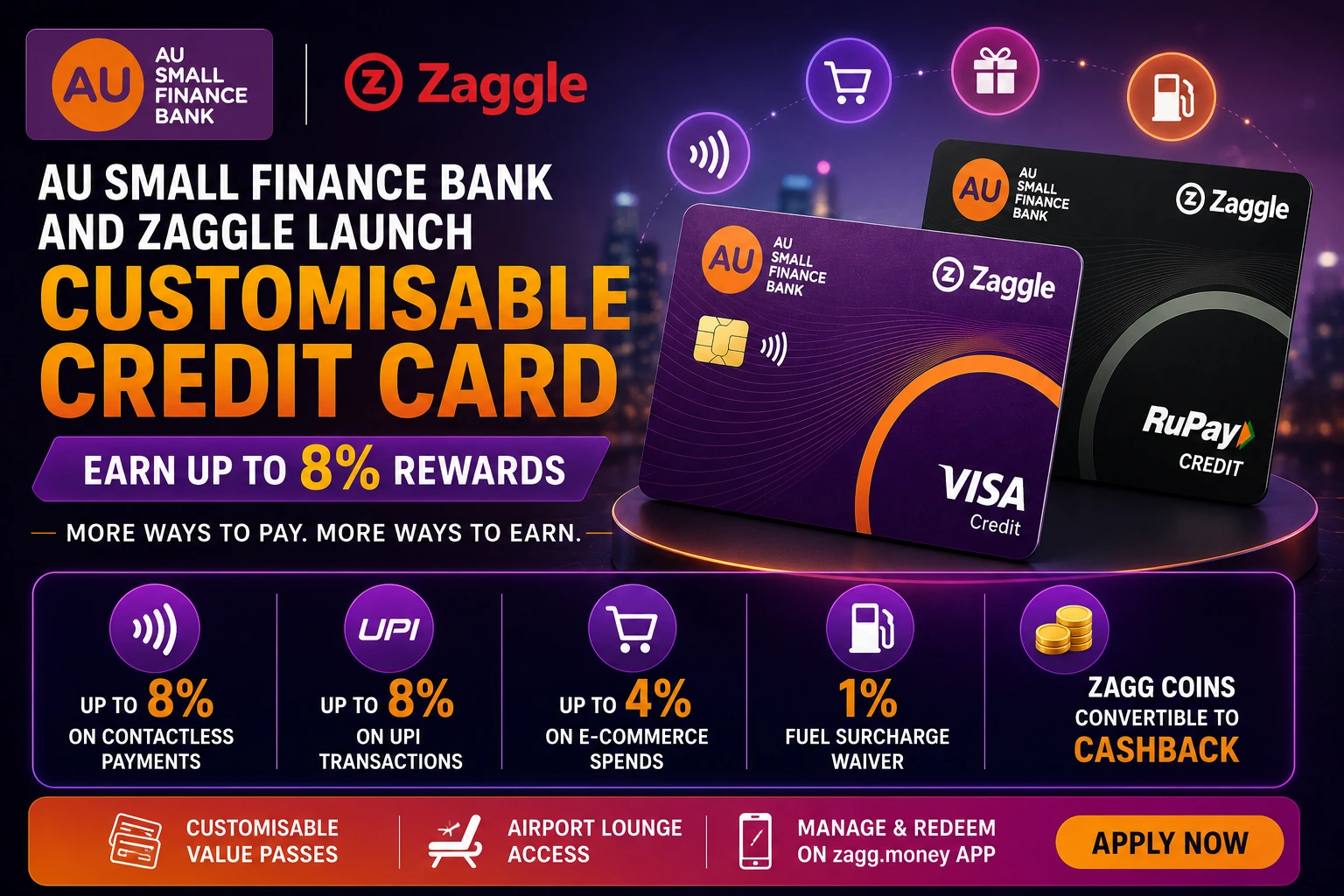
Up to 8% Zagg Coins on Contactless Payments
Customers choosing the Visa variant can earn up to 8% in Zagg Coins when making eligible contactless payments.
The feature is aimed at encouraging tap-and-pay transactions at physical stores and other compatible merchant locations. Actual rewards may depend on the card’s applicable terms, qualifying transactions and any spending conditions.
Up to 8% Zagg Coins on UPI Spending
The RuPay version offers up to 8% Zagg Coins on eligible UPI transactions completed through the zagg.money application.
This feature makes the card particularly relevant for users who frequently make QR-code and merchant payments through UPI while preferring to route those purchases through a credit line.
Rewards on E-Commerce Purchases
Cardholders can earn up to 4% Zagg Coins on qualifying e-commerce transactions.
The online-shopping benefit broadens the card’s rewards structure beyond UPI and contactless payments, although users should review merchant categories, reward limits and excluded transactions before applying.
Fuel Surcharge Waiver
The card includes a 1% fuel-surcharge waiver on eligible fuel transactions.
The benefit may reduce part of the additional charge associated with card payments at petrol pumps. However, such waivers typically remain subject to transaction-value limits, monthly caps and applicable taxes.
Zagg Coins Can Be Converted Into Cashback
A major feature of the card is its coins-to-cashback system.
Customers can convert accumulated Zagg Coins into cashback through the zagg.money app. The converted amount is then credited directly to the cardholder’s credit card account, making the reward system easier to understand than programmes that restrict points to selected merchandise or travel portals.
Visa and RuPay Variants Offer Different Spending Benefits
The AU Zaggle Credit Card is being issued on both Visa and RuPay networks, allowing applicants to select a version based on their payment habits.
The Visa card places greater emphasis on contactless transactions, while the RuPay version is designed to reward UPI payments made through the company’s application. This choice could appeal to users who want rewards aligned with the way they already spend.
Customisable Value Passes Add Category Benefits
The card also introduces optional value passes that allow customers to unlock additional benefits in selected spending categories.
These passes may cover groceries, dining, utility payments, entertainment and travel. Depending on the activated pass, customers may also receive access to vouchers, airport-lounge benefits and category-specific privileges through the zagg.money app.
The approach differs from conventional credit cards that offer a fixed package of benefits to every user. Instead, cardholders can select benefits that more closely match their lifestyle and regular expenses.
How Customers Can Access the Card
The companies plan to distribute the card through the zagg.money application, Zaggle’s website and assisted sales channels.
Zaggle may also promote the product among employees of companies within its corporate network. The partnership therefore gives AU Small Finance Bank access to Zaggle’s existing digital and corporate ecosystem while allowing Zaggle to expand further into consumer financial services.
Background
AU Small Finance Bank began banking operations in 2017 and has expanded its business across deposits, loans, payments and credit cards. The bank has also received in-principle approval from the Reserve Bank of India to transition into a universal bank.
Zaggle operates as a spend-management and financial-technology company offering prepaid cards, employee benefits, tax solutions and enterprise payment products. The co-branded card represents a significant move into the consumer retail credit-card segment.
The two companies had previously announced their strategic partnership in September 2025, with plans to develop co-branded retail credit and prepaid-card products.
Why This Launch Matters
India’s credit-card market is becoming increasingly connected with UPI, mobile applications and personalised rewards.
By combining traditional credit-card spending with UPI-based rewards, the AU Zaggle card reflects a broader industry effort to make credit cards more relevant for customers who primarily use digital payments.
The ability to choose between payment networks and activate category-based passes could also increase competition among banks and fintech firms offering customisable card products.
Balanced Analysis
The AU Zaggle Credit Card offers potentially attractive reward rates, particularly for users who frequently make contactless, UPI or e-commerce payments. Direct conversion of Zagg Coins into statement cashback may also make the reward programme more practical.
However, headline reward rates do not necessarily apply to every transaction. Customers should examine the joining fee, annual fee, spending thresholds, maximum monthly rewards, excluded merchant categories, value-pass subscription costs and redemption conditions before applying.
The card may provide meaningful value to consumers whose spending matches the promoted categories. Users with irregular spending or limited use of the zagg.money app may find the benefits less compelling.
Important Points to Check Before Applying
Prospective customers should review the official terms covering:
Joining and renewal fees
Eligibility criteria and credit limits
Reward caps and expiry rules
Value-pass charges
Lounge-access conditions
UPI and contactless transaction eligibility
Fuel-waiver limits
Interest rates and late-payment charges
Responsible usage remains important because unpaid credit-card balances can attract high interest charges, potentially outweighing the value of rewards or cashback.