हिंदी में पढ़ें —JantaScope हिंदी
Finance

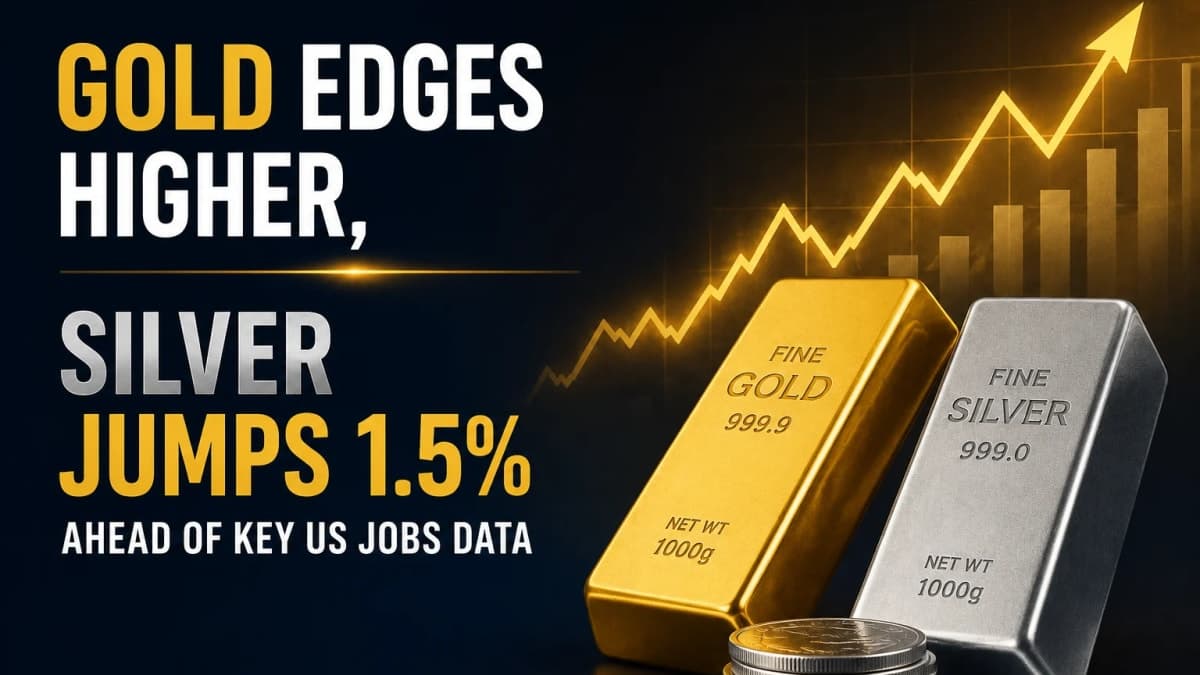
Gold Edges Higher, Silver Jumps 1.5% Ahead of Key US Jobs Data

Gold prices moved modestly higher while silver recorded a stronger 1.5% jump as investors positioned themselves ahead of key US employment data. The upcoming jobs figures are being closely watched because they could influence expectations around interest rates, the US dollar and the near-term direction of precious metals.

Gold Edges Higher, Silver Jumps 1.5% Ahead of Key US Jobs Data

By Jeet Nirmal

Source: CNBC TV18

Gold and Silver Move Higher Ahead of US Jobs Report

Precious metals traded on a positive note, with gold edging higher and silver gaining 1.5% as attention shifted toward key US jobs data.

The contrasting moves highlighted a stronger advance in silver, while gold posted a comparatively measured rise. Investors are awaiting the employment figures for fresh signals about the condition of the US economy and the potential direction of monetary policy.

With major economic data approaching, traders often become more sensitive to changes in expectations surrounding interest rates, inflation and the US dollar. Those factors can have an important influence on precious-metal prices.

Why US Jobs Data Matters for Gold

US employment figures are among the economic indicators closely followed by financial markets because they can provide clues about the strength of the economy.

A resilient labour market can affect expectations about how long interest rates may remain elevated. Conversely, signs of weakening employment conditions can increase expectations for easier monetary policy.

That distinction matters for gold because the metal does not generate interest. When yields on interest-bearing assets rise, holding non-yielding assets such as gold can become relatively less attractive. Expectations of lower rates can have the opposite effect.

The relationship, however, is not automatic. Gold can also attract demand during periods of economic uncertainty, financial-market volatility or heightened demand for defensive assets.

Silver Outperforms With 1.5% Jump
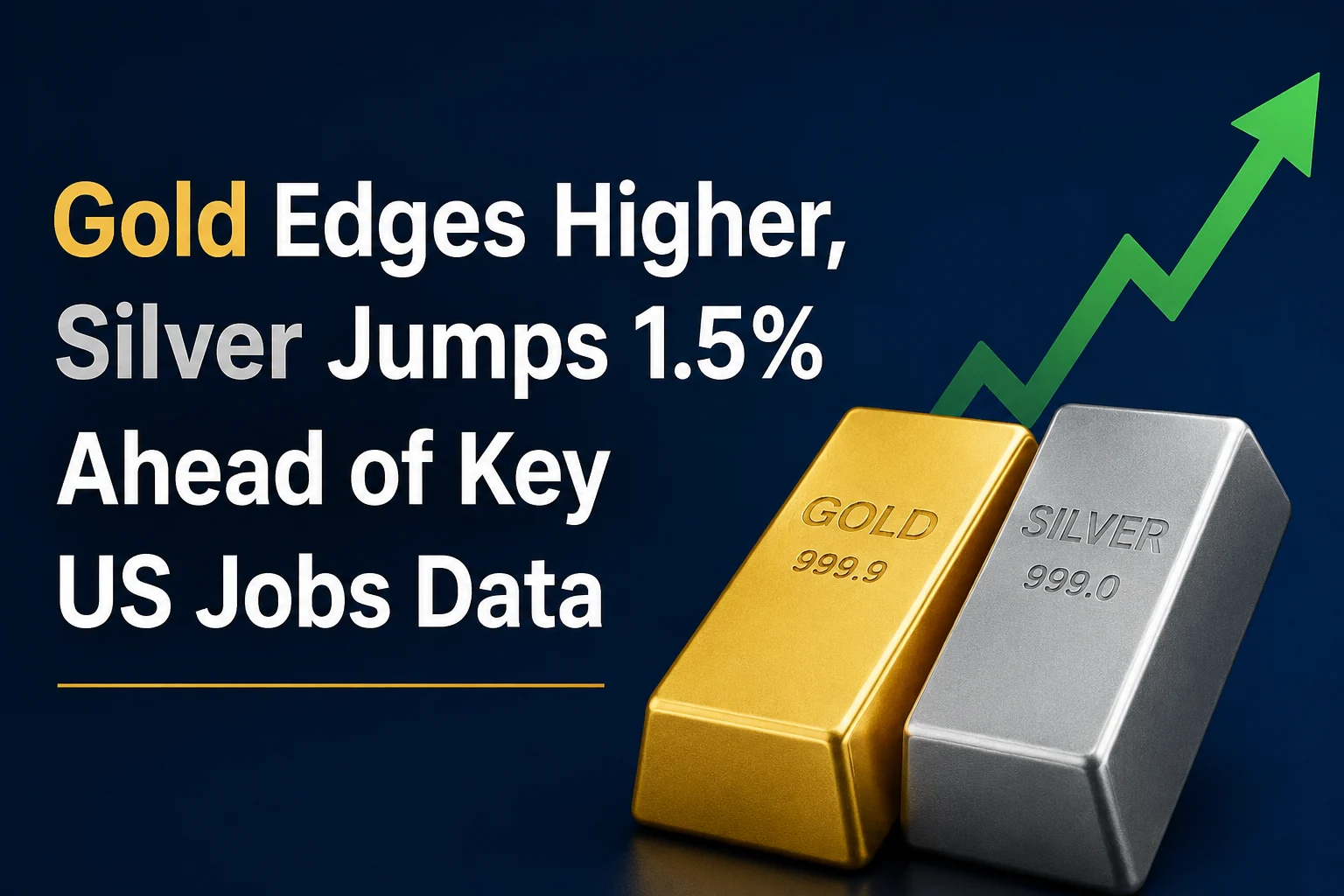
Silver's 1.5% increase stood out compared with gold's more modest advance.

Although silver is a precious metal, its market dynamics differ from gold because it also has significant industrial applications. As a result, its price can respond not only to monetary-policy expectations and currency movements but also to perceptions about industrial and economic activity.

Silver can also experience sharper percentage movements than gold, making its performance potentially more volatile in both directions.

Dollar and Interest-Rate Expectations in Focus

The US dollar is another important factor for precious metals.

Because internationally traded gold and silver are commonly priced in dollars, changes in the currency can influence demand from buyers using other currencies. A stronger dollar can create pressure on metal prices, while a weaker dollar can provide support, although other market forces can outweigh this relationship.

The upcoming jobs data could therefore influence precious metals indirectly by changing expectations for interest rates, bond yields and the dollar.

Why the Market Move Matters

The advance in gold and the sharper rise in silver show that investors are positioning ahead of an important economic data release rather than waiting for the figures before making moves.

The jobs report could become a short-term catalyst if the numbers significantly alter expectations about the US economy or monetary policy.

For gold investors, the focus will likely remain on the interaction between interest-rate expectations, bond yields, the dollar and demand for defensive assets. Silver investors may have to consider those same factors alongside the metal's sensitivity to industrial demand.

Balanced Outlook

The gains in precious metals do not necessarily establish a longer-term direction.

If US jobs data strengthens expectations that interest rates will remain elevated, precious metals could face pressure from higher yields or a firmer dollar. If the employment figures encourage expectations of easier monetary conditions, gold and silver could receive additional support.

Silver's stronger 1.5% move may indicate greater short-term momentum, but its typically higher volatility means gains can also reverse more sharply.

Until the employment figures provide clearer signals, precious-metal markets may remain sensitive to shifts in economic expectations.

This article is based on reporting published by CNBC TV18.

Related

More stories

Indian Government Bond Yields Stay Under Pressure as RBI Rate Outlook and Oil Risks Weigh on Market

Indian government bond yields remained elevated on Tuesday as investors weighed a more cautious monetary-policy outlook from the Reserve Bank of India, movements in global crude oil prices and uncertainty across international bond markets. The benchmark 10-year yield hovered around 6.87%-6.88%, keeping borrowing-cost concerns in focus.

Finance

Indian Government Bond Yields Stay Under Pressure as RBI Rate Outlook and Oil Risks Weigh on Market

India’s Forex Reserves Jump Nearly $10 Billion to Six-Month High of $716.9 Billion

India’s foreign exchange reserves climbed to a six-month high of $716.9 billion in the week ended August 14, 2026, rising by nearly $10 billion from the previous week. The increase was led by higher foreign currency assets and gold holdings, strengthening the country’s financial cushion amid volatility in global currency and commodity markets.

Finance

India’s Forex Reserves Jump Nearly $10 Billion to Six-Month High of $716.9 Billion

Indian Banks Raise $12 Billion Overseas as RBI Swap Window Sparks Funding Rush

Indian banks have raised about $12 billion from overseas debt markets in 2026, taking advantage of strong international demand for Indian banking debt and a special foreign-exchange swap facility introduced by the Reserve Bank of India (RBI). The surge has accelerated ahead of an important deadline for eligible foreign-currency deposits and highlights lenders’ growing ability to tap global pools of capital.

Finance

Indian Banks Raise $12 Billion Overseas as RBI Swap Window Sparks Funding Rush

RBI Opens Door for LIC to Nearly Double HDFC Bank Stake — What the 9.99% Approval Really Means

The Reserve Bank of India has approved Life Insurance Corporation of India’s request to increase its holding in HDFC Bank to as much as 9.99%. LIC held 4.11% of the private-sector lender as of August 14, 2026, meaning the regulatory clearance gives India’s largest insurer substantial room to increase its investment. The permission, however, does not mean LIC is required to purchase shares up to the approved limit immediately.

Finance

RBI Opens Door for LIC to Nearly Double HDFC Bank Stake — What the 9.99% Approval Really Means

Why HDFC Bank Shares Are in Focus Today as Blue-Chip Buying Supports the Market

HDFC Bank shares remained firmly on investors’ radar on Monday, August 24, as buying in heavyweight blue-chip stocks helped Indian benchmark indices trade with a positive bias. The private-sector banking major was among the large-cap names supporting the market, even as investors remained cautious about geopolitical tensions, crude oil prices and upcoming global monetary-policy signals.

Finance

Why HDFC Bank Shares Are in Focus Today as Blue-Chip Buying Supports the Market

India’s Dollar-Deposit Trade Is Booming — Why Citigroup and Axis Bank Are Joining the Rush

Citigroup and Axis Bank have teamed up on a financing arrangement linked to foreign-currency deposits from non-resident Indians, highlighting how the Reserve Bank of India’s efforts to attract overseas dollars are creating new opportunities in cross-border banking. The structure could help amplify NRI dollar inflows while strengthening banks’ access to foreign-currency funding.

Finance

India’s Dollar-Deposit Trade Is Booming — Why Citigroup and Axis Bank Are Joining the Rush