Indian Banks Turn to Global Markets for Billions in Funding
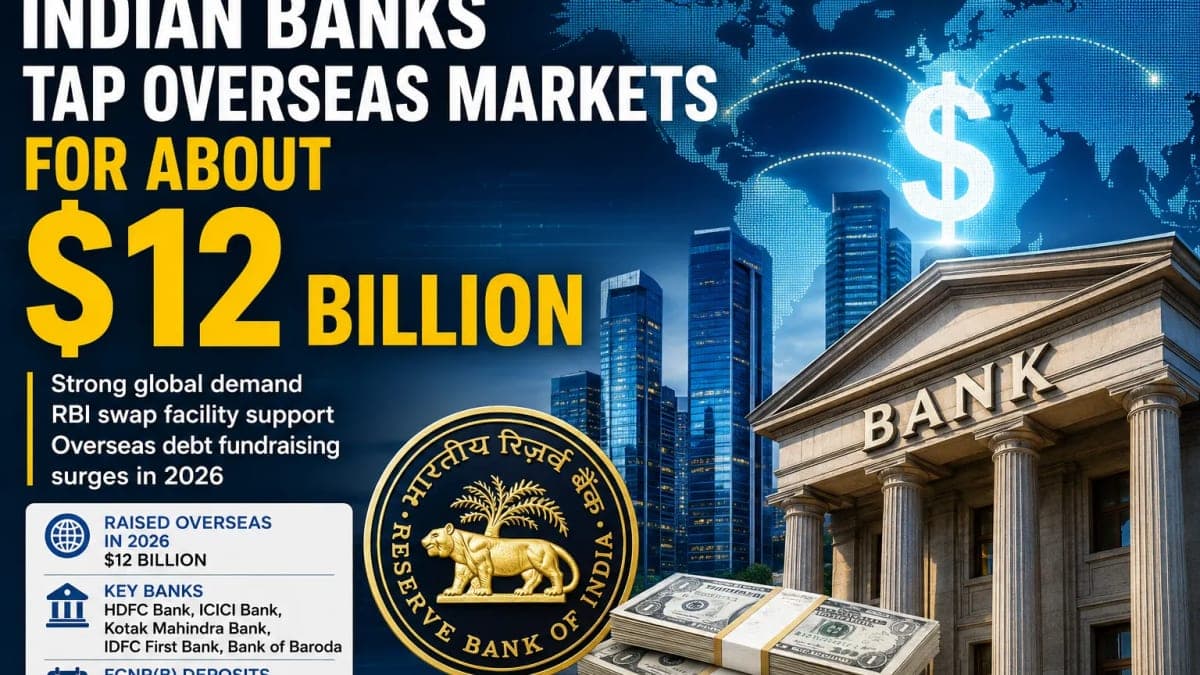
India’s banking sector is witnessing one of its strongest periods of overseas fundraising in years, with lenders raising roughly $12 billion abroad so far in 2026.
The fundraising wave comes as banks seek foreign-currency resources while taking advantage of supportive RBI measures and healthy global investor appetite for debt issued by established Indian financial institutions.
The activity has intensified sharply in recent weeks. HDFC Bank, ICICI Bank, Kotak Mahindra Bank, IDFC First Bank and Bank of Baroda collectively raised about $4.4 billion during one particularly active week, making it one of the busiest periods for foreign-currency debt issuance by Indian lenders this year.
RBI Swap Facility Helps Drive Overseas Borrowing
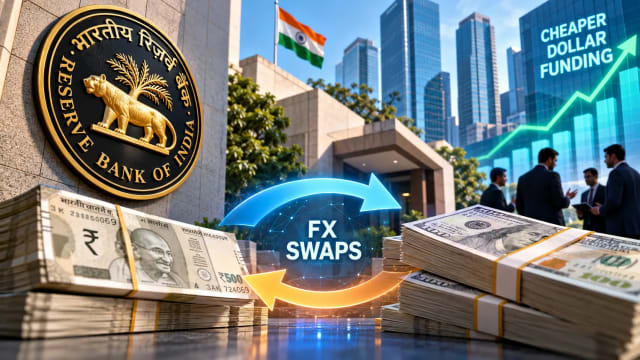
A major factor behind the fundraising momentum is the RBI’s special foreign-exchange swap arrangement.
The mechanism is connected with eligible Foreign Currency Non-Resident (Bank), or FCNR(B), deposits. These deposits allow non-resident Indians to hold money with Indian banks in foreign currencies.
Because banks ultimately have to repay these deposits in foreign currency, exchange-rate movements can create additional risk. The RBI swap mechanism helps participating lenders manage that currency exposure, improving the economics of raising foreign-currency funds.
FCNR(B) deposits booked by August 31, 2026 qualify for the relevant swap support, creating an incentive for banks to mobilise funds before the deadline.
HDFC Bank Leads Recent Fundraising
HDFC Bank has emerged as one of the largest participants in the current overseas borrowing cycle.
The lender recently raised $1.75 billion, following an earlier $750 million fundraising in June. Other banks have also increased the size of their overseas transactions as demand from investors remained strong.
The scale of these deals suggests that major Indian banks continue to enjoy meaningful access to international debt markets even as global financial conditions remain sensitive to interest rates, currencies and geopolitical risks.
India's Foreign Debt Issuance Accelerates
The banking-sector fundraising is also contributing to a much broader rise in India's international debt issuance.
Overall overseas debt raised from India during 2026 has reached around $17 billion, according to reported figures. That compares with approximately $5 billion in 2025, while the 2021 total was about $22 billion.
If issuance remains strong through the rest of the year, 2026 could therefore become one of India's more significant years for international debt-market activity.
Why Are Global Investors Buying Indian Bank Debt?
Strong investor participation is important because it can allow banks to raise larger sums without having to offer excessively expensive borrowing terms.
Several factors may be supporting demand, including the financial position of major Indian lenders, India's economic growth outlook and international investors' search for relatively attractive yields from established emerging-market issuers.
For banks, diversifying funding beyond domestic deposits and local bond markets can also provide greater flexibility in managing their balance sheets.
Why the $12 Billion Fundraising Wave Matters
The development has implications beyond the banks conducting the transactions.
Foreign-currency inflows can strengthen the availability of dollars within India's financial system. The RBI can also absorb some of these flows through foreign-exchange operations, which means the impact on the rupee is not necessarily straightforward.
Earlier analysis of the RBI's currency operations indicated that foreign-currency inflows raised by lenders can be passed to the central bank through swaps, while the RBI simultaneously manages its broader foreign-exchange position.
For lenders, overseas borrowing can provide an additional source of capital for funding requirements and help diversify liabilities across markets and currencies.
What Are the Risks?
The surge in foreign borrowing also deserves a balanced assessment.
International debt introduces exposure to changes in global interest rates, refinancing conditions and foreign-exchange markets. Hedging arrangements can reduce currency risk, but they do not eliminate every funding or refinancing challenge.
There is also a timing issue. Part of the current rush is linked to temporary RBI incentives. Once the special FCNR(B)-related window closes, the economics of issuing new overseas debt could become less attractive.
That means the exceptional pace seen during the current period should not automatically be viewed as a permanent shift in banks' funding strategies.
What Happens Next?
The August 31 deadline for eligible FCNR(B) deposits will be an important near-term milestone.
Banks may continue trying to capture favourable funding conditions before the window closes. After that, overseas issuance will increasingly depend on international interest rates, credit spreads, investor demand and individual banks' funding requirements.
The broader story, however, is significant: Indian banks have demonstrated that they can mobilise billions of dollars from international markets when regulatory incentives and investor demand align.
The roughly $12 billion raised overseas in 2026 therefore represents more than a short-term funding surge. It is also a sign of the increasingly close connection between India's banking system and global capital markets.
This article is based on reporting published by The Economic Times.