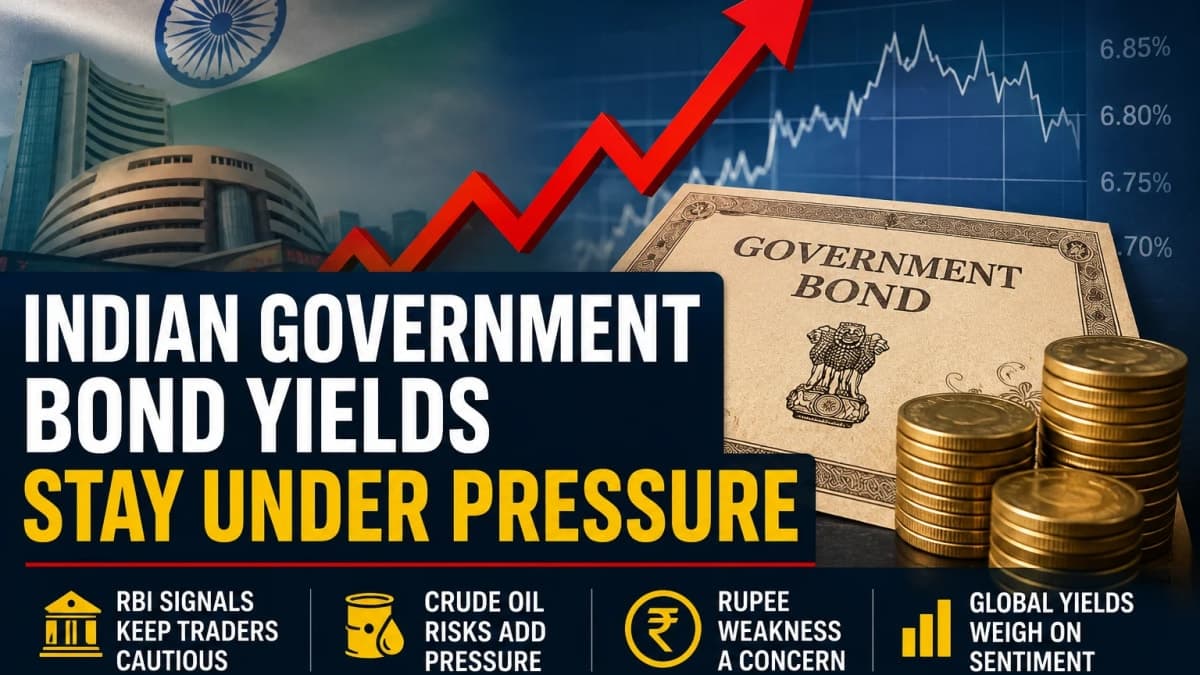
Indian Bond Market Remains Under Pressure
India's government bond market continued to face pressure on August 25, with the benchmark 10-year yield holding close to recent highs as traders assessed domestic monetary-policy signals alongside developments in global energy and fixed-income markets.
The 10-year government bond yield was trading around 6.87%-6.88%, compared with roughly 6.77% at the end of the week of August 7. This indicates that a significant portion of the bond-market recovery seen earlier in August has subsequently reversed.
Bond yields move inversely to prices, meaning persistent or rising yields generally reflect weaker bond prices and can translate into higher borrowing costs across parts of the economy.
Hawkish RBI Signals Change Rate Expectations
One of the biggest domestic influences has been the changing interpretation of the Reserve Bank of India's policy outlook.
Minutes from the RBI's August policy meeting prompted investors to reassess expectations for interest rates. Recent commentary and the policy discussion highlighted inflation risks and reduced confidence that further monetary easing would be available.
That matters because government bond prices are highly sensitive to expectations about future interest rates. When investors believe rates could remain elevated—or potentially rise sooner than previously expected—they generally demand higher yields for holding longer-term debt.
The shift in expectations has therefore created a tougher environment for bonds even without an immediate change in the policy rate.
Crude Oil Remains a Major Variable
Oil prices are another important factor influencing Indian debt markets.
India depends heavily on imported energy, meaning sustained increases in global crude prices can raise inflation risks and increase pressure on the country's external accounts. Higher inflation expectations can, in turn, reduce the likelihood of easier monetary policy and push bond yields upward.
Recent easing in crude prices has provided some relief. However, geopolitical uncertainty surrounding Iran and international sanctions continues to keep traders alert to the possibility of renewed volatility.
As a result, oil remains one of the most closely watched external indicators for Indian bond investors.
Rupee Pressure Adds Another Layer of Uncertainty
Currency-market developments are also influencing sentiment.
The Indian rupee has faced pressure from elevated oil prices and corporate demand for dollars. Traders reported that the RBI likely intervened in the foreign-exchange market on Tuesday to limit further depreciation.
A weaker currency can complicate the bond-market outlook because it can increase imported inflation and influence foreign investors' returns after currency conversion.
For overseas investors, attractive nominal bond yields may not necessarily translate into equally attractive returns if the rupee depreciates substantially.
India-US Yield Gap Draws Attention
Investors are also watching the narrowing gap between Indian and US government bond yields.
US Treasury yields remain elevated, reducing the relative yield advantage offered by emerging-market debt. The narrowing India-US yield spread can therefore affect how global investors evaluate Indian fixed-income securities compared with developed-market alternatives.
This does not automatically mean foreign investors will retreat from Indian debt. Credit conditions, currency expectations, economic growth and portfolio diversification all influence investment decisions.
However, a smaller yield premium can make the competition for global capital more intense.
Foreign Interest Provides a Counterweight
Despite near-term pressure, the broader outlook for Indian government bonds is not entirely negative.
Foreign investment had strengthened earlier in the year. Reuters reported in July that government securities attracted nearly $6.5 billion in foreign investment from the beginning of June, helping drive the benchmark 10-year yield down toward 6.73% at the time.
International asset manager Invesco has also expressed a bullish view on Indian government debt, with a preference for longer-duration bonds, indicating that some global investors continue to see value in the market despite recent volatility.
These factors could provide support if inflation risks moderate and the monetary-policy outlook becomes clearer.
Why Higher Government Bond Yields Matter
Movements in government bond yields extend beyond traders and institutional investors.
Government securities effectively provide a benchmark for pricing debt throughout the financial system. Persistently higher sovereign yields can eventually influence corporate bond rates, infrastructure financing and other long-term borrowing costs.
For the government, higher yields can also raise the cost of financing future borrowing.
At the same time, higher yields can make fixed-income securities more attractive to investors seeking income, particularly if inflation expectations remain controlled.
Balanced Outlook: Pressure Remains, but Support Factors Exist
The current bond-market environment reflects a contest between competing forces.
On one side are concerns about inflation, crude oil, currency weakness, global yields and a potentially less accommodative RBI. These factors can keep upward pressure on Indian yields.
On the other side, softer oil prices, institutional demand and continued interest from foreign investors could limit the extent of the sell-off.
The benchmark 10-year yield remaining near 6.87%-6.88% suggests investors are currently demanding greater compensation for duration and inflation risk than they were earlier in August.
The next major direction for the bond market is therefore likely to depend on how inflation, oil prices, RBI communication, the rupee and global interest-rate expectations evolve.
This article is based on reporting published by Reuters.