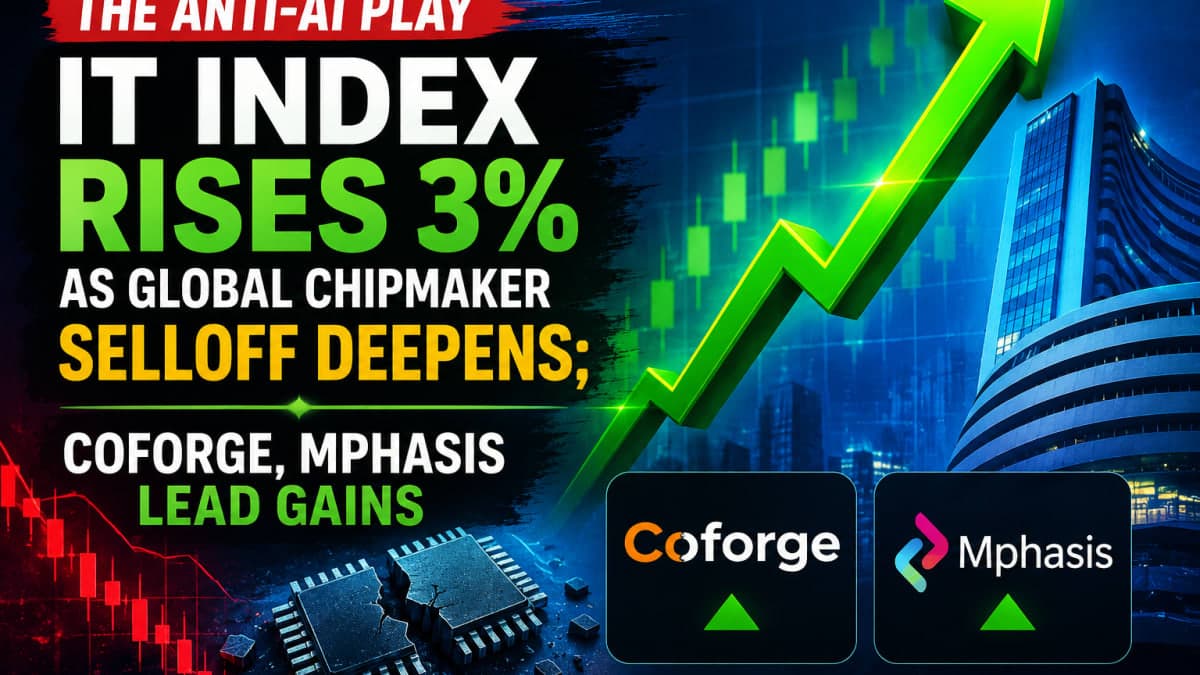
Indian IT Index Surges 3% as Investors Shift Away from Global Chipmakers
Indian information technology stocks witnessed a broad-based rally, with the sectoral IT index rising around 3% during the trading session. The gains came against the backdrop of a deepening selloff in global semiconductor stocks, prompting investors to rotate capital into software services companies viewed as relatively resilient.
Among the biggest beneficiaries of the shift in sentiment were Coforge and Mphasis, which outperformed many of their peers and helped drive the sector higher.
The move highlighted a changing market narrative, where investors looked beyond hardware-related volatility and instead favored companies with strong digital services capabilities and stable enterprise demand.
Software Stocks Benefit From Changing Market Sentiment
Global semiconductor companies have recently faced increased selling pressure due to concerns surrounding valuations, demand expectations, and broader uncertainty in the technology sector.
As chipmakers struggled, investors appeared to redirect funds toward IT services companies that generate revenue from software development, cloud migration, digital transformation, cybersecurity, and consulting.
Indian IT firms generally have less direct exposure to semiconductor manufacturing cycles, making them attractive alternatives during periods of hardware-related weakness.
Coforge and Mphasis Lead the Rally
Coforge and Mphasis emerged as the strongest performers during the session, reflecting renewed investor confidence in mid-tier IT companies with diversified client portfolios.
Market participants believe firms focused on digital engineering, cloud services, enterprise modernization, and artificial intelligence integration may continue attracting business despite broader uncertainty across the technology landscape.
Their gains also contributed to positive momentum across the wider Indian IT sector.
Background: Why Global Chip Stocks Are Under Pressure
Semiconductor companies have experienced heightened volatility in recent sessions as investors reassessed expectations surrounding artificial intelligence-driven growth and future earnings.
After an extended rally fueled by optimism around AI infrastructure and advanced computing, some investors have begun locking in profits while evaluating whether current valuations fully reflect future growth prospects.
The resulting decline in several global chip stocks has created ripple effects across international technology markets.
Why Indian IT Companies Are Responding Differently
Unlike semiconductor manufacturers, India's leading IT companies primarily generate revenue through long-term service contracts, software development, business consulting, and digital transformation projects.
Although global economic conditions influence client spending, these businesses are generally less dependent on hardware demand cycles.
As enterprises continue investing in cloud computing, cybersecurity, automation, and AI implementation, Indian IT firms may continue benefiting from sustained digital transformation initiatives.
What This Means for Investors
The sharp rise in the IT index suggests investors are becoming more selective within the technology sector.
Rather than treating technology as a single investment theme, markets are increasingly distinguishing between companies tied to semiconductor production and those providing enterprise software and digital services.
If global chip-related volatility continues, software-focused companies could remain relatively attractive, particularly those with healthy order books and diversified international clients.
Balanced Analysis
While the rally reflects improving confidence in Indian IT stocks, challenges remain.
Technology spending by global corporations continues to depend on economic conditions, interest rates, and business confidence in key overseas markets. Any slowdown in enterprise investments could affect future revenue growth for Indian IT firms.
At the same time, continued adoption of artificial intelligence, cloud computing, and automation presents meaningful long-term opportunities for software services companies.
Investors are therefore balancing short-term market volatility against longer-term structural growth prospects.
Why This Matters
India's IT industry is among the country's largest export sectors and plays a significant role in employment, foreign exchange earnings, and equity markets.
A strong performance by the IT index during a period of weakness in global semiconductor stocks demonstrates that investors increasingly view software services and chip manufacturing as distinct segments with different growth drivers and risk profiles.
The latest market movement also underscores the importance of diversification within the broader technology sector.