हिंदी में पढ़ें —JantaScope हिंदी
Finance

India's Core Infrastructure Output Climbs to Five-Month High of 5% in June

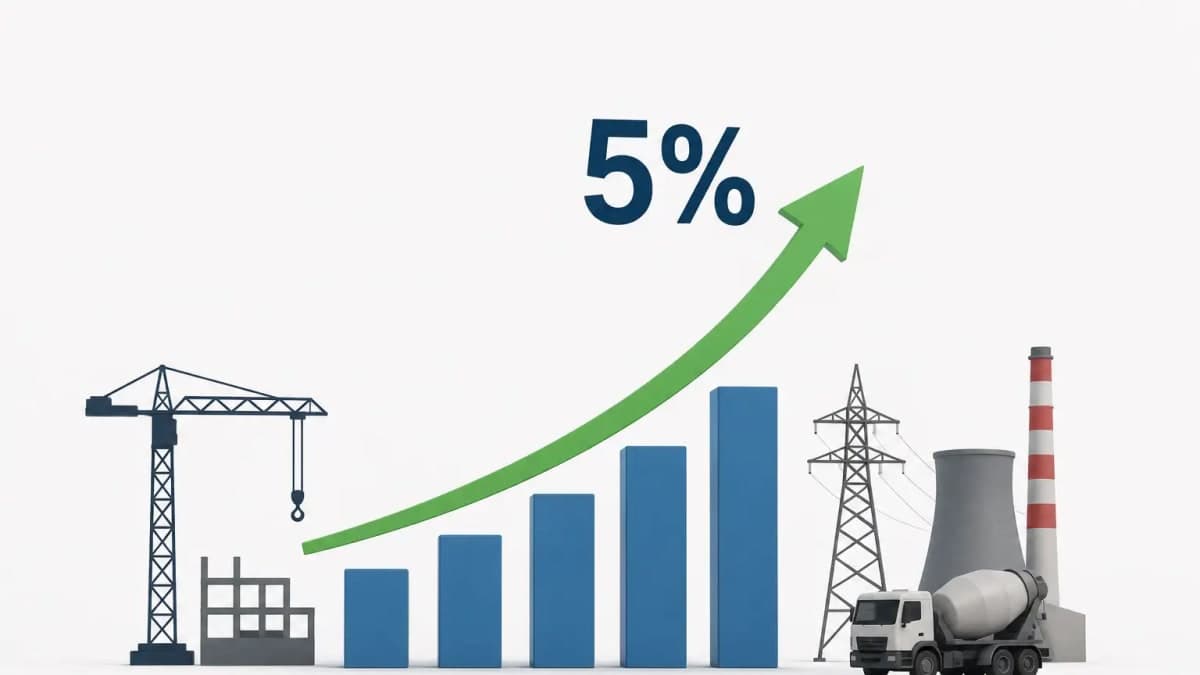
India's core infrastructure industries recorded their strongest growth in five months as output expanded by 5% year-on-year in June. The improvement was driven by robust gains in electricity generation, cement production, and iron ore output, reflecting stronger momentum in key industrial sectors despite weakness in some energy-related segments.

India's Core Infrastructure Output Climbs to Five-Month High of 5% in June

By Jeet Nirmal

Source: Janta Scope

India's core infrastructure industries recorded their strongest growth in five months as output expanded by 5% year-on-year in June. The improvement was driven by robust gains in electricity generation, cement production, and iron ore output, reflecting stronger momentum in key industrial sectors despite weakness in some energy-related segments.

Long Summary

India's core infrastructure sector registered a 5% year-on-year increase in June, marking the fastest pace of growth in five months and signaling renewed strength in the country's industrial activity. The latest figures were released under the revised Index of Core Industries (ICI) series, which now uses 2022-23 as the base year and includes nine core industries, with iron ore added to the index. The stronger June performance highlights improving momentum across several infrastructure-linked industries that play a vital role in the broader economy.

The June expansion was largely supported by exceptional growth in iron ore production, which surged 43.9% compared to the same month last year. Electricity generation and cement production also delivered strong performances, each growing 9.8%, while coal production returned to positive territory with a modest 1.4% increase after declining in the previous month. These sectors helped offset weaker output in other areas and contributed significantly to the overall improvement in the infrastructure index.

Despite the encouraging headline figure, not every sector experienced growth during the month. Crude oil production, natural gas, refinery products, and fertiliser output recorded year-on-year declines, reflecting ongoing challenges in parts of the energy and industrial supply chain. The mixed sectoral performance suggests that while industrial activity is strengthening overall, recovery remains uneven across different segments of the economy.

The revised Index of Core Industries now provides a more current picture of India's infrastructure economy by shifting the base year from 2011-12 to 2022-23. The inclusion of iron ore reflects structural changes in India's industrial landscape and offers a broader measure of production trends. The core industries together serve as an important indicator because they account for a significant share of the overall Index of Industrial Production (IIP) and often provide an early signal of economic activity.

For the first quarter of the current financial year (April-June), the infrastructure index recorded cumulative growth of 3.6%, a notable improvement over the 1% expansion seen during the corresponding period last year. Economists view this increase as a sign that infrastructure-related investments, construction activity, and industrial demand are gradually strengthening despite global economic uncertainties.

The latest data indicates that India's infrastructure sector continues to build momentum, with strong performances in electricity, cement, and iron ore providing support to industrial growth. While challenges remain in energy-related industries, the five-month high in core sector output points to improving economic activity and may offer a positive outlook for manufacturing and infrastructure development in the coming months.


Related

More stories

India’s Q2 Economic Indicators Signal Strong Momentum Ahead of Festive Season

India ended the July-September quarter with encouraging signals across manufacturing, industrial production, tax collections, digital payments and parts of the automobile market. The data point to resilient economic activity ahead of the festive season, although inflation, energy costs and uneven rural-facing demand remain important risks.

Finance

India’s Q2 Economic Indicators Signal Strong Momentum Ahead of Festive Season

India-US Trade Deal Not Imminent, USTR Says as Negotiations Enter Final Stretch

India and the United States are continuing negotiations on a bilateral trade agreement, but an immediate breakthrough should not be expected, US Trade Representative Jamieson Greer said. His comments came after discussions with Indian Commerce and Industry Minister Piyush Goyal at the G20 Trade Ministers’ Meeting in Milwaukee. Both sides say negotiations are progressing, although unresolved issues remain.

Finance

India-US Trade Deal Not Imminent, USTR Says as Negotiations Enter Final Stretch

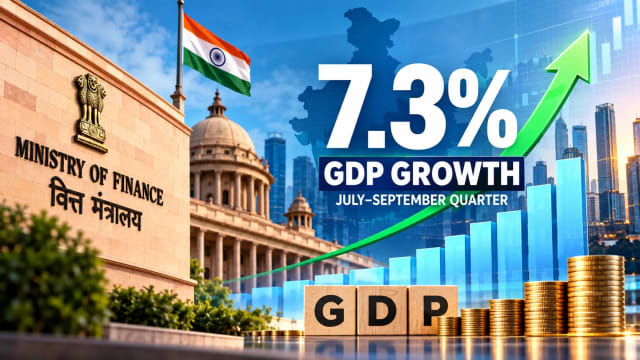
Finance Ministry Sees India’s Q2 FY27 GDP Growth at 7.3%, but Global Risks Cloud Outlook

India’s Finance Ministry expects real GDP to grow around 7.3% in the July–September quarter of FY27, extending the economy’s strong start to the fiscal year. The estimate is notably above the Reserve Bank of India’s 6.4% projection for the quarter, although the ministry has warned that oil prices, trade uncertainty and tighter global financial conditions remain important risks

Finance

Finance Ministry Sees India’s Q2 FY27 GDP Growth at 7.3%, but Global Risks Cloud Outlook

FPI Outflows Cross ₹1 Trillion in H1 FY27 as Global Pressures Weigh on Indian Markets

Foreign portfolio investors remained cautious toward Indian markets during the first half of FY27, with net selling reaching ₹1.29 trillion. Financial services, oil and gas, automobiles and telecom faced significant withdrawals, while selected consumer and services sectors continued to attract overseas capital.

Finance

FPI Outflows Cross ₹1 Trillion in H1 FY27 as Global Pressures Weigh on Indian Markets

RBI FX Swaps Open Cheaper Dollar Funding Route for Some Indian Companies

The Reserve Bank of India’s large-scale dollar-rupee swap operations are reshaping currency-market pricing and creating an unusual funding opportunity for some Indian companies. Higher forward premiums mean eligible corporates may be able to borrow in rupees and convert that liability into dollars through currency swaps at a lower effective cost than borrowing directly overseas.

Finance

RBI FX Swaps Open Cheaper Dollar Funding Route for Some Indian Companies

Finance Ministry Estimates India’s Q2 GDP Growth at 7.3% as Momentum Moderates

India’s Finance Ministry expects the economy to grow by 7.3% in the July–September quarter of FY2026-27, according to its nowcasting model. The estimate points to continued economic expansion after 7.8% real GDP growth in April–June, although the ministry has also highlighted risks from geopolitical tensions, trade uncertainty, rising oil prices and tighter global financial conditions.

Finance

Finance Ministry Estimates India’s Q2 GDP Growth at 7.3% as Momentum Moderates