हिंदी में पढ़ें —JantaScope हिंदी
Finance

India–U.K. Trade Deal Advances, But Key Issues Remain Unresolved

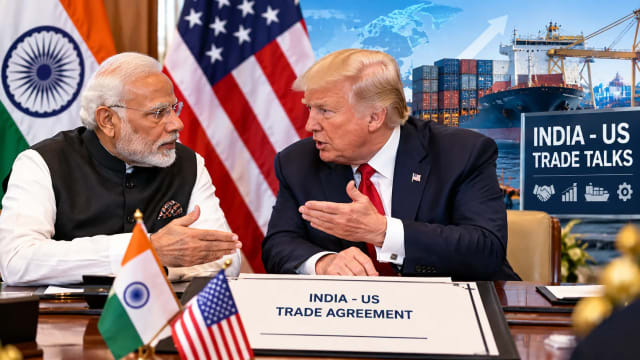
The India–United Kingdom trade agreement marks an important milestone in bilateral economic relations, but several critical issues remain unresolved before the partnership can achieve its full potential. While the deal is expected to strengthen trade, investment, and business cooperation, negotiations continue on sensitive sectors, regulatory standards, and implementation mechanisms.

India–U.K. Trade Deal Advances, But Key Issues Remain Unresolved

By Jeet Nirmal

Source: Janta Scope

India–U.K. Trade Deal Moves Forward, Yet Important Challenges Still Await Resolution

A Landmark Agreement with More Work Ahead

The India–U.K. trade agreement represents one of the most significant developments in economic ties between the two countries in recent years. Designed to improve market access, encourage investment, and deepen commercial cooperation, the pact reflects the growing strategic relationship between New Delhi and London.

However, despite substantial progress, experts note that several important matters remain unfinished. These unresolved areas are expected to shape the long-term effectiveness of the agreement and determine how successfully businesses in both countries benefit from the new framework.

Why the Trade Deal Matters

India and the United Kingdom have maintained strong trade and investment ties across sectors such as technology, pharmaceuticals, financial services, manufacturing, education, and professional services. A comprehensive trade agreement aims to reduce barriers, simplify business procedures, and create new opportunities for exporters and investors.

For businesses, the agreement could lower costs, improve market access, and strengthen supply chain partnerships. For consumers, increased trade may eventually expand product choices and enhance competition.
Key Areas Still Under Discussion

Although major components of the agreement have been finalized, certain policy areas continue to attract attention.

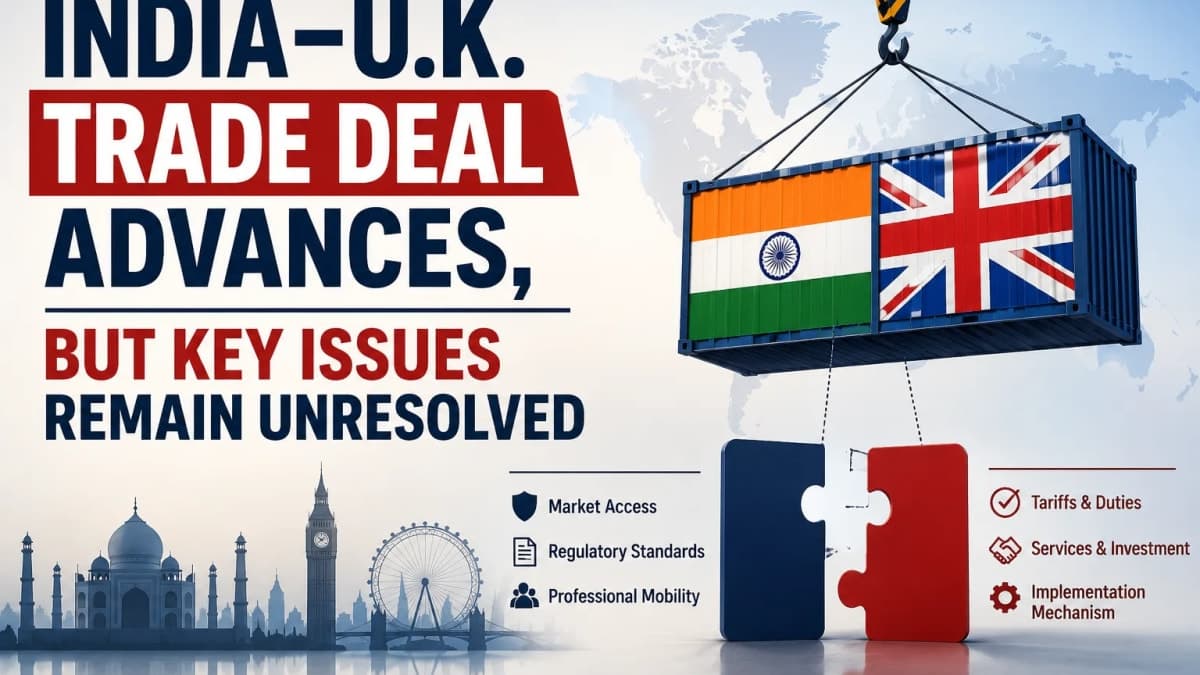
Among the issues frequently discussed are regulatory alignment, market access for specific industries, professional mobility, standards for goods and services, intellectual property matters, and implementation timelines. These areas require continued dialogue to ensure that both countries receive balanced economic benefits while protecting domestic interests.

Successful implementation will depend not only on the text of the agreement but also on practical execution and cooperation between regulators.

Economic Opportunities for Both Countries

If implemented effectively, the agreement could create fresh opportunities across multiple sectors.

Indian businesses may gain improved access to British markets in manufacturing, information technology, engineering services, and pharmaceuticals. Meanwhile, British companies could benefit from greater participation in India's expanding consumer market, infrastructure projects, financial services, and advanced technology sectors.

Small and medium-sized enterprises may also benefit from simplified trade procedures if implementation remains efficient.

Challenges Beyond the Agreement

Trade agreements often mark the beginning rather than the conclusion of economic cooperation. Businesses still need clarity regarding customs procedures, regulatory approvals, dispute resolution mechanisms, and compliance requirements.

Global economic uncertainty, changing geopolitical conditions, and evolving supply chains also mean that governments must remain flexible in adapting the agreement to future challenges.

What Comes Next

Attention is now shifting toward the implementation phase, where governments, businesses, and regulatory authorities will work to translate policy commitments into measurable economic outcomes.

Continued dialogue may also address remaining issues through future negotiations, amendments, or sector-specific cooperation agreements.

Balanced Analysis

The India–U.K. trade agreement is widely viewed as an important step toward strengthening bilateral economic relations. However, the success of any trade pact depends not only on signing the agreement but also on resolving practical issues that emerge during implementation.

The remaining unfinished aspects should be seen as part of an evolving partnership rather than obstacles alone. As negotiations continue and businesses begin using the new framework, both countries will have opportunities to refine the agreement and maximize its long-term economic benefits.

Related

More stories

Indian Government Bond Yields Stay Under Pressure as RBI Rate Outlook and Oil Risks Weigh on Market

Indian government bond yields remained elevated on Tuesday as investors weighed a more cautious monetary-policy outlook from the Reserve Bank of India, movements in global crude oil prices and uncertainty across international bond markets. The benchmark 10-year yield hovered around 6.87%-6.88%, keeping borrowing-cost concerns in focus.

Finance

Indian Government Bond Yields Stay Under Pressure as RBI Rate Outlook and Oil Risks Weigh on Market

India’s Forex Reserves Jump Nearly $10 Billion to Six-Month High of $716.9 Billion

India’s foreign exchange reserves climbed to a six-month high of $716.9 billion in the week ended August 14, 2026, rising by nearly $10 billion from the previous week. The increase was led by higher foreign currency assets and gold holdings, strengthening the country’s financial cushion amid volatility in global currency and commodity markets.

Finance

India’s Forex Reserves Jump Nearly $10 Billion to Six-Month High of $716.9 Billion

Indian Banks Raise $12 Billion Overseas as RBI Swap Window Sparks Funding Rush

Indian banks have raised about $12 billion from overseas debt markets in 2026, taking advantage of strong international demand for Indian banking debt and a special foreign-exchange swap facility introduced by the Reserve Bank of India (RBI). The surge has accelerated ahead of an important deadline for eligible foreign-currency deposits and highlights lenders’ growing ability to tap global pools of capital.

Finance

Indian Banks Raise $12 Billion Overseas as RBI Swap Window Sparks Funding Rush

RBI Opens Door for LIC to Nearly Double HDFC Bank Stake — What the 9.99% Approval Really Means

The Reserve Bank of India has approved Life Insurance Corporation of India’s request to increase its holding in HDFC Bank to as much as 9.99%. LIC held 4.11% of the private-sector lender as of August 14, 2026, meaning the regulatory clearance gives India’s largest insurer substantial room to increase its investment. The permission, however, does not mean LIC is required to purchase shares up to the approved limit immediately.

Finance

RBI Opens Door for LIC to Nearly Double HDFC Bank Stake — What the 9.99% Approval Really Means

Why HDFC Bank Shares Are in Focus Today as Blue-Chip Buying Supports the Market

HDFC Bank shares remained firmly on investors’ radar on Monday, August 24, as buying in heavyweight blue-chip stocks helped Indian benchmark indices trade with a positive bias. The private-sector banking major was among the large-cap names supporting the market, even as investors remained cautious about geopolitical tensions, crude oil prices and upcoming global monetary-policy signals.

Finance

Why HDFC Bank Shares Are in Focus Today as Blue-Chip Buying Supports the Market

India’s Dollar-Deposit Trade Is Booming — Why Citigroup and Axis Bank Are Joining the Rush

Citigroup and Axis Bank have teamed up on a financing arrangement linked to foreign-currency deposits from non-resident Indians, highlighting how the Reserve Bank of India’s efforts to attract overseas dollars are creating new opportunities in cross-border banking. The structure could help amplify NRI dollar inflows while strengthening banks’ access to foreign-currency funding.

Finance

India’s Dollar-Deposit Trade Is Booming — Why Citigroup and Axis Bank Are Joining the Rush