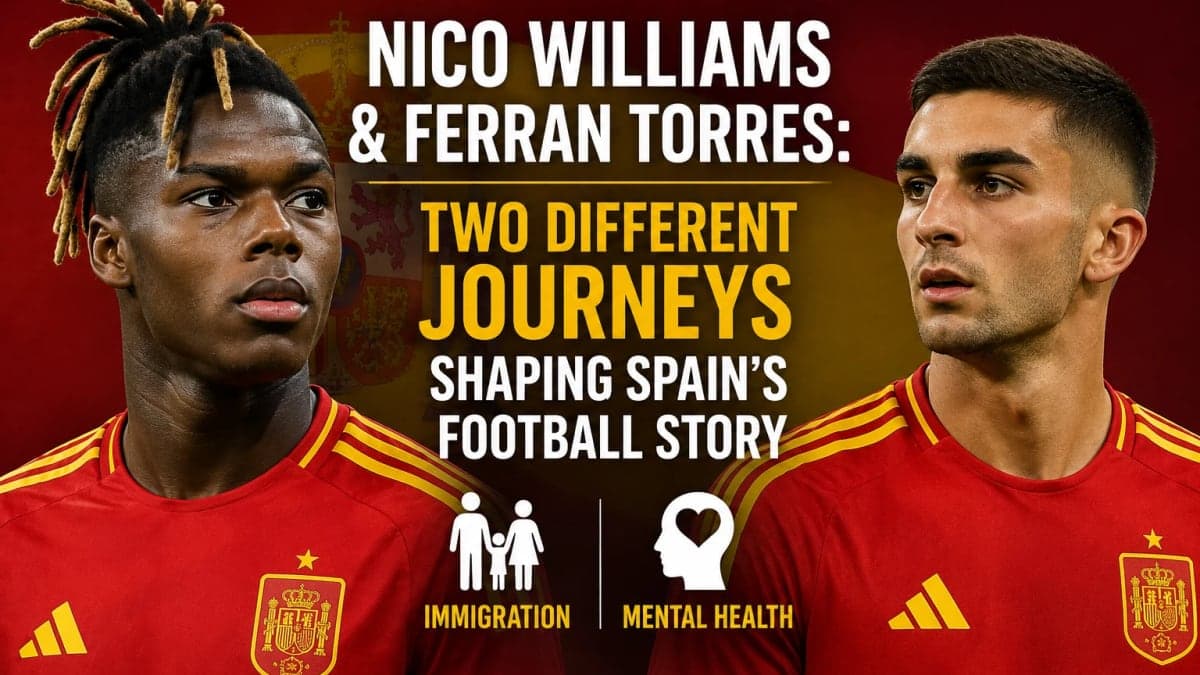
Different Paths, One National Team
Although both players wear the Spanish national team's colours, their stories extend far beyond football.
Nico Williams' rise is rooted in the sacrifices made by his parents, who migrated in search of better opportunities. Their determination helped create the foundation for Williams and his brother to pursue professional football, eventually reaching the highest levels of the sport.
Ferran Torres, meanwhile, has publicly discussed his struggles with depression and the importance of seeking support while dealing with the pressures of professional football. His willingness to speak about mental health has contributed to wider conversations within the sporting community.
Immigration and Opportunity
Williams' story reflects the role immigrant families have played in shaping modern European football.
Many professional footballers across Europe come from multicultural backgrounds, with parents or grandparents who relocated in pursuit of safety, employment or improved living conditions. These journeys often involve significant hardship before future generations benefit from greater opportunities.
Williams' development into one of Spain's brightest talents illustrates how determination, family support and access to sporting opportunities can transform lives across generations.
Mental Health in Professional Sport
Torres' experience highlights another increasingly important issue in elite sport—mental well-being.
Professional athletes face constant expectations, intense competition, media attention and public scrutiny. In recent years, more players have spoken openly about anxiety, depression and emotional well-being, helping reduce stigma surrounding mental health.
By discussing his own challenges, Torres has encouraged greater awareness that mental health deserves the same attention as physical fitness in professional sport.
Background
Spain's national football team has become increasingly diverse over the past two decades, reflecting broader demographic and cultural changes within the country.
At the same time, football organizations around the world have expanded mental health support systems, recognizing that psychological well-being is an essential part of athletic performance and long-term career development.
The stories of Williams and Torres represent two different aspects of this changing landscape—one centred on immigration and opportunity, the other on emotional resilience and mental health awareness.
Why This Story Matters
The experiences of Nico Williams and Ferran Torres demonstrate that success in elite football often involves overcoming challenges that extend well beyond the pitch.
Their stories encourage broader discussions about family sacrifice, social inclusion, mental health and the importance of creating supportive environments for athletes from all backgrounds. They also remind supporters that professional players face personal struggles that are not always visible during competition.
Balanced Analysis
Williams' and Torres' journeys highlight resilience in different forms.
Supporters view Williams' rise as an inspiring example of how opportunity and perseverance can help immigrant families build successful futures through sport. Meanwhile, Torres' openness about depression has been welcomed by many as an important step toward normalizing conversations around mental health in elite competition.
At the same time, experts note that individual experiences should not be generalized. Immigration stories and mental health challenges differ from person to person, and long-term progress depends on continued institutional support, access to professional care and inclusive sporting environments.
Together, the two footballers represent more than athletic excellence—they reflect the evolving social and human dimensions of modern football.


