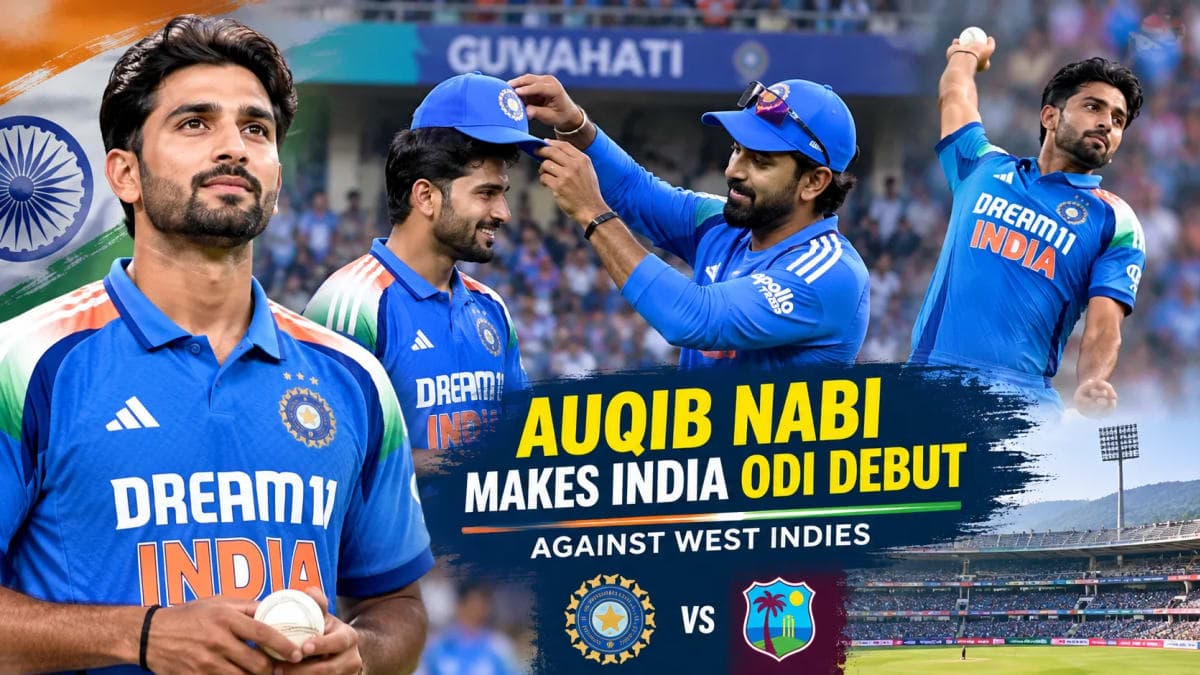
Auqib Nabi Receives Maiden India ODI Cap
Auqib Nabi's long journey through domestic cricket reached the international stage on Wednesday as the Jammu and Kashmir fast bowler made his ODI debut for India against West Indies.
Nabi was handed his maiden ODI cap by vice-captain KL Rahul ahead of the second ODI at the Barsapara Cricket Stadium in Guwahati. He replaced Nitish Kumar Reddy in India's playing XI.
Captain Shubman Gill won the toss and elected to field. Gill said the Guwahati pitch had more grass and looked somewhat patchy, conditions that could offer assistance to fast bowlers early in the innings.
Domestic Performances Earn Nabi His Opportunity
The call-up followed a strong period in domestic cricket for the right-arm pacer.
Nabi played an important role in Jammu and Kashmir's historic 2025-26 Ranji Trophy title, finishing as the tournament's leading wicket-taker and earning the Player of the Series award.
His performances had already pushed him closer to the senior national side. Nabi was included in India's Test squad for the tour of Sri Lanka in August 2026 but did not make his international debut during that series. The West Indies ODI series subsequently brought his first opportunity in India's playing XI.
Before his ODI debut, Nabi had collected 56 wickets from 36 List A matches at an average of 27.37, including three four-wicket hauls.
India Give Another Pacer an International Opportunity
Nabi's selection adds another pace option to India's ODI setup at a time when the team is continuing its preparations toward the 2027 ICC Men's Cricket World Cup. The ICC identified building momentum toward that tournament as part of the context surrounding India's current ODI programme.
For Nabi, the debut represents recognition of sustained domestic performances. For India, it also provides an opportunity to assess another seam-bowling option at international level.
A debut alone, however, does not establish a player's long-term position in the side. Nabi's role in India's ODI plans will depend on his performances and future team combinations as competition for pace-bowling places develops.


