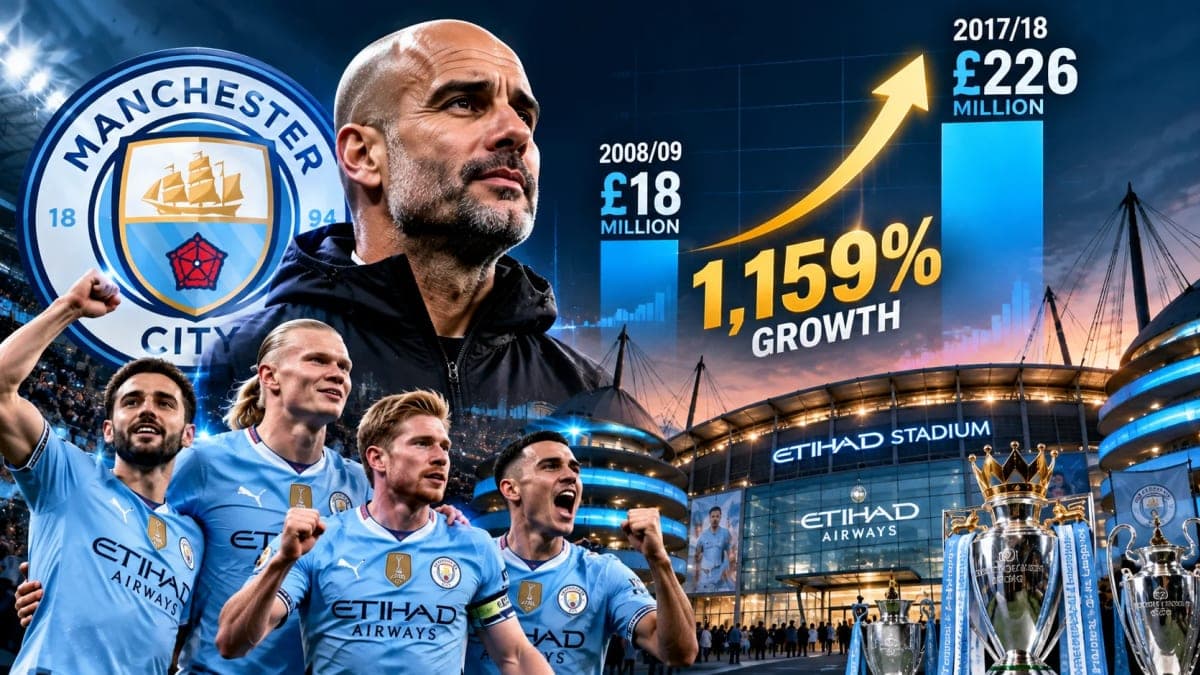
Manchester City’s Commercial Rise in Focus
Manchester City’s transformation over the past two decades has not been confined to the football pitch. The club also experienced an extraordinary expansion in its commercial business during the years following its 2008 takeover by Abu Dhabi United Group.
According to figures examined by Hindustan Times using Deloitte Football Money League data, City generated just £18 million in commercial revenue in 2008/09. Nine years later, the corresponding commercial figure represented growth of roughly 1,159%.
The expansion occurred as City developed from a club outside European football’s financial elite into one of the sport’s biggest commercial operations.
Revenue Accelerated Before European Success
One of the most striking periods came in 2011/12.
City’s commercial revenue rose from £57.8 million to £112.1 million in a single season, an increase of almost 94%. Total revenue simultaneously climbed from £153.2 million to £231.1 million.
That season was historic on the pitch as City won the Premier League. However, the club was still relatively inexperienced in Europe's leading competition and failed to progress beyond the Champions League group stage.
Despite that limited European record, City was already approaching Manchester United commercially. City recorded £112.1 million in commercial revenue in 2011/12 compared with United's £117.6 million.
Etihad Partnership Played a Major Role
Commercial partnerships became an important part of City's financial expansion.
A major development was the long-term Etihad Airways agreement announced in 2011, which incorporated shirt sponsorship, stadium naming rights and the Etihad Campus alongside other commercial arrangements.
Deloitte subsequently identified the beginning of the Etihad partnership as the largest component of City's commercial-revenue increase during the 2011/12 season.
City's commercial income continued expanding in subsequent years even as its Champions League performances took longer to reach the same level as its domestic success.
Why the Figures Are Back in Focus
The historical numbers have attracted renewed attention following findings concerning Manchester City's compliance with Premier League financial rules during the period covering 2009/10 to 2017/18.
Manchester City disputes the findings, maintains its innocence and has said it intends to appeal.
Importantly, rapid commercial growth by itself does not establish financial wrongdoing. Revenue figures alone cannot determine whether individual sponsorship agreements were appropriately valued or funded. Those questions depend on the evidence and regulatory findings surrounding specific transactions.
A Transformation On and Off the Pitch
Manchester City's sporting achievements eventually caught up with its financial expansion. The club developed into a dominant force in English football and later secured the Champions League.
The financial timeline nevertheless highlights an unusual feature of City's development: its rise as a major commercial operation happened extremely quickly, at a time when its record in European competition was still developing.
That distinction is important when examining the numbers. City's commercial growth demonstrates the scale and speed of the club's business transformation, while questions about compliance with financial regulations remain a separate matter subject to the ongoing legal and regulatory process.


