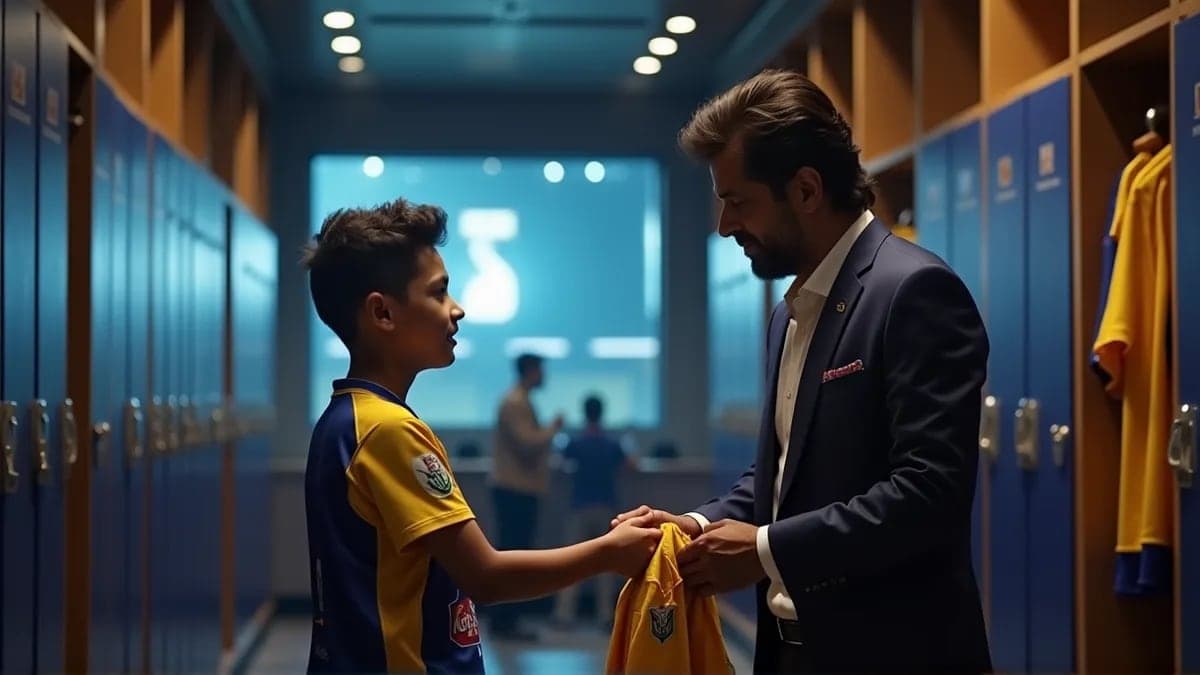
During a recent episode of JioHotstar's talk show, former Indian Test opener Cheteshwar Pujara opened up about a moment that still makes him smile: meeting Kolkata Knight Riders co‑owner Shah Rukh Khan while he was a rookie in the 2009‑10 Indian Premier League. The cricketer said the encounter felt like a "fanboy moment", yet he quickly shifted his focus to the professional environment the franchise offered.
Pujara's brief spell with KKR produced 122 runs across six innings, a respectable strike‑rate of 106 and a top score of 45 not out. Though his IPL résumé includes later stops with Royal Challengers Bengaluru, Punjab Kings and a squad‑member role with the 2021 champion Chennai Super Kings, the KKR episode remains a vivid reminder of how celebrity ownership intersects with player development in India's premier T20 competition.
Overview
Cheteshwar Pujara entered the IPL arena as a relatively unknown Test specialist, having earned his place in India's red‑ball line‑up through gritty performances at home. The 2009‑10 season saw him don the orange and black of Kolkata Knight Riders, a franchise co‑owned by Bollywood megastar Shah Rukh Khan and actress Juhi Chawla. Over six matches, Pujara accumulated 122 runs at an average of 30.50, a figure that hinted at his adaptability to the faster format.
Beyond the numbers, the experience offered Pujara exposure to a high‑pressure environment, access to seasoned international teammates, and the chance to observe how a star‑powered ownership model shapes team culture. Those early lessons, he says, laid groundwork for his later roles with other IPL sides and contributed to his evolution into a more versatile batsman.
The Detail
When Pujara first stepped onto the KKR training ground, he was greeted by Shah Rukh Khan, whose presence in the locker room is often described as charismatic and hands‑on. The cricketer admitted that the sight of the film icon sparked a genuine fan reaction, but he quickly reminded himself that performance, not celebrity, mattered most. "You can't stay at a franchise just because a star owns it; you stay because the environment pushes you forward," he explained.
During that inaugural IPL season, Pujara's strike‑rate of 106.08 reflected an attempt to blend his traditionally defensive technique with the aggressive demands of T20 cricket. While he never recorded a half‑century for KKR, his highest unbeaten 45 demonstrated a willingness to rotate the strike and support the team's top order.
After KKR, Pujara's IPL journey continued with stints at Royal Challengers Bengaluru and Punjab Kings, where he added modest contributions but never cemented a permanent spot. His most high‑profile association came in 2021 when he was part of the Chennai Super Kings squad that lifted the trophy, although he did not feature in any match that campaign.
Net Sessions and Rivalries
One anecdote Pujara shared on the show involved Australian fast bowler Josh Hazlewood. Having faced Hazlewood repeatedly during India's 2018 and 2021 Border‑Gavaskar series, the bowler playfully declined to bowl to Pujara in CSK's net sessions, joking that he had already bowled enough to the Indian batsman. The light‑hearted refusal underscored the camaraderie and subtle rivalries that flourish behind the scenes of IPL camps.
The Context
The IPL, launched in 2008, quickly became a platform where cricketing talent meets entertainment glamour. Celebrity owners like Shah Rukh Khan bring media attention, sponsorship clout, and a brand aura that can elevate a franchise's marketability. For players, this translates into heightened scrutiny, larger audiences, and sometimes, additional pressure to perform under bright lights.
Historically, KKR's early years were marked by fluctuating fortunes on the field, but the franchise's ownership model remained a constant draw for fans. The presence of Bollywood personalities helped the team secure a loyal fan base, especially in Kolkata, a city known for its passionate sports culture.
Pujara's own career trajectory mirrors the broader shift in Indian cricket, where Test specialists increasingly seek exposure to limited‑overs formats to broaden skill sets. While his primary reputation rests on his 7,195 Test runs at an average of 43.60, his forays into the IPL illustrate how even the most traditional batsmen adapt to the game's evolving demands.
Retiring from international cricket in 2022, Pujara left behind a legacy of patience and technique. His brief IPL chapters, however, highlight a willingness to step outside his comfort zone, learn from overseas bowlers, and absorb the franchise's professional ethos.
The Other Side
Critics argue that celebrity ownership can sometimes distract from pure cricketing objectives, turning franchises into marketing machines rather than performance‑driven entities. While Pujara emphasizes the learning environment, some former players contend that the glitz may create unrealistic expectations for younger talent seeking validation through fame.
Another point of debate centers on the limited impact Pujara had on the scoreboard during his IPL tenure. Despite respectable averages, he never secured a regular spot in the playing XI, leading some analysts to suggest that his classical technique struggled to translate fully into the high‑tempo T20 arena.
Finally, the anecdote about Hazlewood refusing to bowl in nets, while humorous, hints at the psychological games that can arise when teammates become opponents in a different context. Such dynamics raise questions about how players balance camaraderie with competition in a league where national teammates often become rivals.
Key Takeaways
Pujara's meeting with Shah Rukh Khan remains a personal highlight, illustrating the unique blend of sport and celebrity in the IPL.
The KKR stint offered the Test batsman exposure to a fast‑paced environment, shaping his later approach to limited‑overs cricket.
Celebrity ownership brings both marketing benefits and potential distractions for player development.
Pujara's overall IPL record was modest, underscoring the challenge traditional Test players face in T20 formats.
Net‑session anecdotes reveal the informal rivalries and humor that coexist with professional competition.
His retirement from international cricket caps a career that straddles both red‑ball mastery and limited‑overs experimentation.
Where This Goes
As the IPL continues to expand, the league's ability to nurture traditional Test talent within a franchise setting will be closely watched. Pujara's experience suggests that while star owners can inspire, the core value for players lies in the quality of coaching, mentorship, and competitive exposure. Future Indian batsmen may look to his journey as a template for balancing Test ambitions with the commercial realities of modern cricket.
For Shah Rukh Khan and other celebrity owners, the challenge will be to maintain the delicate equilibrium between entertainment appeal and genuine cricketing infrastructure, ensuring that the next generation of players can thrive both on the field and in the spotlight.
This article is based on reporting published by livemint.


