Rupee Holds Ground as RBI Steps In Amid Rising Oil Pressure
The Indian rupee found support on Thursday as traders reported likely intervention by the Reserve Bank of India in the foreign-exchange market, helping the currency withstand renewed pressure from higher crude oil prices.
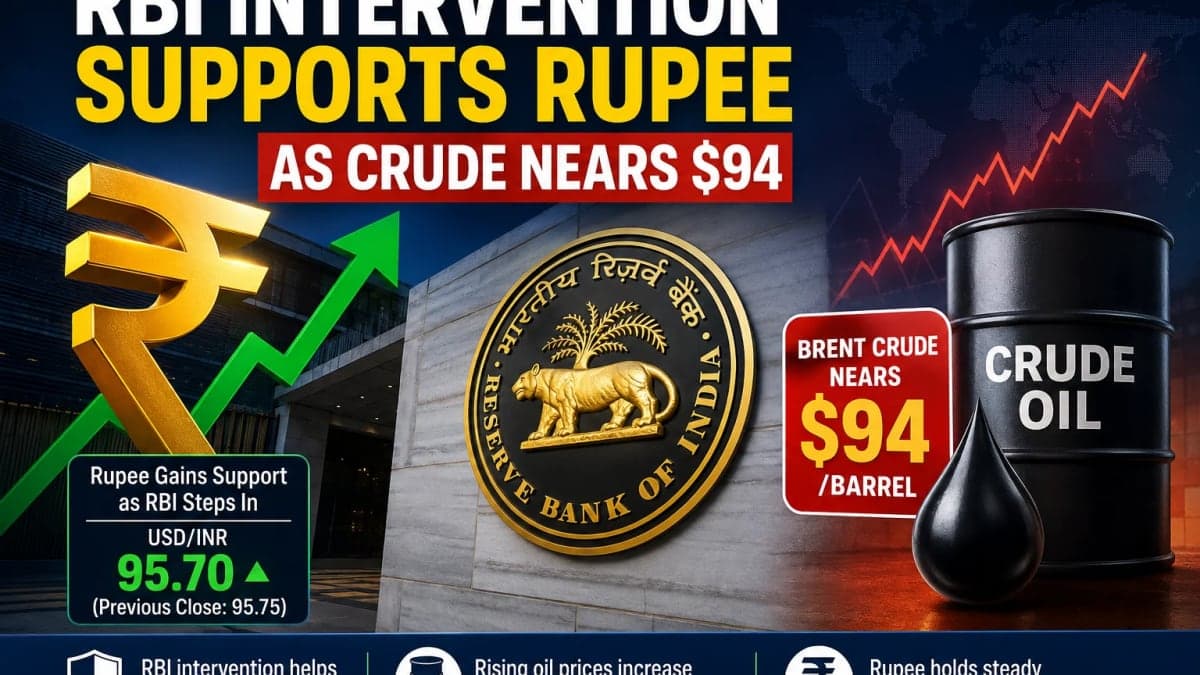
The rupee closed at about ₹95.705 per US dollar, marginally stronger than its previous close of ₹95.7525. Earlier in the session, traders said central-bank action helped the currency recover as corporate hedging and derivative-related dollar demand added pressure.
The relatively limited movement was notable because Brent crude rose more than 2% to around $93.8 a barrel. For India, which relies heavily on imported energy, a sustained increase in international oil prices can quickly become an important challenge for the currency and the broader economy.
Why RBI Intervention Matters for the Rupee
The RBI generally seeks to contain excessive volatility in the foreign-exchange market rather than defend a permanently fixed exchange rate. When dollar demand rises sharply, intervention can reduce abrupt swings and give businesses and financial markets more time to adjust.
Recent trading sessions have shown the central bank playing an active role in limiting rupee weakness. On August 18, traders reported RBI intervention across spot, futures and offshore non-deliverable forward markets as rising oil prices and US Treasury yields pressured the currency.
That activity has also made currency traders more cautious about aggressively betting on further rupee depreciation.
Crude Oil Near $94 Creates a Fresh Challenge
Oil remains one of the most important external risks for India's currency.
India imports the vast majority of the crude oil it consumes. Because international oil purchases are largely settled in dollars, higher crude prices can increase dollar demand from refiners and other importers.
This can create a two-way squeeze: rising oil prices increase India's import costs, while a weaker rupee makes every dollar of imported crude more expensive in domestic currency terms.
Brent crude's rise toward $94 therefore represents more than a movement in the global commodity market. If elevated prices persist, they could affect India's trade balance, inflation trajectory, corporate costs and monetary-policy expectations.
Rupee Remains Under Pressure Despite Weaker Dollar
The rupee's struggle is particularly significant because several Asian currencies benefited from broader weakness in the US dollar.
Even against that relatively supportive global backdrop, the Indian currency required assistance from likely RBI intervention. Traders attributed some of the pressure to corporate hedging and the settlement of maturing derivative positions.
The rupee had already closed at a three-week low of ₹95.7525 per dollar on Wednesday as rising crude prices and persistent corporate dollar demand weighed on sentiment. RBI activity was believed to have helped prevent a sharper decline toward the closely watched ₹96-per-dollar level.
Higher Oil Could Complicate India's Inflation Outlook
A prolonged period of expensive crude could eventually filter through to transportation, manufacturing and other areas of the economy.
The immediate impact on consumers depends on several factors, including domestic fuel pricing, taxes, refining conditions and government policy. Nevertheless, sustained increases in energy costs can create broader inflationary pressure by raising transportation and production expenses.
This means policymakers must watch both sides of the equation: allowing excessive currency depreciation could make imports more expensive, while heavy and persistent intervention in foreign-exchange markets also has costs and cannot permanently eliminate external economic pressures.
What It Means for Businesses and Consumers
For Indian companies that import fuel, machinery, electronics, chemicals or other dollar-priced goods, currency stability provides some protection against sudden increases in costs.
Exporters can experience the opposite effect. A weaker rupee can improve the rupee value of overseas earnings for some companies, meaning that preventing depreciation is not automatically positive for every part of the economy.
Consumers may feel the consequences more indirectly. If high oil prices persist, the impact can eventually emerge through transportation expenses, airline costs, manufacturing inputs and broader inflation.
Balanced Analysis: RBI Can Limit Volatility, but Oil Remains the Key Risk
The latest currency movement demonstrates the effectiveness—and limitations—of central-bank intervention.
RBI action can discourage speculative pressure, supply dollars to the market and prevent temporary imbalances from producing disorderly currency movements. India's substantial foreign-exchange reserves also provide policymakers with room to respond when volatility rises.
However, intervention cannot completely offset fundamental pressures indefinitely.
If crude prices remain elevated while corporate dollar demand stays strong, the rupee could continue to face depreciation pressure. Conversely, easing geopolitical tensions, falling oil prices, stronger foreign investment inflows or broader dollar weakness could reduce the need for aggressive RBI support.
The key question is therefore not simply whether the RBI can defend the rupee on an individual trading day, but whether the external conditions creating demand for dollars begin to improve.
Outlook: Oil, RBI Action and ₹96 Level in Focus
Currency traders are likely to keep a close watch on Brent crude prices, geopolitical developments, foreign capital flows, US interest-rate expectations and further RBI activity.
The ₹96-per-dollar area has emerged as an important psychological level for the market, with recent intervention helping keep the currency away from a sharper decline.
For now, RBI support has helped contain volatility. But with crude approaching $94 a barrel, India's dependence on imported energy means the rupee remains exposed to developments far beyond the domestic foreign-exchange market.
This article is based on reporting published by Reuters.