RBI’s ₹50,000-Crore Bond Sale Starts September 17
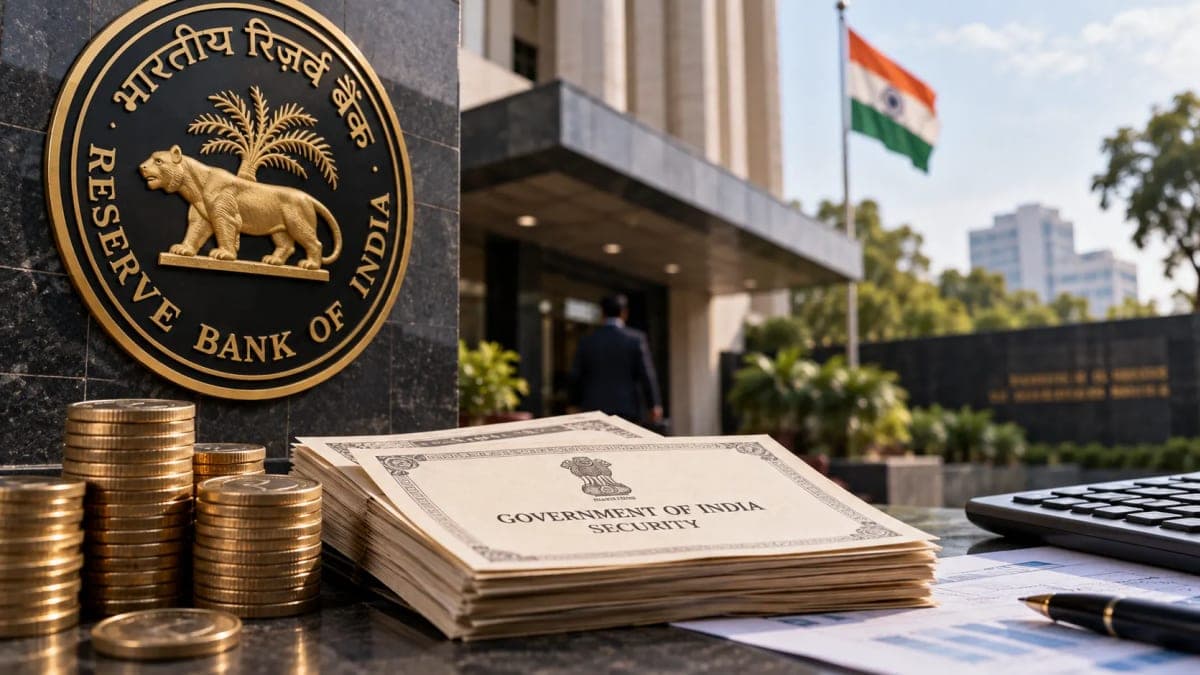
The Reserve Bank of India is preparing to withdraw a significant amount of surplus cash from the banking system through the sale of government securities, with the first ₹50,000-crore auction scheduled for Thursday, September 17, 2026.
The operation is part of a larger ₹1 lakh crore Open Market Operation (OMO) sale programme announced by the central bank.
According to the RBI’s official announcement, the ₹1 lakh crore will be sold in three tranches:
₹50,000 crore on September 17
₹25,000 crore on September 21
₹25,000 crore on September 28
The auctions will use a multi-security, multiple-price method.
This is more than a routine bond-market event. The RBI is effectively trying to remove part of an unusually large pool of money sitting in the banking system—and the operation could influence short-term interest rates, government bond yields and broader financial conditions.
What Exactly Is the RBI Selling?
The first ₹50,000-crore auction will cover six Government of India securities with maturities ranging from 2029 to 2032.
The RBI has listed the 7.59% GS 2029, 6.79% GS 2029, 7.61% GS 2030, 5.77% GS 2030, 6.68% GS 2031 and 8.28% GS 2032 for the September 17 auction.
Importantly, the RBI has not assigned a separate notified amount to each security. The ₹50,000 crore is the aggregate amount for the auction.
That distinction matters because this is not a new government borrowing programme in which the Centre is raising ₹50,000 crore to fund expenditure.
The securities already exist. The RBI is selling government bonds from its portfolio through an open market operation primarily aimed at liquidity management.
Why Is RBI Selling Bonds When Banks Already Have Plenty of Cash?
That is precisely the reason for the sale.
India’s banking system has accumulated an exceptionally large liquidity surplus following substantial foreign-currency inflows.
Reuters reported that banks raised about $127 billion through the RBI's special foreign-exchange mobilisation scheme, contributing to a banking-system liquidity surplus that averaged around ₹10.25 lakh crore in September, equivalent to nearly 3.8% of deposits.
The problem for the RBI is not simply that banks have a lot of money.
Too much liquidity can push overnight money-market rates below the levels the central bank wants to maintain.
Reuters reported that the surplus had pushed overnight rates below the floor of the monetary-policy corridor.
This creates a monetary-policy transmission problem: the RBI may set its policy rate at one level, but abundant liquidity can pull actual short-term market rates significantly lower.
Selling government bonds is one way to reverse that.
How an OMO Bond Sale Removes Money From the System
The mechanics are relatively straightforward.
When the RBI buys government bonds from the market, it pays investors and injects rupee liquidity into the financial system.
When it sells bonds, the opposite happens.
Banks and other eligible participants pay the RBI for those securities. That money moves out of the banking system and onto the RBI's balance sheet, reducing available liquidity.
In simple terms:
RBI sells bonds → buyers pay RBI → banking-system cash falls.
This makes an OMO sale fundamentally different from the liquidity-injection OMO purchases that investors may have become more familiar with during periods when the central bank was trying to add durable liquidity.
Why ₹1 Lakh Crore Is Significant
The scale and method of the operation make it notable.
Reuters reported that the RBI last sold bonds in the secondary market in September 2024, while traders said the last scheduled debt sale through the auction route occurred in October 2014.
The central bank had already attempted other liquidity-absorption mechanisms.
According to Reuters, a longer-tenor Variable Rate Reverse Repo (VRRR) operation and dollar-rupee sell-buy swaps conducted in the preceding week attracted limited interest.
That helps explain why outright bond sales have returned to the RBI's liquidity-management toolkit.
Bond Yields Were Already Under Pressure Before the Auction
The operation comes at a sensitive time for India's government bond market.
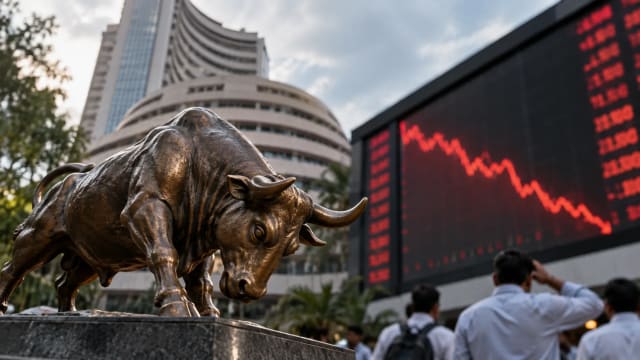
The benchmark 10-year government bond yield ended the previous week at 7.0233%, registering its fourth consecutive weekly increase. It had risen about six basis points during that week after gaining roughly 20 basis points over the preceding three weeks.
An OMO sale can add to the supply of government securities available to investors.
Other things being equal, greater supply can put downward pressure on bond prices. Because bond prices and yields move inversely, that can push yields higher.
But the auction itself is not the only force determining yields.
Oil prices, expectations for Indian monetary policy, movements in US Treasury yields, foreign portfolio flows and the Federal Reserve's September decision are all influencing the market simultaneously.
Why Higher Government Bond Yields Matter Beyond Bond Traders
Government bond yields act as an important benchmark for borrowing costs throughout the economy.
If yields rise persistently, the impact can eventually extend beyond government securities into corporate bonds and other market-linked borrowing costs.
Banks, insurers, mutual funds and other large institutional investors also hold substantial government-security portfolios.
Because bond prices fall when yields rise, a sharp increase in yields can reduce the market value of existing fixed-rate bonds.
However, higher yields can also create opportunities for investors purchasing bonds at the new, higher yield levels.
The effect therefore differs considerably depending on whether an investor already owns bonds, is buying new securities or intends to hold them until maturity.
JantaScope Analysis: This Is About Restoring Control Over Short-Term Rates
The most useful way to understand the ₹1 lakh crore sale is not as a standalone tightening event, but as part of the RBI's attempt to regain tighter control over liquidity conditions.
A banking system flooded with cash can make monetary policy less effective if overnight interest rates consistently trade below the intended policy corridor.
RBI Governor Sanjay Malhotra said before the OMO announcement that the central bank had multiple tools available to manage liquidity, including open market operations and foreign-exchange swaps, adding that “nothing is off the table.”
The subsequent announcement of the bond sales shows the RBI choosing one of its more direct instruments for withdrawing durable liquidity.
That does not automatically mean a change in the RBI's policy interest rate.
Liquidity management and the policy repo rate are related but distinct tools. The Monetary Policy Committee decides the policy rate, while liquidity operations help the RBI keep market conditions aligned with its monetary-policy stance.
That distinction is especially important for readers interpreting the bond sale as a signal about the RBI's next rate decision.
Another Pressure Point: Oil
The timing is complicated further by global conditions.
Brent crude was trading above $100 a barrel this week amid supply concerns, according to Reuters. India is a major crude importer, making sustained increases in oil prices relevant for inflation, the trade balance and the rupee.
India's consumer inflation was reported at 4.82% in August.
That means the RBI is managing surplus domestic liquidity while simultaneously watching inflation and external-market pressures.
What Investors Should Watch in the ₹50,000-Crore Auction
The headline amount is important, but the market's response will provide additional information.
Demand for the six securities, the prices accepted by the RBI and subsequent movements in yields can indicate how comfortably the market is able to absorb the additional bond supply.
The reaction of the benchmark 10-year yield will also be closely watched even though the securities in the first OMO basket mature between 2029 and 2032.
Investors should also monitor liquidity conditions after the auction. If the banking-system surplus remains exceptionally large even after the ₹1 lakh crore programme, attention could shift toward whether additional liquidity-management operations are required.
Any such future action, however, should not be assumed until announced by the RBI.
What Happens Next?
The first ₹50,000-crore OMO sale takes place on September 17.
That will be followed by two ₹25,000-crore tranches on September 21 and September 28, taking the announced programme to ₹1 lakh crore.
The bigger question is whether that will be enough to bring liquidity and overnight rates closer to the RBI's desired operating conditions.
The answer will depend not only on the amount the RBI withdraws, but also on government cash flows, foreign-exchange operations, banking activity and other sources that add or remove rupees from the system.
For markets, therefore, September 17 is not simply a ₹50,000-crore bond auction. It is the first test of how aggressively the RBI can drain an unusually large liquidity surplus without creating excessive disruption in India's bond market.