RBI Moves Bombay High Court Over Tata Sons Listing: What the Caveat Means for the Tata Group
The long-running question over whether Tata Sons must enter the stock market has taken a significant legal turn.
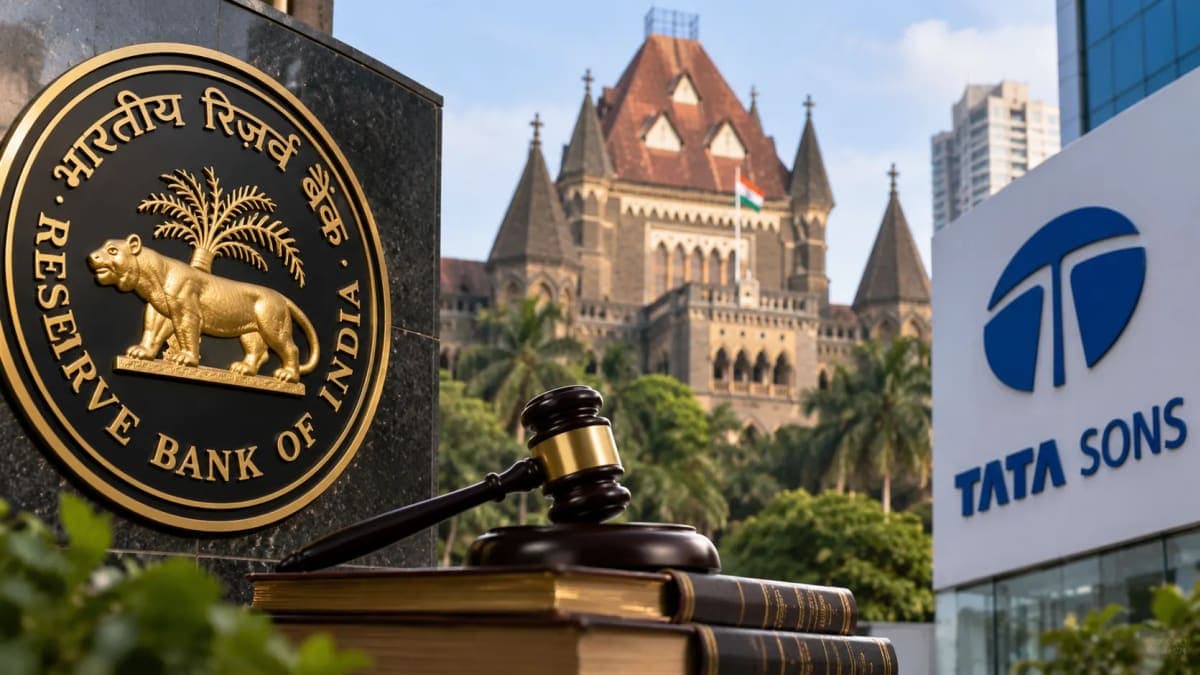
The Reserve Bank of India has filed a caveat in the Bombay High Court in connection with Tata Sons' listing issue, seeking an opportunity to be heard before the court passes any order if the Tata Group's holding company—or another petitioner—challenges the regulator's position.
The development follows RBI's rejection of Tata Sons' attempt to surrender its registration as a Core Investment Company, or CIC, according to Reuters and other reports citing people familiar with the matter.
The caveat does not mean that RBI has sued Tata Sons, nor does it mean that the Bombay High Court has ordered Tata Sons to launch an IPO.
Instead, it is essentially a procedural safeguard: if a case is brought before the court, RBI wants its arguments heard before any order—particularly interim relief—is considered.
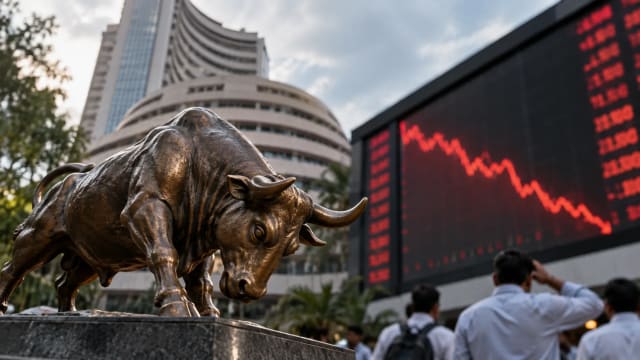
That distinction matters because speculation around a possible Tata Sons IPO has intensified following the regulator's decision.
Why is Tata Sons facing pressure to list?
The dispute traces back to RBI's Scale Based Regulation framework for non-banking financial companies.
Under that framework, NBFCs are divided into regulatory layers according to factors including size, activity and systemic significance.
RBI's rules state that an NBFC identified in the Upper Layer, or NBFC-UL, must be listed within three years of its identification.
Tata Sons Private Limited was included in RBI's Upper Layer list as a Core Investment Company. RBI's subsequent published NBFC-UL lists continued to identify Tata Sons as an Upper Layer entity.
That classification is the regulatory foundation behind the listing issue.
The three-year deadline has already passed
RBI first identified Tata Sons among the Upper Layer NBFCs in September 2022.
Under the three-year requirement, that put the company on a path toward listing by September 2025.
However, Tata Sons did not proceed with an IPO.
Instead, it had sought to surrender its Core Investment Company registration, an approach that could have removed the regulatory basis for mandatory listing if accepted.
Reports say Tata Sons submitted its application in March 2024.
RBI has now rejected that route and asked the company to comply with the regulatory requirements applicable to it.
The central bank's subsequent caveat indicates that it wants to ensure its position is represented should the dispute reach the Bombay High Court.
What exactly is a caveat?
This is perhaps the most important part of the story for readers.
A caveat is not a court judgment against Tata Sons.
It also does not itself compel the company to sell shares to the public.
A caveat allows a party expecting possible litigation to ask the court not to pass an order affecting it without first giving that party an opportunity to be heard.
In this case, RBI's move is therefore best understood as preparation for a possible legal challenge rather than the beginning of a lawsuit initiated by the central bank.
As of this article's publication, reports indicate Tata Sons has been considering its options, but the existence of the caveat should not be interpreted as evidence that a final court battle—or an IPO—is already underway.
Why did Tata Sons want to surrender its CIC registration?
Tata Sons is unusual compared with a conventional lending-focused NBFC.
It is the principal holding company of the Tata Group and owns major stakes across the conglomerate, including in companies such as Tata Consultancy Services and Tata Steel.
Tata Sons had substantially reduced its borrowings before seeking deregistration.
Its attempt to surrender its CIC registration therefore raised a fundamental regulatory question: whether changes to its financing structure were sufficient to allow it to leave the regulated CIC framework and consequently escape the NBFC-UL listing requirement.
RBI's rejection, as reported, indicates that the regulator did not accept the proposed route out of that framework.
However, RBI has not publicly released a detailed order explaining all of its reasoning, so conclusions about the precise regulatory considerations behind the rejection should be treated cautiously.
Tata Sons remains an enormous financial holding company
The scale of Tata Sons helps explain why the issue attracts attention far beyond a routine NBFC compliance matter.
According to Tata Sons' FY2024-25 annual report, the company reported standalone investments of roughly ₹1.70 lakh crore at March 31, 2025.
Its own FY2025-26 disclosures are available through Tata Sons' corporate document repository.
Tata Sons' significance also comes from what it owns.
For example, Tata Consultancy Services' FY2025-26 annual report shows Tata Sons holding 71.74% of TCS as of March 31, 2026.
Tata Steel's FY2025-26 financial statements show Tata Sons holding 31.76% of Tata Steel.
This means a Tata Sons listing would not simply introduce another large company to India's stock market. Investors would effectively be gaining exposure to a holding company sitting above significant parts of one of India's largest corporate groups.
Why a Tata Sons IPO could be structurally complicated
The phrase "Tata Sons IPO" sounds straightforward, but executing one would involve considerably more than choosing a valuation and selling shares.
A potential transaction would have to address several questions.
How much equity would actually be offered?
Which existing shareholders, if any, would sell shares?
Would Tata Sons issue new shares, existing shareholders sell shares, or would the structure involve both?
How would the market value the holding company's stakes in listed and unlisted Tata businesses while accounting for a holding-company discount?
And how would a listing affect the governance structure of a company that has historically remained closely held?
None of these questions has yet been definitively answered publicly.
That is why estimates assigning a specific IPO size or valuation to Tata Sons should not be presented as settled facts.
Tata Trusts' ownership makes the situation especially important
Tata Sons' ownership structure distinguishes it from most potential mega-IPOs.
Two of its largest shareholders are the Sir Dorabji Tata Trust and the Sir Ratan Tata Trust, according to Tata Sons' annual report.
Together with other Tata charitable trusts, the trusts have historically controlled roughly two-thirds of Tata Sons.
The Shapoorji Pallonji family's investment entities constitute another major shareholder bloc.
Consequently, a listing debate is not only about regulatory compliance. Depending on how any eventual transaction is structured, it could also affect liquidity for existing shareholders, valuation transparency and the governance environment surrounding the Tata Group's holding company.
Importantly, however, a public listing does not automatically mean Tata Trusts would lose control. The eventual effect would depend on how many shares were offered and which shareholders participated.
Why some listed Tata stocks reacted
The regulatory developments have also attracted attention in the stock market because several publicly traded Tata Group companies own stakes in Tata Sons.
Investors have previously viewed a possible Tata Sons listing as a potential route toward establishing a more observable market valuation for those holdings.
Following the latest regulatory developments, some Tata Group shares rose sharply, according to market reports.
But this needs an important qualification.
A rise in a Tata Group stock following Tata Sons IPO speculation does not establish how much value an eventual listing would unlock for that company. Any effect would depend on the valuation assigned to Tata Sons, the size and structure of an IPO, holding-company discounts, taxation and whether the shareholder actually monetised any of its stake.
What happens next?
The caveat itself does not determine the next step.
Broadly, several paths remain possible.
Tata Sons could continue discussions with RBI, seek reconsideration or clarification of the regulator's decision, pursue legal remedies, or begin taking steps toward compliance with the listing requirement.
Reports on September 15 also indicated that Tata Trusts wanted Tata Sons to examine options including approaching RBI again before pursuing litigation.
Until Tata Sons, RBI or a court formally confirms the next step, however, those possibilities should remain exactly that—possibilities.
JantaScope Analysis: The bigger issue is regulatory perimeter, not just an IPO
The most interesting aspect of this dispute may ultimately be larger than Tata Sons.
RBI introduced its Scale Based Regulation framework partly to apply progressively tighter supervision to NBFCs whose size, complexity and interconnectedness could make them more significant to India's financial system.
Mandatory listing for Upper Layer NBFCs is part of that framework.
Listing brings disclosure obligations, market scrutiny and a broader governance framework that does not exist in exactly the same form for a closely held private company.
Tata Sons presents an unusual test because it is simultaneously a regulated Core Investment Company and the apex holding company of one of India's most important business groups.
The central question is therefore not simply whether investors will eventually be able to buy Tata Sons shares.
It is whether a company identified by RBI as sufficiently significant to fall within its Upper Layer framework can restructure its financial profile in a way that removes the listing obligation—and how much discretion the regulator has when deciding that question.
If the issue eventually reaches court, that regulatory question could become at least as important as the IPO itself.
For now, one conclusion is safe:
RBI's Bombay High Court caveat strengthens its procedural position in anticipation of possible litigation, but it is neither a court order forcing an immediate Tata Sons IPO nor proof that an IPO timetable has been finalised.