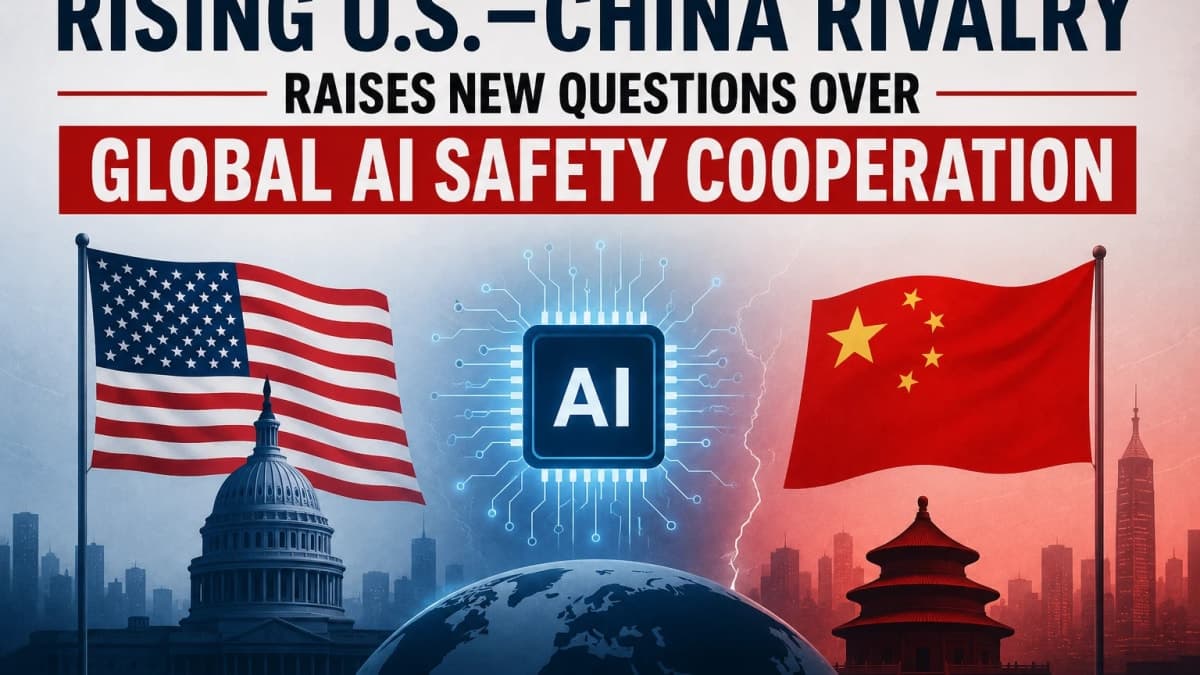
U.S.–China Competition in Artificial Intelligence Could Complicate Global Safety Frameworks
AI Innovation Accelerates Amid Strategic Competition
Artificial intelligence is evolving rapidly, transforming industries ranging from healthcare and finance to manufacturing, defense, and education. At the same time, the world's two largest economies—the United States and China—are intensifying their competition to lead the next generation of AI technologies.
While this rivalry is driving innovation and investment, it is also raising concerns that geopolitical disagreements could slow international cooperation on AI safety standards and responsible development.
Why AI Safety Has Become a Global Priority
As AI systems become more capable, governments, researchers, and technology companies have increasingly emphasized the importance of developing safeguards that reduce risks while encouraging innovation.
AI safety discussions typically focus on issues such as model reliability, cybersecurity, misuse prevention, transparency, accountability, and the ethical deployment of increasingly advanced systems. Many experts believe these challenges require international collaboration because AI technologies often operate across national borders.
Geopolitical Tensions Create New Obstacles
Relations between Washington and Beijing have become increasingly competitive across areas including technology, trade, semiconductor manufacturing, national security, and advanced computing.
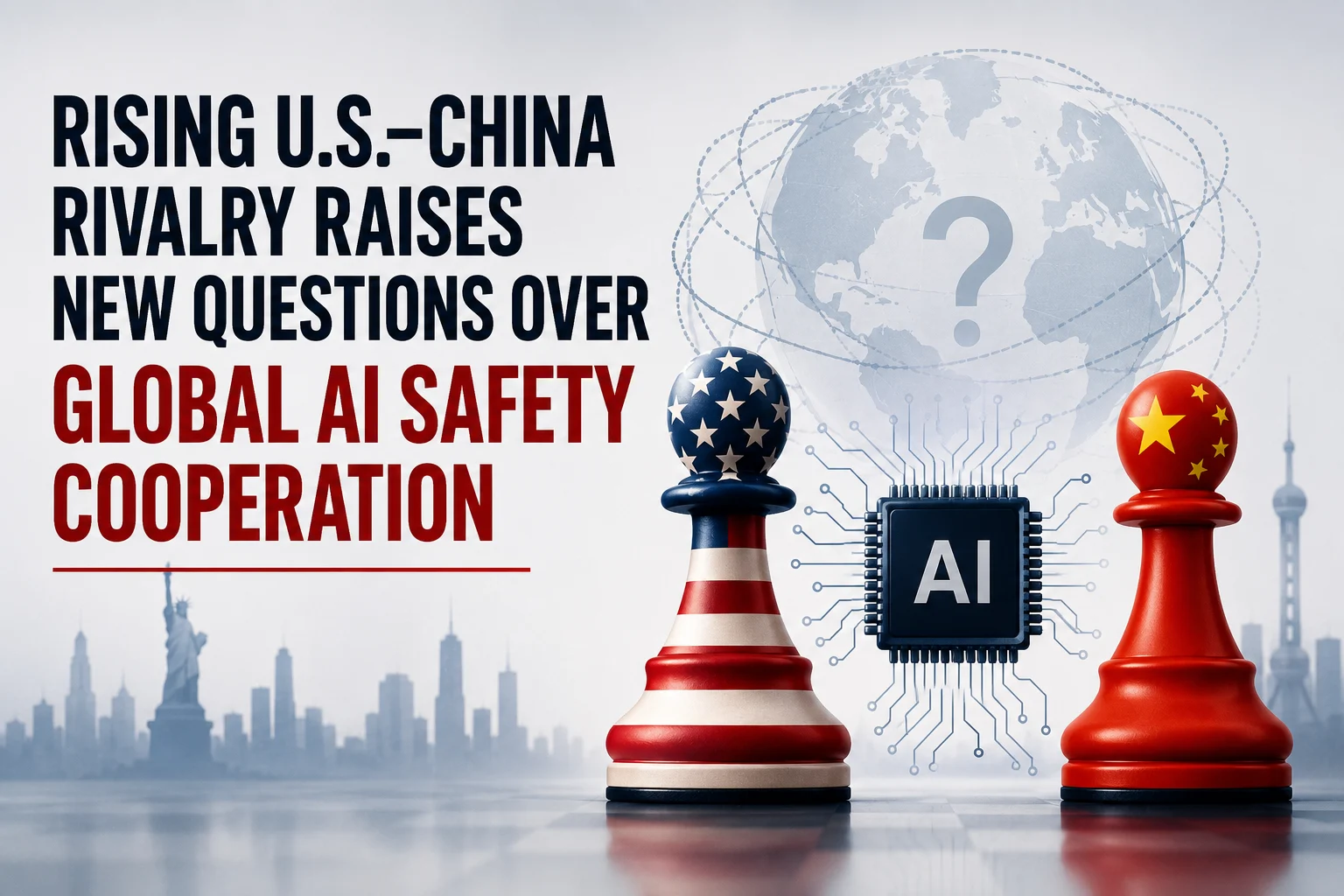
This broader strategic rivalry has the potential to complicate cooperation on AI governance. Differences in national priorities, regulatory approaches, and security concerns may make it more difficult for both countries to coordinate on shared standards or jointly address emerging risks.
Without consistent communication, experts warn that fragmented regulations could lead to uneven safety practices across different regions.
Global Implications Beyond Two Countries
The impact of U.S.–China competition extends well beyond bilateral relations. Many countries, international organizations, research institutions, and private companies are seeking common principles for responsible AI development.
If leading AI powers adopt significantly different regulatory frameworks, businesses operating globally may face compliance challenges, while international efforts to establish common safety guidelines could become more complicated.
Developing nations may also have to navigate competing technology ecosystems when adopting AI solutions.
Balancing Innovation and Regulation
Governments worldwide continue to face the challenge of encouraging technological advancement without slowing economic growth or limiting research.
Excessive regulation could hinder innovation, while insufficient oversight could increase risks associated with increasingly powerful AI systems. Policymakers are therefore attempting to strike a balance between maintaining competitiveness and ensuring public trust in AI technologies.
Industry leaders have also called for practical governance models that encourage responsible innovation while remaining flexible enough to adapt as AI capabilities continue evolving.
What Lies Ahead
Artificial intelligence is expected to play an increasingly central role in economic development, scientific research, national security, and public services over the coming years.
Future international cooperation may depend on whether major AI powers can maintain technical dialogue despite broader geopolitical disagreements. Multilateral forums, industry partnerships, academic collaboration, and global standards organizations may all play important roles in shaping future AI governance.
Balanced Analysis
Competition between the United States and China is likely to accelerate AI innovation through increased investment, research, and technological breakthroughs. However, the same rivalry could make international coordination on AI safety more difficult if geopolitical priorities outweigh collaborative efforts.
The future of global AI governance may ultimately depend on finding areas where strategic competition and shared responsibility can coexist. Achieving that balance will be critical as artificial intelligence becomes more deeply integrated into economies and societies worldwide.