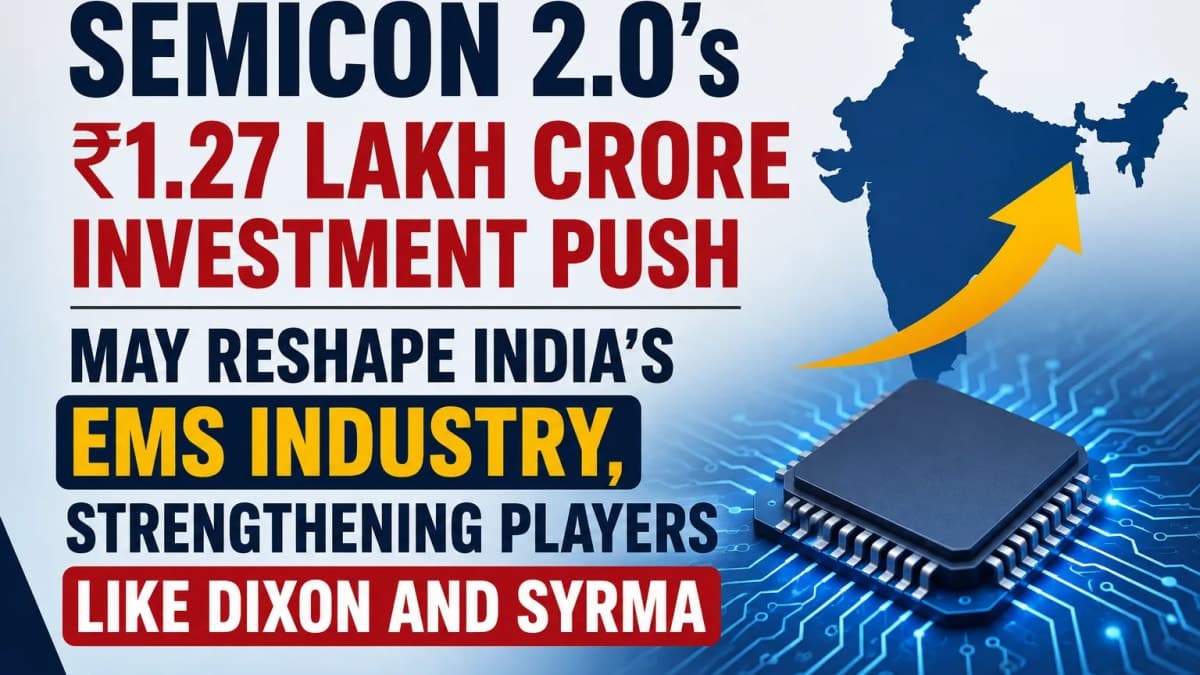
Semicon 2.0’s ₹1.27 Lakh Crore Push Could Accelerate India’s Electronics Manufacturing Growth
India is preparing for the next phase of its semiconductor manufacturing journey with the proposed Semicon 2.0 programme, an initiative reportedly valued at ₹1.27 lakh crore. The plan is designed to expand the country's semiconductor ecosystem, encourage advanced manufacturing, and reduce dependence on imported chips.
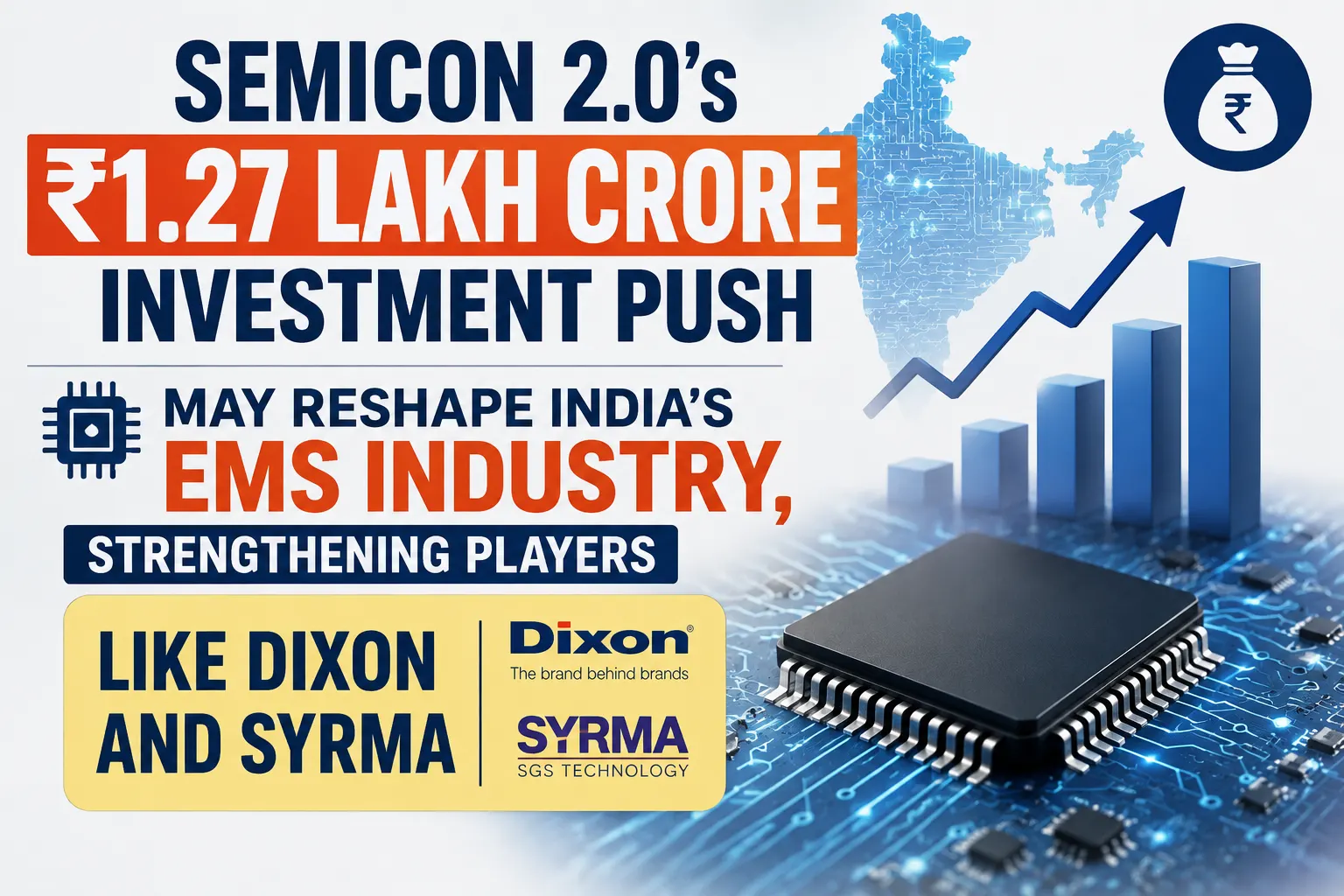
While the initiative primarily targets semiconductor fabrication and component manufacturing, analysts believe the ripple effects could extend well beyond chipmakers. India's Electronics Manufacturing Services (EMS) companies, including leading players such as Dixon Technologies and Syrma SGS Technology, may emerge among the biggest indirect beneficiaries as domestic electronics production scales up.
Why Semicon 2.0 Matters
Semiconductors form the backbone of modern technology, powering everything from smartphones and laptops to automobiles, industrial equipment, medical devices, and artificial intelligence systems.
India has significantly expanded its electronics manufacturing capacity over the past decade but still relies heavily on imported semiconductor components. By encouraging local chip manufacturing and packaging, Semicon 2.0 aims to build a stronger domestic supply chain capable of supporting long-term industrial growth.
The programme also aligns with India's broader vision of becoming a global manufacturing hub under initiatives promoting high-value technology production.
Potential Benefits for the EMS Industry
Electronics Manufacturing Services companies assemble products for global and domestic brands across sectors including consumer electronics, telecom equipment, industrial electronics, automotive components, and wearable devices.
A stronger semiconductor ecosystem could provide several advantages to these manufacturers:
Improved availability of locally sourced semiconductor components.
Reduced dependence on overseas supply chains.
Faster production cycles and lower logistics costs.
Greater confidence for global brands to expand manufacturing in India.
Increased investment across the electronics value chain.
These improvements could help EMS companies expand production while strengthening India's competitiveness in global electronics exports.
Why Dixon and Syrma Are Being Watched
Among listed EMS companies, Dixon Technologies and Syrma SGS Technology are often viewed as key participants in India's electronics manufacturing expansion.
Dixon has steadily diversified across smartphones, televisions, consumer appliances, IT hardware, and electronic devices through contract manufacturing partnerships.
Syrma SGS Technology has strengthened its presence in industrial electronics, automotive electronics, RFID solutions, and precision manufacturing, positioning itself to benefit from broader electronics demand.
As semiconductor manufacturing becomes more localized, companies with established manufacturing infrastructure could find additional opportunities to scale production and attract new business.
Broader Economic Impact
The semiconductor ecosystem extends far beyond chip fabrication facilities. Investments typically generate demand across:
Electronics assembly
Component manufacturing
Testing and packaging
Precision engineering
Logistics and supply chain services
Research and development
Skilled technical employment
As these industries grow together, India could improve its position in global electronics value chains while creating thousands of high-skilled manufacturing jobs.
Challenges Remain
Despite the optimism surrounding Semicon 2.0, industry experts caution that building a globally competitive semiconductor ecosystem requires sustained investment and long-term policy support.
Key challenges include:
High capital expenditure requirements
Access to advanced manufacturing technology
Skilled workforce development
Reliable infrastructure and utilities
Global competition from established semiconductor manufacturing nations
Successfully addressing these issues will determine how quickly India can translate policy ambitions into manufacturing capacity.
Looking Ahead
The proposed Semicon 2.0 programme represents another significant step in India's effort to strengthen its technology manufacturing ecosystem. While semiconductor production remains the primary objective, the initiative could generate substantial opportunities across the broader electronics industry.
For EMS companies such as Dixon Technologies and Syrma SGS Technology, expanding domestic semiconductor capabilities may create favorable conditions for future growth as India continues its push toward becoming a major global electronics manufacturing destination.