हिंदी में पढ़ें —JantaScope हिंदी
Finance

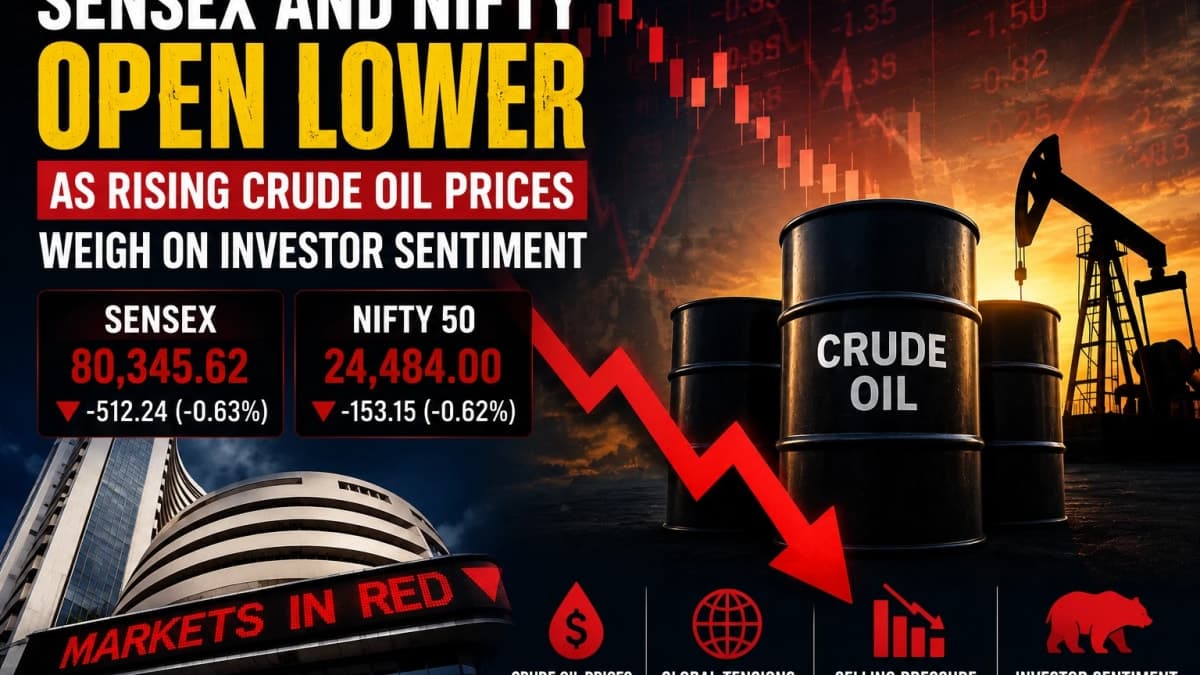
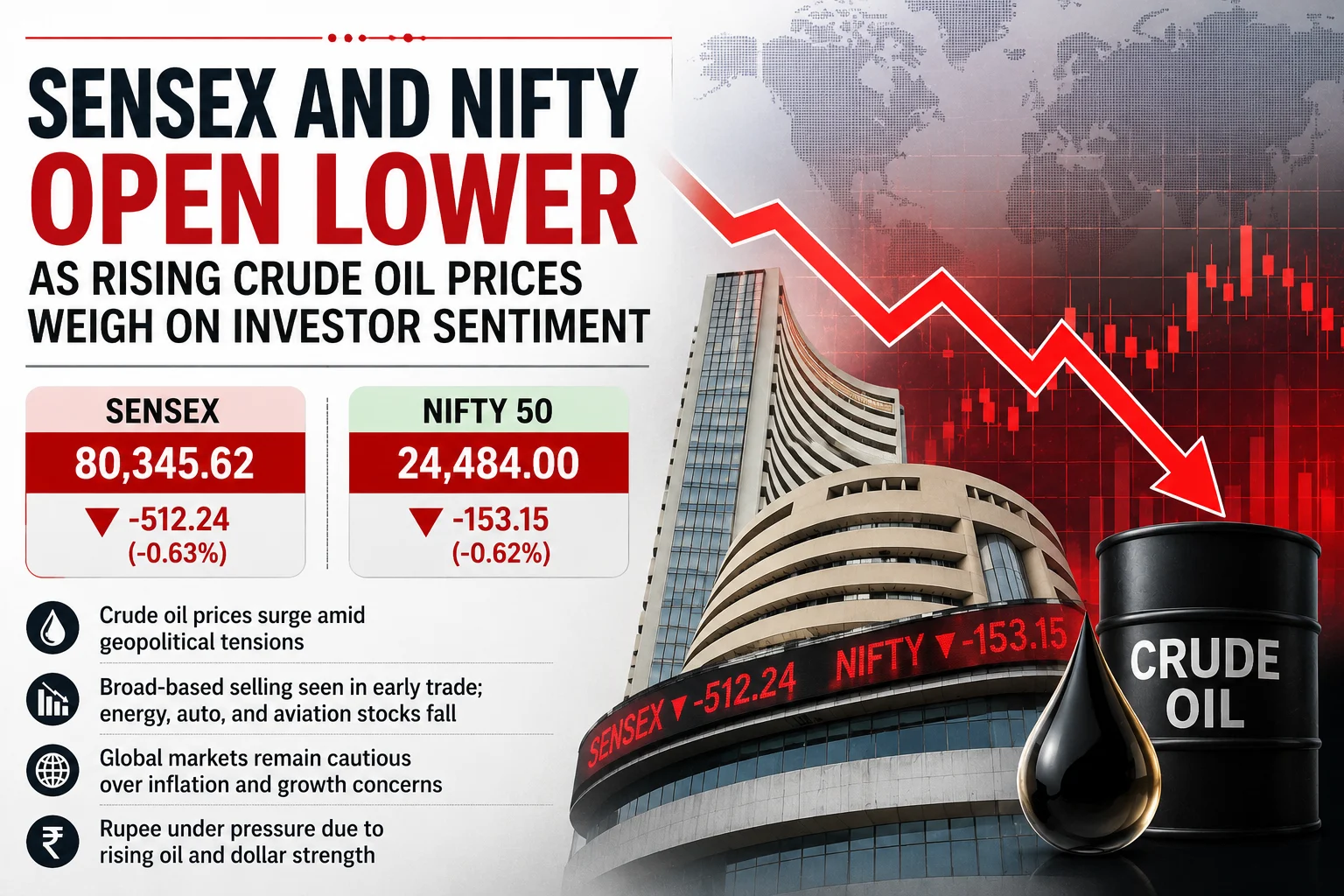
Sensex and Nifty Open Lower as Rising Crude Oil Prices Weigh on Investor Sentiment

Indian equity benchmark indices Sensex and Nifty began Thursday's trading session on a weak note as surging global crude oil prices and escalating geopolitical tensions dampened investor confidence. Higher energy costs, combined with cautious global market cues and mixed corporate earnings, triggered broad-based selling in early trade.

Sensex and Nifty Open Lower as Rising Crude Oil Prices Weigh on Investor Sentiment

By Jeet Nirmal

Source: Janta Scope

Indian Stock Markets Extend Losses Amid Oil Price Surge

Benchmark Indices Start the Day in the Red

The BSE Sensex and NSE Nifty opened lower in early trading, extending their recent losing streak as investors reacted to another sharp jump in international crude oil prices.

The decline reflected growing concerns that sustained high oil prices could increase inflationary pressures, widen India's import bill, and squeeze corporate profitability. As one of the world's largest crude oil importers, India remains particularly sensitive to fluctuations in global energy markets.


Why Crude Oil Prices Are Affecting the Market

Geopolitical Risks Push Energy Costs Higher

Global crude prices have risen significantly following renewed geopolitical tensions in the Middle East, raising fears of potential supply disruptions.

Higher crude prices generally increase transportation and manufacturing costs while adding pressure on fuel imports. Investors worry that prolonged price increases may affect inflation, reduce consumer spending power, and influence future monetary policy decisions. These concerns have prompted traders to adopt a cautious approach toward equities.

Sector-Wise Performance

Oil-Sensitive Stocks Face Selling Pressure

Several sectors linked to fuel consumption and input costs remained under pressure during early trade.

Healthcare, banking, automobile, aviation, and select technology stocks witnessed weakness, while upstream energy companies received some buying interest because higher crude prices could improve their earnings outlook. Overall market breadth remained negative as selling spread across most sectors.


Corporate Earnings Also Influence Sentiment

Apart from crude oil prices, investors remained focused on the ongoing quarterly earnings season.

Disappointing earnings from some companies and caution ahead of upcoming financial results added to market volatility. Market participants continued to assess whether corporate performance can offset the impact of rising global macroeconomic risks.


Background

The Indian stock market has witnessed increased volatility in recent sessions as geopolitical developments, elevated commodity prices, and global economic uncertainty continue to influence investor behaviour.

When crude oil prices rise sharply, sectors that rely heavily on fuel or imported raw materials often experience increased cost pressures. This can reduce profit margins and affect overall market sentiment, particularly in an import-dependent economy like India.


Why This Story Matters

The movement of Sensex and Nifty is closely watched because it reflects investor confidence in India's economy.

Persistently high crude oil prices could affect inflation, corporate earnings, government finances, and consumer spending. Investors will continue monitoring geopolitical developments, oil price movements, foreign investment flows, and quarterly earnings for clues about the market's short-term direction.


Balanced Analysis

While higher crude oil prices have created immediate pressure on Indian equities, market performance will also depend on corporate earnings, monetary policy expectations, and developments in global financial markets.

Some energy producers could benefit from elevated oil prices, whereas sectors dependent on fuel and transportation costs may continue facing headwinds if crude remains elevated. Investors are likely to remain cautious until there is greater clarity on both geopolitical risks and commodity price trends.


Related

More stories

Indian Government Bond Yields Stay Under Pressure as RBI Rate Outlook and Oil Risks Weigh on Market

Indian government bond yields remained elevated on Tuesday as investors weighed a more cautious monetary-policy outlook from the Reserve Bank of India, movements in global crude oil prices and uncertainty across international bond markets. The benchmark 10-year yield hovered around 6.87%-6.88%, keeping borrowing-cost concerns in focus.

Finance

Indian Government Bond Yields Stay Under Pressure as RBI Rate Outlook and Oil Risks Weigh on Market

India’s Forex Reserves Jump Nearly $10 Billion to Six-Month High of $716.9 Billion

India’s foreign exchange reserves climbed to a six-month high of $716.9 billion in the week ended August 14, 2026, rising by nearly $10 billion from the previous week. The increase was led by higher foreign currency assets and gold holdings, strengthening the country’s financial cushion amid volatility in global currency and commodity markets.

Finance

India’s Forex Reserves Jump Nearly $10 Billion to Six-Month High of $716.9 Billion

Indian Banks Raise $12 Billion Overseas as RBI Swap Window Sparks Funding Rush

Indian banks have raised about $12 billion from overseas debt markets in 2026, taking advantage of strong international demand for Indian banking debt and a special foreign-exchange swap facility introduced by the Reserve Bank of India (RBI). The surge has accelerated ahead of an important deadline for eligible foreign-currency deposits and highlights lenders’ growing ability to tap global pools of capital.

Finance

Indian Banks Raise $12 Billion Overseas as RBI Swap Window Sparks Funding Rush

RBI Opens Door for LIC to Nearly Double HDFC Bank Stake — What the 9.99% Approval Really Means

The Reserve Bank of India has approved Life Insurance Corporation of India’s request to increase its holding in HDFC Bank to as much as 9.99%. LIC held 4.11% of the private-sector lender as of August 14, 2026, meaning the regulatory clearance gives India’s largest insurer substantial room to increase its investment. The permission, however, does not mean LIC is required to purchase shares up to the approved limit immediately.

Finance

RBI Opens Door for LIC to Nearly Double HDFC Bank Stake — What the 9.99% Approval Really Means

Why HDFC Bank Shares Are in Focus Today as Blue-Chip Buying Supports the Market

HDFC Bank shares remained firmly on investors’ radar on Monday, August 24, as buying in heavyweight blue-chip stocks helped Indian benchmark indices trade with a positive bias. The private-sector banking major was among the large-cap names supporting the market, even as investors remained cautious about geopolitical tensions, crude oil prices and upcoming global monetary-policy signals.

Finance

Why HDFC Bank Shares Are in Focus Today as Blue-Chip Buying Supports the Market

India’s Dollar-Deposit Trade Is Booming — Why Citigroup and Axis Bank Are Joining the Rush

Citigroup and Axis Bank have teamed up on a financing arrangement linked to foreign-currency deposits from non-resident Indians, highlighting how the Reserve Bank of India’s efforts to attract overseas dollars are creating new opportunities in cross-border banking. The structure could help amplify NRI dollar inflows while strengthening banks’ access to foreign-currency funding.

Finance

India’s Dollar-Deposit Trade Is Booming — Why Citigroup and Axis Bank Are Joining the Rush