Indian Stock Market Comes Under Pressure
Indian benchmark equity indices moved lower as investors reacted to renewed uncertainty surrounding global oil markets.
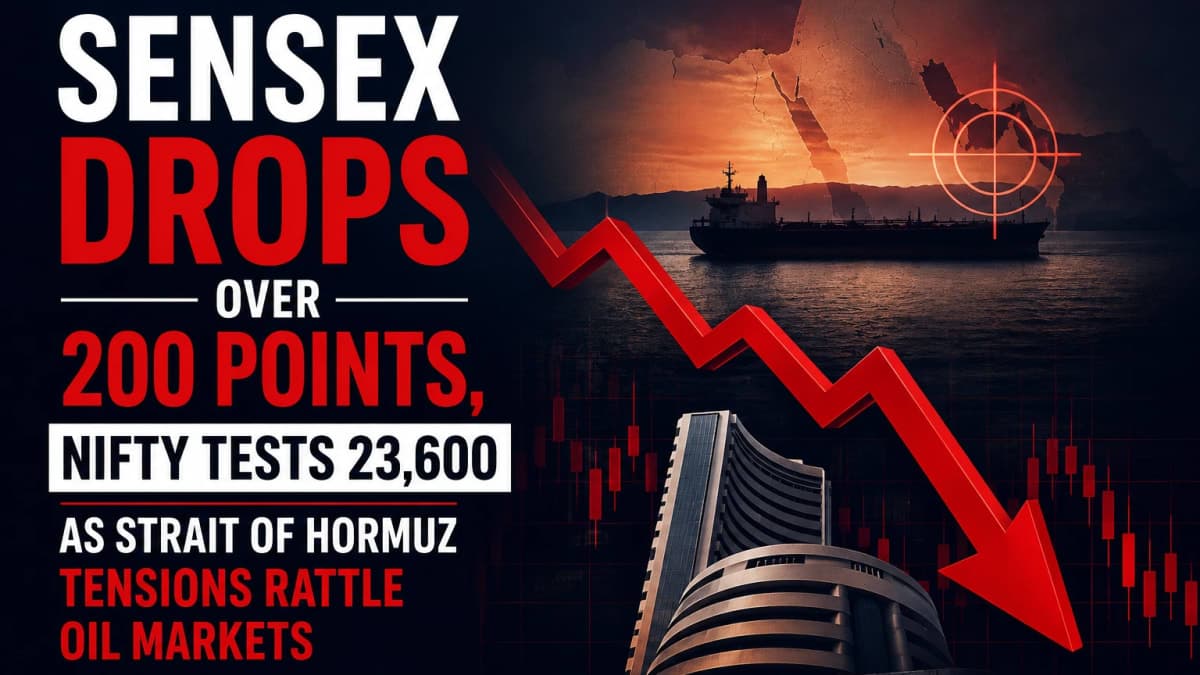
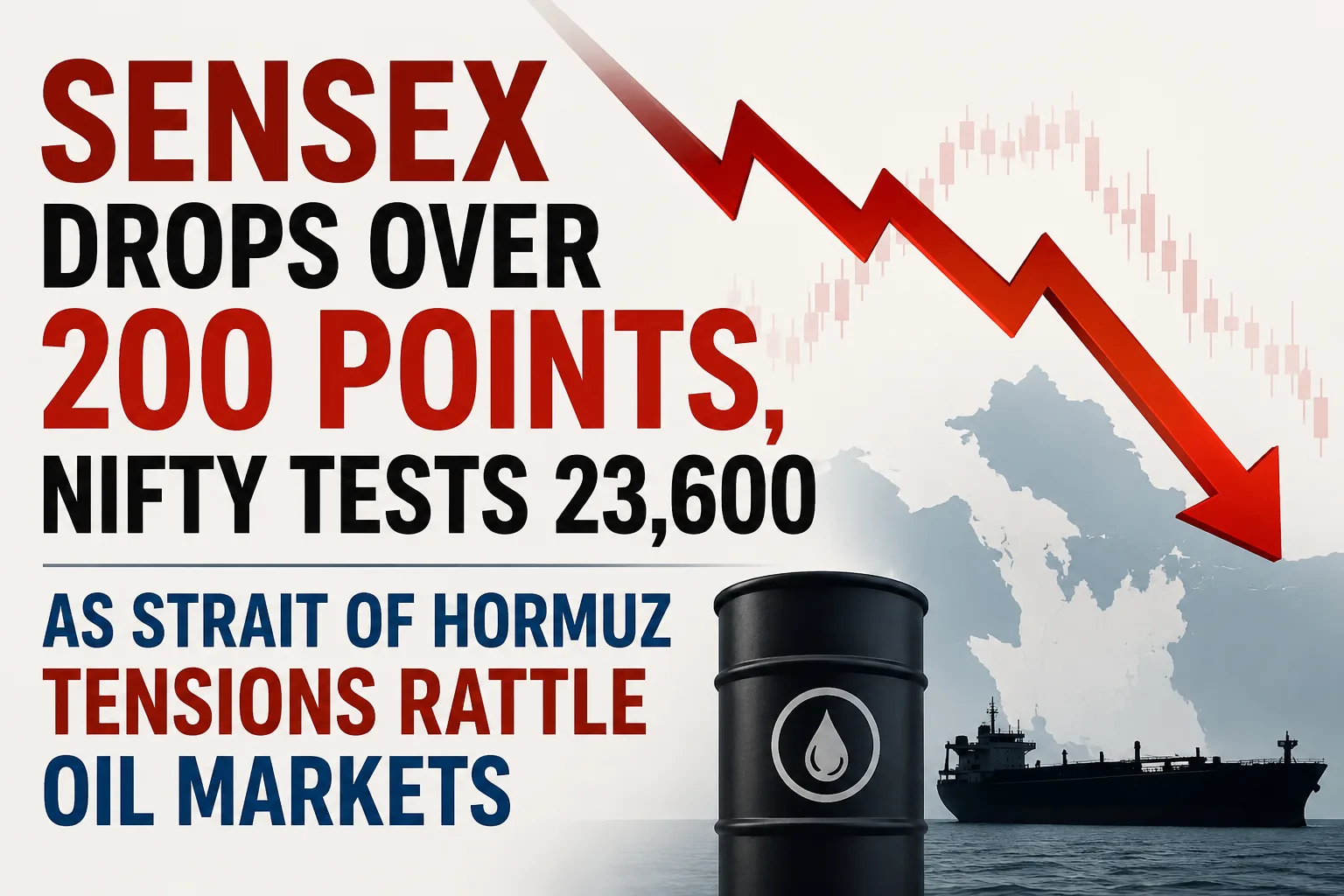
The Sensex dropped more than 200 points, while the Nifty tested the 23,600 mark. The decline came as tensions linked to the Strait of Hormuz unsettled sentiment around crude oil and raised concerns about the possible economic consequences of disruption in a strategically important energy corridor.
The market movement highlights how geopolitical developments outside India can quickly influence domestic investor sentiment, particularly when they involve global energy supplies.
Why the Strait of Hormuz Matters
The Strait of Hormuz is one of the world's strategically important maritime routes for energy transportation. Because of its importance to international oil shipments, geopolitical tension surrounding the waterway can attract immediate attention from commodity traders, governments and financial markets.
Concerns over the route can create uncertainty over future oil supplies even before any major disruption occurs. Investors may consequently become more cautious as they assess how geopolitical developments could affect crude prices and the wider global economy.
For equity markets, uncertainty itself can become an important factor as investors reassess risk.
Oil-Market Concerns Put Investors on Alert
The latest pressure on the Sensex and Nifty shows the close relationship between geopolitical risk, energy-market sentiment and equities.
Oil is particularly significant for India because changes in global crude prices can have broader implications for businesses, consumers and the economy. A sustained increase in energy costs can potentially increase expenses across industries that depend heavily on fuel and transportation.
However, short-term volatility in oil does not necessarily translate into a prolonged negative trend for equities. Much depends on how geopolitical conditions develop and whether concerns surrounding energy supplies intensify or ease.
Sensex Falls More Than 200 Points
The Sensex's decline of over 200 points reflected the cautious mood in the domestic market.
Sharp geopolitical developments can prompt investors to reduce exposure to riskier assets while waiting for greater clarity. Such moves can also lead to increased volatility as markets react to changing expectations surrounding oil prices and global economic conditions.
At the same time, a decline of a few hundred points by itself does not establish the direction of the market over a longer period. Investors typically assess several domestic and international factors before forming a broader outlook.
Nifty Tests the 23,600 Level
The Nifty's move toward the 23,600 level also placed attention on the benchmark as traders assessed the market's response to geopolitical uncertainty.
Major index levels are closely watched because they can influence short-term market sentiment. Whether the Nifty stabilises around such levels or experiences further pressure can depend on how investors interpret subsequent developments.
With the immediate trigger linked to concerns surrounding oil markets, developments affecting the Strait of Hormuz are likely to remain an important sentiment factor.
Why Rising Oil Risk Matters for India
India's economy is sensitive to movements in international energy prices, making global oil-market developments particularly relevant for domestic investors.
Higher crude prices can potentially increase costs for fuel-dependent industries and place pressure on transportation and logistics expenses. If elevated energy prices persist, their effects can spread through different parts of the economy.
The impact is not necessarily uniform. Different sectors can react differently to movements in crude prices, while broader equity-market performance also depends on corporate earnings, economic conditions, foreign investment flows and domestic investor participation.
Balanced Outlook: Geopolitical Risk Versus Domestic Fundamentals
The fall in the Sensex and the Nifty's test of 23,600 underline the market's sensitivity to geopolitical uncertainty, but the immediate decline should be viewed in context.
Oil-market concerns can produce sharp short-term swings, particularly when strategically important supply routes are involved. Yet market direction over a longer period depends on whether those concerns turn into sustained disruptions and how other economic factors evolve.
If tensions surrounding the Strait of Hormuz ease, some of the geopolitical risk premium affecting market sentiment could diminish. Conversely, a further deterioration in conditions could keep oil prices and equity markets volatile.
For investors, the key issue is therefore not simply the initial market decline but whether tensions begin to have a lasting effect on global energy supplies and economic expectations.
Why This Matters
The episode demonstrates the connection between geopolitics, global energy markets and Indian equities.
The Sensex falling more than 200 points and the Nifty testing 23,600 show how quickly uncertainty around a major international oil route can influence investor confidence. For India, where international energy prices have significant economic relevance, developments affecting oil markets can become an important factor for both financial markets and the broader economic outlook.
This article is based on reporting published by The Economic Times.