Sensex and Nifty Decline for Fifth Straight Session as Global Risks Pressure Markets
Markets Stay Under Pressure
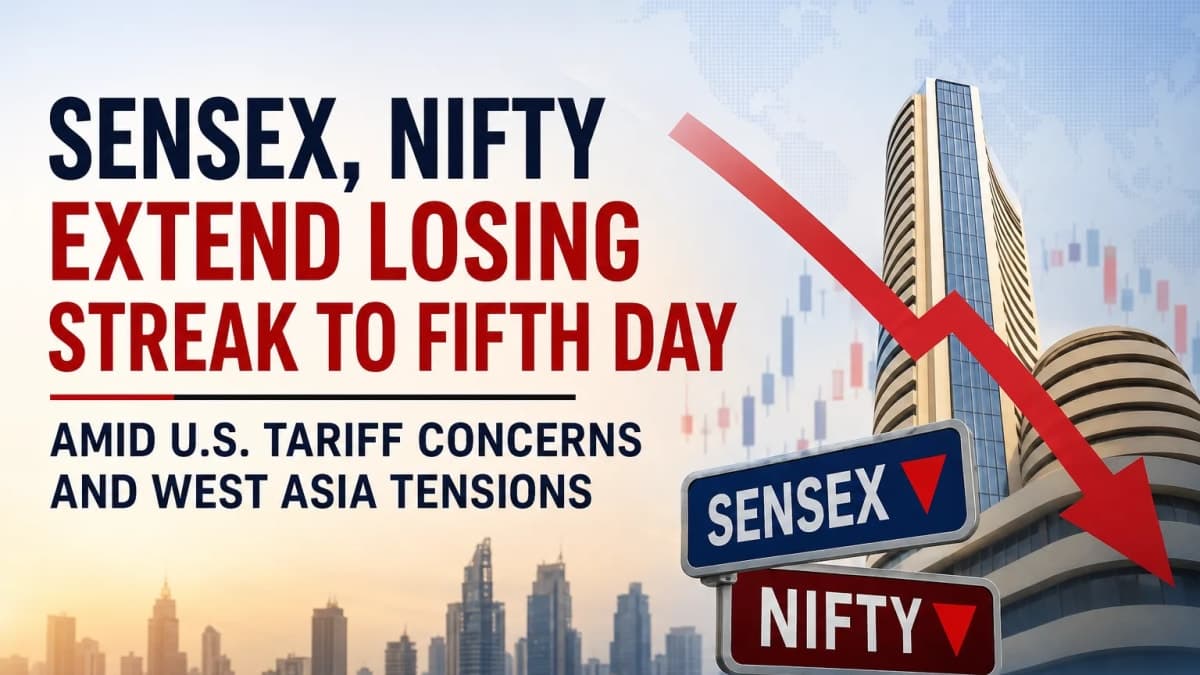
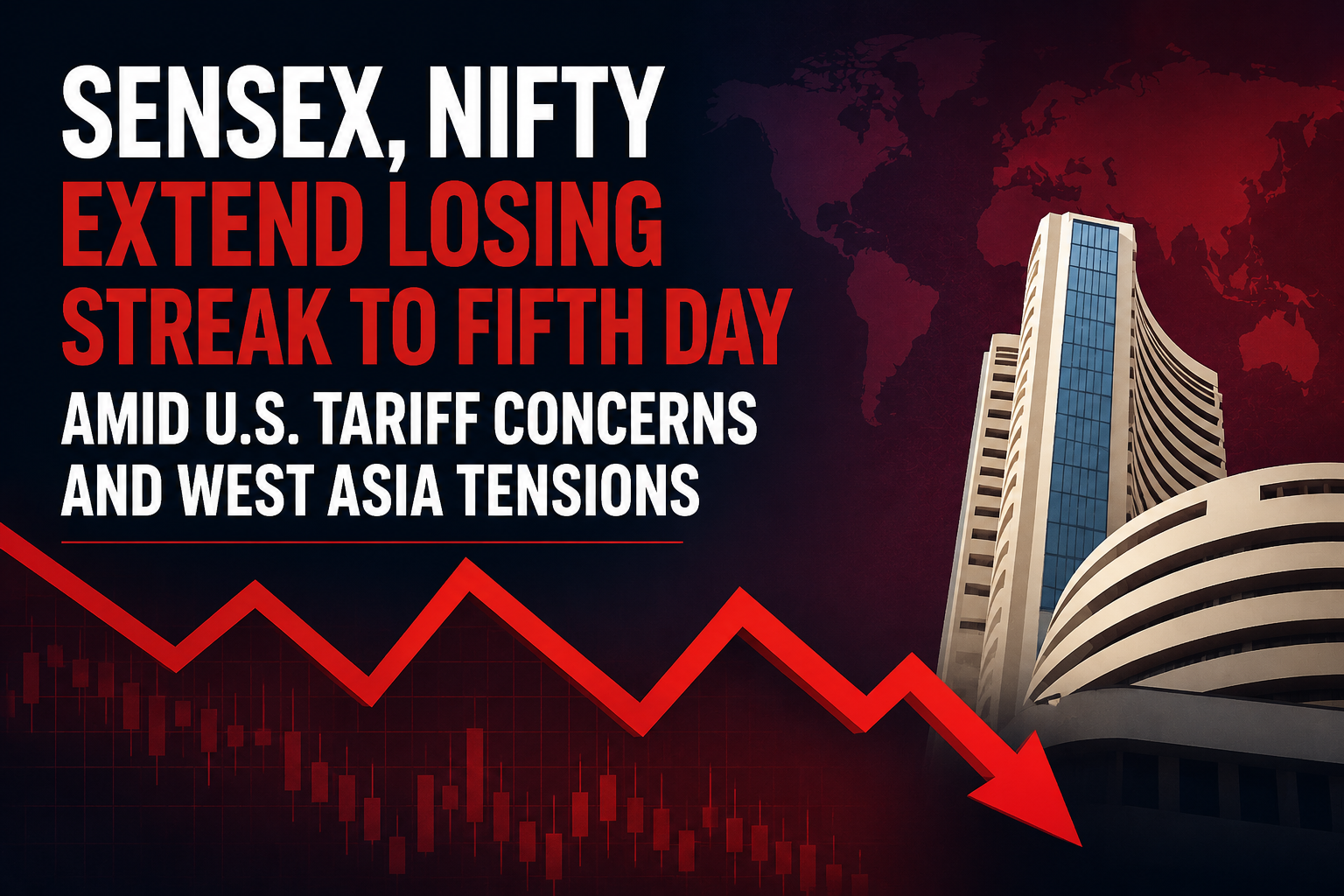
Indian equity markets extended their losses for a fifth consecutive trading day, with both the Sensex and Nifty ending lower as investors reacted to growing uncertainty in the global economy. Concerns over potential U.S. trade tariffs, coupled with rising tensions in West Asia, continued to dampen investor sentiment and encouraged cautious trading.
The prolonged decline reflects a broader shift toward risk aversion, with market participants closely monitoring international developments that could affect trade, inflation, and economic growth.
U.S. Trade Tariff Concerns Weigh on Investor Confidence
One of the key factors influencing market sentiment has been uncertainty surrounding U.S. trade policies. Expectations of fresh tariffs or tighter trade measures have raised fears of disruptions to global supply chains and international commerce.
Such concerns often prompt investors to reassess exposure to emerging markets, including India, as global funds seek safer investment avenues during periods of heightened uncertainty.
West Asia Geopolitical Tensions Add to Volatility
Escalating tensions in West Asia have further intensified market caution. Geopolitical instability in the region has the potential to disrupt energy supplies and increase crude oil prices, creating additional pressure on economies that rely heavily on energy imports.
For India, higher oil prices can affect inflation, increase import costs, and place pressure on corporate profitability, making geopolitical developments particularly significant for financial markets.
Global Uncertainty Influences Domestic Trading
Although domestic economic fundamentals remain an important driver of long-term growth, international developments often influence short-term market movements. Foreign institutional investors tend to react quickly to global risks, leading to fluctuations in equity markets.
As uncertainty persists, investors are closely tracking international policy decisions, commodity prices, and geopolitical events before making fresh investment decisions.
What Investors Are Watching Next
Market participants are expected to monitor further developments related to U.S. trade measures, diplomatic efforts in West Asia, global crude oil prices, and upcoming economic indicators. Corporate earnings, central bank commentary, and foreign investment trends are also likely to influence market direction in the coming sessions.
Analysts believe volatility may continue until there is greater clarity on these global issues.
Balanced Analysis
The fifth consecutive day of losses highlights how interconnected global financial markets have become. While domestic fundamentals remain a key factor for India's long-term market outlook, external developments such as trade disputes and geopolitical conflicts can significantly influence short-term investor sentiment.
Although periods of volatility often create uncertainty, they also encourage investors to focus on company fundamentals, portfolio diversification, and long-term investment strategies rather than reacting solely to daily market fluctuations.