Shiprocket Makes a Strong Stock-Market Debut
Shiprocket entered the stock market with considerable momentum following its IPO.
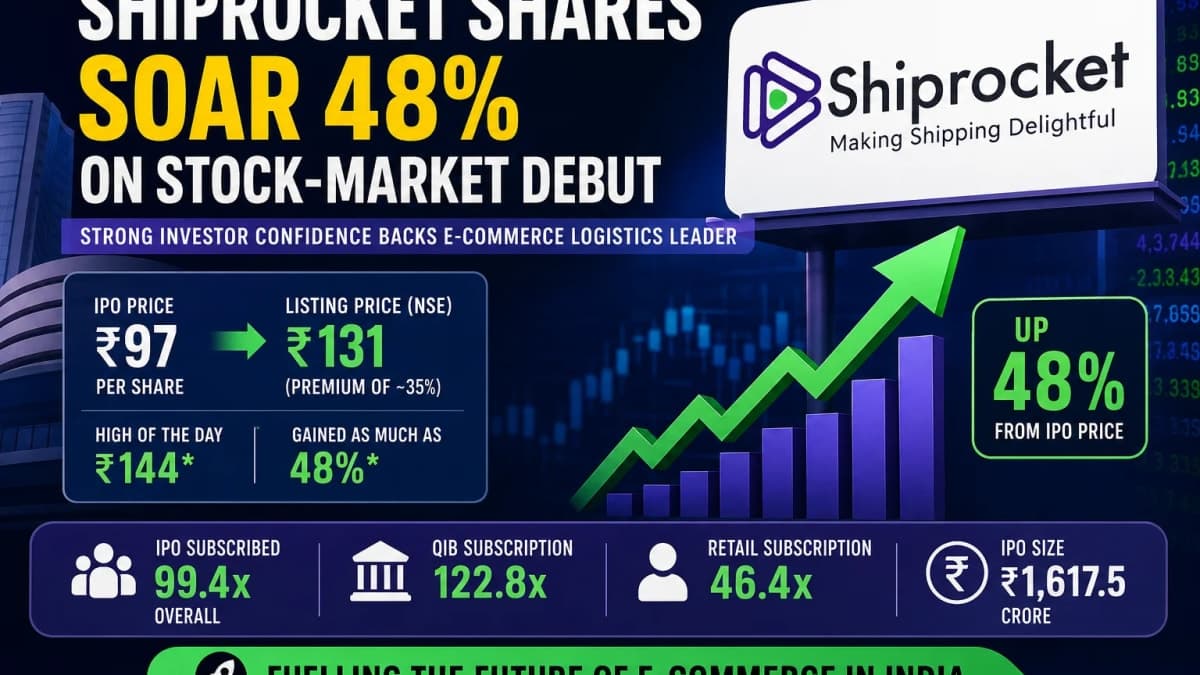
The shares were issued at ₹97 apiece. On the NSE, the stock listed at ₹131, representing a premium of about 35% to the issue price. The BSE debut was also significantly above the IPO price.
Investor buying did not end with the opening trade. Shiprocket shares continued to advance after listing, at one stage reaching gains of approximately 48% from the issue price. Reuters reported that the stock rose as much as 48.6% over its IPO price, pushing the company's market valuation to around ₹100.1 billion, or approximately $1.05 billion.
The sharp movement made Shiprocket one of the closely watched newly listed technology and e-commerce-linked companies in the Indian market.
Strong IPO Demand Sets the Stage
The enthusiasm surrounding Shiprocket’s listing followed heavy demand during its public offering.
According to Reuters, the IPO was subscribed about 99.4 times overall. Demand from institutional investors was particularly strong, with that portion subscribed about 122.8 times, while the retail segment was subscribed roughly 46.4 times.
The company had set its IPO price band at ₹92-₹97 per share. The public offering was valued at approximately ₹1,617.5 crore and valued Shiprocket at up to around ₹7,056 crore before its market debut.
Such strong subscription numbers helped create expectations of a positive listing, but the extent of the post-listing rally showed that investor demand remained substantial after trading began.
What Does Shiprocket Do?
Shiprocket operates a technology-led commerce and logistics platform designed to help businesses manage areas such as shipping, fulfilment and payments.
Its business is closely tied to the growth of online commerce, particularly among smaller merchants and direct-to-consumer brands that require access to logistics infrastructure without necessarily building their own delivery networks.
Rather than functioning only as a conventional courier company, Shiprocket connects merchants with different logistics and commerce services through its technology platform.
This positioning gives the company exposure to several structural trends in India, including increasing online shopping, digital payments, direct-to-consumer brands and growing e-commerce adoption beyond major metropolitan areas.
Why Shiprocket’s Listing Matters
Shiprocket’s market debut is significant beyond the immediate gains enjoyed by IPO investors.
The performance offers an indication of investor appetite for technology-driven companies connected to India's digital commerce infrastructure. Logistics has become increasingly important as online retailers compete not only on product selection and price but also on delivery speed, reliability and customer experience.
India’s e-commerce industry is expected to continue expanding rapidly. Reuters cited expectations for the sector to grow at a compound annual rate of roughly 20%-25% through 2030, supported by greater internet penetration, digital-payment adoption and rising demand from smaller cities.
For Shiprocket, this creates a potentially large addressable market—but also raises expectations for execution.
IPO Funds Could Support Shiprocket’s Expansion
The IPO gives Shiprocket additional capital to invest in its next phase of development.
Proceeds are expected to support areas including technology and product development, expansion of the company's network and potential strategic acquisitions.
These investments could strengthen the platform as competition intensifies across India's logistics and e-commerce infrastructure market.
Shiprocket competes in an ecosystem that includes established logistics companies such as Delhivery and Blue Dart Express, alongside numerous specialised delivery and technology businesses.
Investor Enthusiasm Comes With Valuation Risks
A strong listing can demonstrate confidence in a company, but it does not automatically guarantee similar returns in the future.
Shiprocket's rapid rise means the market is already assigning considerable value to expectations of future expansion. Investors will therefore increasingly focus on operating performance, profitability, cash generation and the company's ability to scale efficiently.
Competition represents another important consideration. As India's e-commerce industry grows, logistics providers are investing heavily in technology, fulfilment infrastructure and faster delivery capabilities.
Shiprocket will need to differentiate its platform while maintaining service quality and managing costs.
The volatility often associated with recently listed shares is another factor. A stock that rises sharply immediately after an IPO can experience significant price swings as early investors take profits and the market searches for a more stable valuation.
Balanced Analysis: Strong Beginning, Bigger Expectations
Shiprocket’s debut provides an encouraging signal for the company and its shareholders.
Its strong IPO subscription, substantial listing premium and subsequent rally indicate that investors see meaningful opportunity in the company's technology-led logistics model and its exposure to India's expanding online-commerce economy.
However, the first trading session represents only the beginning of Shiprocket’s life as a listed company.
Long-term performance will depend less on its debut-day percentage gain and more on whether the company can translate industry growth into sustainable revenue expansion, improving profitability and stronger competitive positioning.
For investors, that distinction is important. Market enthusiasm can support valuations in the short term, while financial execution typically becomes increasingly important once the excitement surrounding a new listing fades.
Shiprocket has therefore made an impressive arrival on the stock market. The next challenge will be demonstrating that the business can grow strongly enough to justify the expectations now reflected in its valuation.
This article is based on reporting published by Reuters.