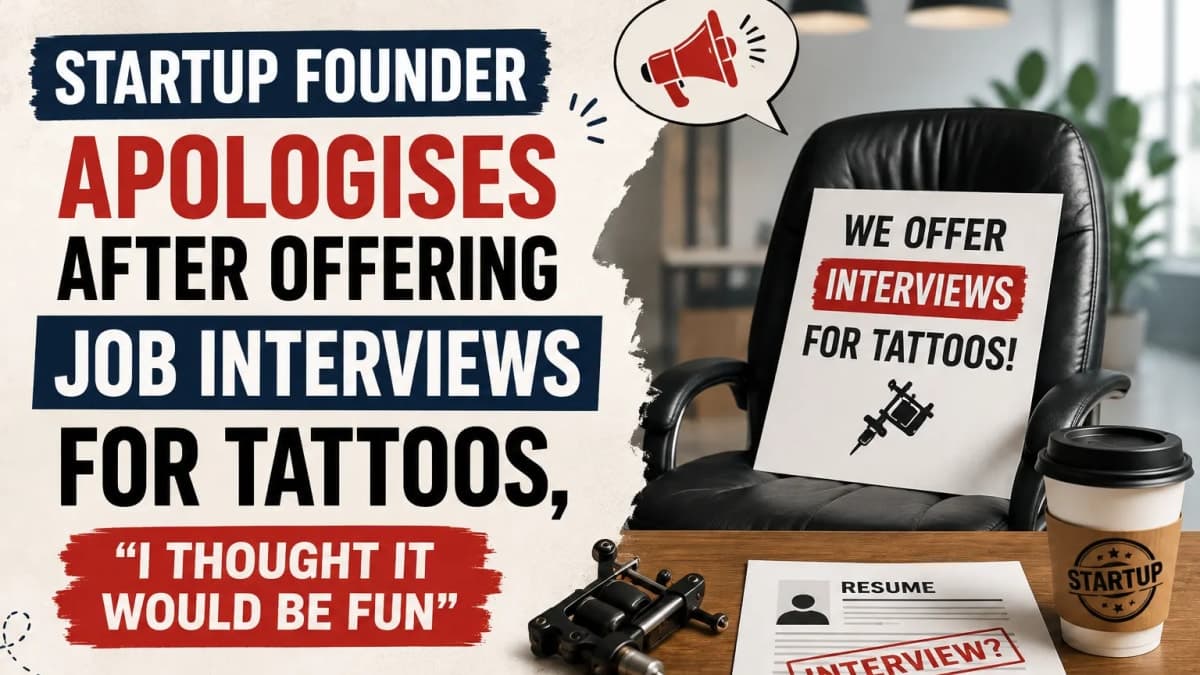
Startup Founder Apologises Over Tattoo-for-Interview Offer
An unconventional recruitment idea has put a startup founder in the spotlight after an offer linking tattoos with job interviews sparked criticism.
The founder had offered job interviews to people willing to get tattoos, turning what would normally be a professional recruitment process into an unusual public challenge.
After the proposal attracted attention, the founder apologised and explained that the initiative had been conceived as something entertaining rather than as an attempt to create controversy.
“I thought it would be fun,” the founder said while addressing the situation.
The episode has since generated a wider conversation about where companies should draw the line when experimenting with unconventional recruitment and employer-branding strategies.
Why the Tattoo Offer Attracted Attention
Startups frequently experiment with unusual approaches to hiring, marketing and workplace culture. Their recruitment campaigns can sometimes be deliberately informal as companies try to differentiate themselves from traditional employers.
Offering an interview in connection with getting a tattoo, however, introduces a different set of considerations.
A tattoo is a personal and potentially permanent decision. Connecting such a choice with access to an employment opportunity can therefore raise questions about whether candidates could feel pressured to participate in something unrelated to their professional abilities.
Even when an offer is intended humorously, the relationship between an employer and a prospective employee creates an important power dynamic.
That distinction helps explain why an idea designed as a light-hearted initiative can become controversial once employment opportunities are involved.
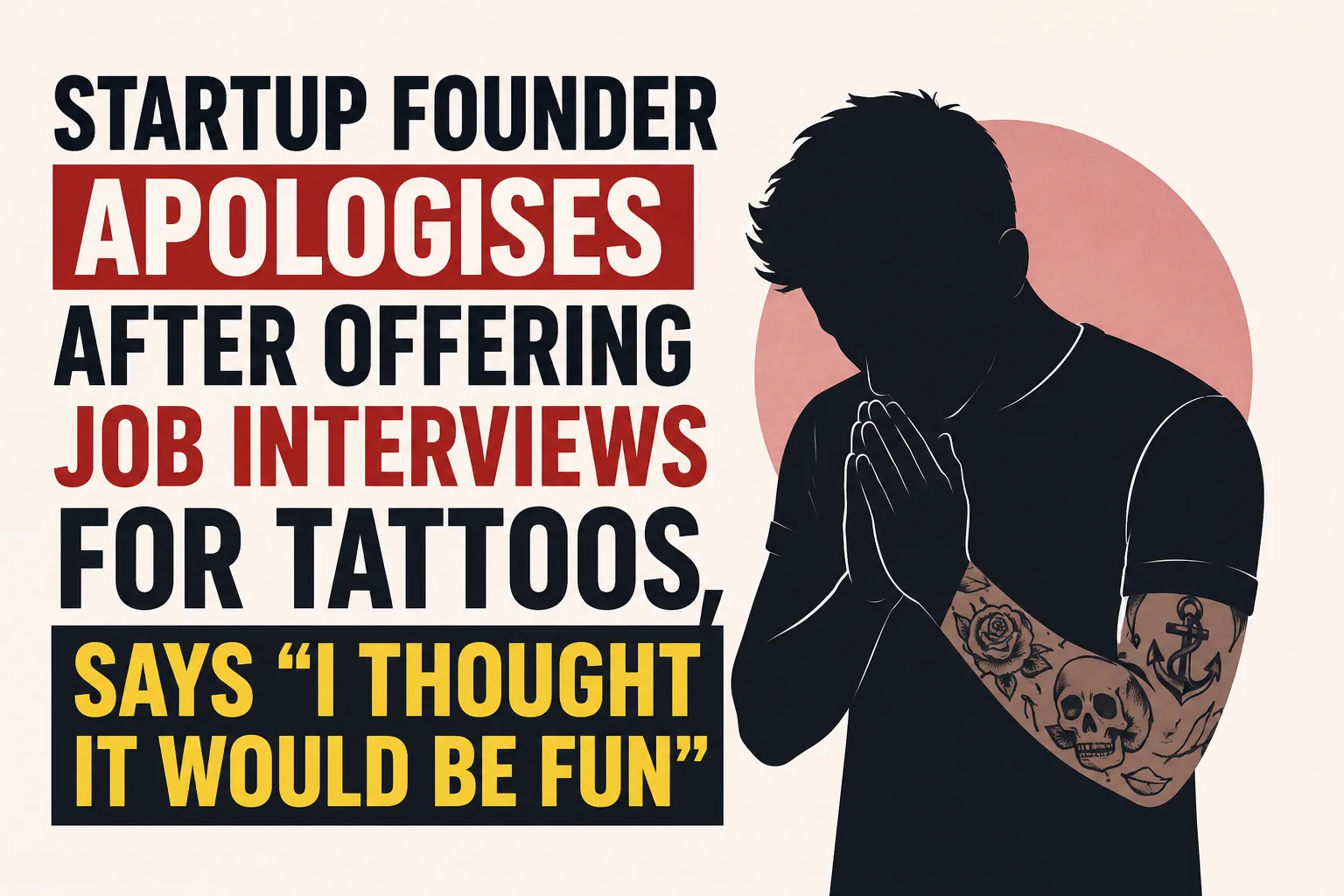
Founder Responds With an Apology
Following the reaction to the offer, the startup founder apologised.
The founder's explanation that the initiative was supposed to be fun indicates that the original intention was not necessarily to establish tattoos as a genuine measure of professional suitability.
However, the controversy illustrates how an employer's intention and the way an initiative is perceived by potential candidates can be very different.
An apology can help acknowledge those concerns, but the episode also provides a broader lesson for companies experimenting with attention-grabbing recruitment strategies.
Hiring Should Focus on Professional Merit
The controversy raises a basic question: what should determine whether someone receives an opportunity to interview for a job?
Traditionally, employers evaluate candidates according to qualifications, experience, skills, portfolios, aptitude and their suitability for a particular position.
Creative recruitment methods can potentially make that process more engaging. Startups in particular may use competitions, challenges, referral programmes or unconventional application questions to identify candidates who fit their working culture.
But there is an important distinction between testing relevant abilities and asking candidates to make decisions involving their bodies or personal appearance.
A tattoo does not necessarily demonstrate whether someone possesses the skills required to perform a particular job.
Startup Culture and the Search for Attention
The episode also reflects the increasingly blurred boundary between recruitment and marketing.
Companies today do not simply advertise vacancies. Recruitment campaigns can become social-media content capable of generating publicity for the business itself.
For startups competing against larger companies for employees, unconventional campaigns can be particularly attractive because they offer an inexpensive way to generate attention.
But viral visibility carries risks.
A campaign designed to demonstrate creativity can instead raise questions about workplace culture, professionalism or hiring practices if the underlying message is misunderstood or considered inappropriate.
The tattoo interview controversy demonstrates how quickly an unusual idea can move beyond its intended audience and become part of a broader public debate.
Why the Controversy Matters
The incident matters beyond one founder or one recruitment offer because it highlights the responsibility employers carry when communicating with job seekers.
Candidates and companies do not necessarily enter recruitment processes from equal positions. Someone actively searching for employment may take an employer's unusual request more seriously than the person making it intended.
Companies therefore need to consider not only whether a recruitment campaign is entertaining but also whether candidates can participate—or decline to participate—without feeling that their employment prospects are affected.
Clear boundaries become especially important when campaigns involve personal appearance, physical changes or other decisions unrelated to job performance.
Balanced Analysis: Creativity Has Limits in Recruitment
There is nothing inherently wrong with companies trying to make recruitment more creative.
An unusual hiring campaign can help a startup demonstrate its personality, attract candidates and stand apart in a competitive employment market. The founder's statement also suggests the tattoo idea was intended as a playful initiative rather than a conventional hiring requirement.
At the same time, employment opportunities carry greater consequences than an ordinary marketing promotion.
Linking an interview to a permanent personal decision can create concerns that would not exist with a simple online challenge or promotional giveaway.
The founder's apology acknowledges that the initiative did not land as intended.
Ultimately, the episode offers a straightforward lesson for employers: creativity can make recruitment memorable, but the strongest hiring campaigns still keep professional opportunity separate from unnecessary personal demands.
This article is based on reporting published by NDTV.