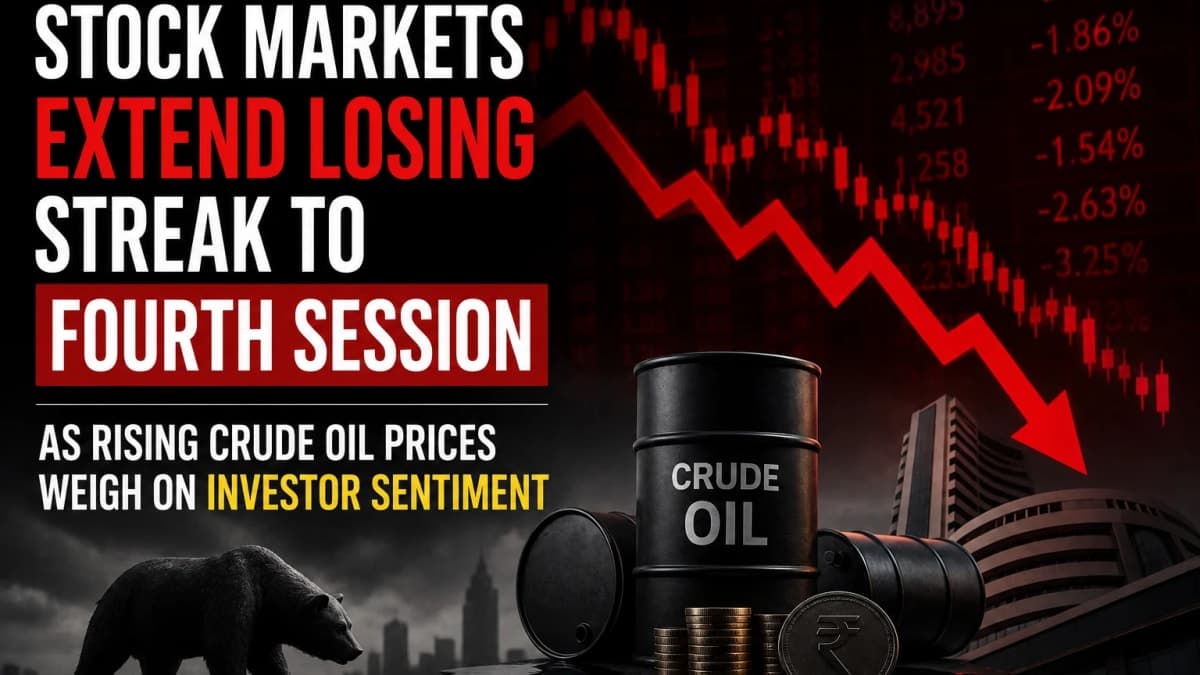
Stock Markets Fall for Fourth Straight Day as Higher Crude Oil Prices Pressure Equities
Introduction
Indian stock markets remained under pressure for the fourth consecutive trading session as a sharp rise in global crude oil prices dampened investor confidence. The sustained increase in oil prices has intensified concerns about inflation, higher import costs, and their potential impact on corporate earnings, prompting investors to adopt a cautious approach.
The continued weakness reflects broader uncertainty in financial markets, where investors are closely monitoring commodity prices and global economic developments.
Rising Crude Oil Prices Trigger Market Weakness
The latest decline in equities coincided with a surge in international crude oil prices, a development that often creates challenges for oil-importing economies such as India.
Higher crude prices increase the country's import bill and can place pressure on inflation. Investors fear that persistent increases in fuel costs may eventually affect businesses through higher transportation, manufacturing, and logistics expenses.
As a result, market participants trimmed exposure to riskier assets, leading to widespread selling across several sectors.
Investor Sentiment Turns Cautious
Market sentiment weakened as investors assessed the possible economic consequences of elevated energy prices.
Companies that rely heavily on fuel and raw materials could face increased operating costs if crude prices remain high for an extended period. At the same time, expectations of inflation may influence future monetary policy decisions, adding another layer of uncertainty for equity markets.
The cautious mood also encouraged investors to move toward relatively safer investment options until market conditions become more stable.

Background: Why Crude Oil Matters to India
India imports a significant portion of its crude oil requirements, making international oil prices an important factor in the country's economic performance.
When crude becomes more expensive, fuel prices, transportation costs, and industrial input expenses often rise. These increases can eventually affect consumer inflation and business profitability if sustained over time.
Financial markets therefore closely monitor movements in global oil prices because they influence corporate earnings, fiscal balances, and investor confidence.
Why This Matters
Stock market performance is closely linked to expectations about future economic growth. Persistent increases in crude oil prices can affect multiple sectors, including aviation, automobiles, logistics, paints, chemicals, and manufacturing.
Higher energy costs may also reduce consumer spending power if inflation accelerates, creating additional challenges for businesses.
For investors, the recent market decline highlights how global commodity prices continue to influence domestic financial markets despite improving corporate fundamentals in several sectors.
Sectors Likely to Feel the Impact
Industries with significant fuel consumption or transportation costs are generally more vulnerable during periods of rising crude prices.
These may include:
Aviation and airlines
Logistics and transportation
Automobile manufacturers
Paint and chemical companies
Manufacturing and industrial businesses
Conversely, companies involved in oil exploration and energy production may benefit if higher crude prices improve revenue and profitability.
Balanced Analysis
While the recent decline reflects immediate concerns over rising crude oil prices, market movements are rarely driven by a single factor. Global economic conditions, foreign investment flows, currency movements, geopolitical developments, and corporate earnings also play significant roles in shaping investor sentiment.
Some analysts believe that if crude prices stabilize, markets could recover as investors regain confidence. Others caution that prolonged high oil prices may continue to create volatility until inflationary pressures ease.
Long-term investors often view such periods of market weakness as part of the normal investment cycle rather than a fundamental change in economic prospects.
Outlook for Investors
Market participants are expected to closely monitor future movements in global crude oil prices, inflation indicators, and policy responses from central banks.
Any easing in energy prices or improvement in global risk sentiment could help stabilize equities. However, continued volatility in commodity markets may keep investors cautious in the near term.
The direction of the market will likely depend on how effectively the economy absorbs higher energy costs while maintaining growth momentum.
Conclusion
Indian stock markets extended their losses for a fourth consecutive session as rising crude oil prices weighed heavily on investor confidence. Although higher energy costs have created short-term uncertainty, investors will continue tracking inflation trends, corporate earnings, and global developments to gauge the market's next direction.