हिंदी में पढ़ें —JantaScope हिंदी
Finance

The E20 Transition: India's Ethanol-Blended Fuel Push Sparks Opportunities and Challenges

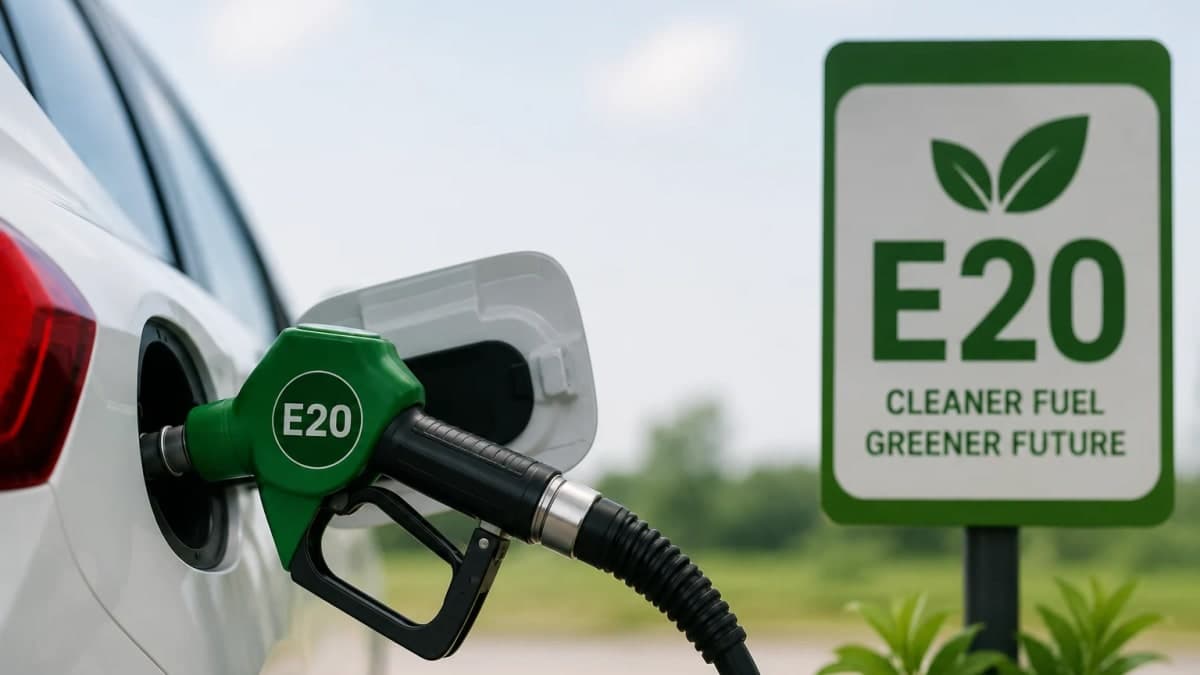
India's transition to E20 fuel—petrol blended with 20% ethanol—is gaining momentum as part of the country's strategy to reduce crude oil imports, lower emissions, and support the agricultural economy. While the shift offers several long-term benefits, it has also triggered discussions around vehicle compatibility, infrastructure readiness, and feedstock availability.

The E20 Transition: India's Ethanol-Blended Fuel Push Sparks Opportunities and Challenges

By Jeet Nirmal

Source: Janta Scope

India is steadily advancing toward the nationwide adoption of E20 fuel, a blend consisting of 20% ethanol and 80% petrol. The initiative forms a key part of the government's broader energy security and sustainability strategy, aimed at reducing dependence on imported crude oil while promoting cleaner transportation fuels. The E20 transition represents one of India's most ambitious efforts to reshape its fuel ecosystem by combining environmental objectives with agricultural and economic priorities.

Ethanol used in E20 fuel is primarily produced from agricultural feedstocks such as sugarcane, maize, damaged food grains, and other biomass sources. Increasing ethanol blending is expected to create additional income opportunities for farmers, strengthen domestic biofuel production, and reduce the country's import bill for fossil fuels. Industry experts believe that greater reliance on locally produced biofuels can improve energy resilience while encouraging investments across the ethanol value chain. Supporters view the transition as a step toward balancing economic growth with cleaner energy solutions.

The automotive sector has also been preparing for the transition by introducing E20-compatible vehicles and engines. Manufacturers have gradually upgraded fuel systems, engine components, and calibration technologies to ensure efficient operation with higher ethanol blends. However, millions of older vehicles currently on Indian roads may not be fully optimized for prolonged use of E20 fuel, raising concerns about fuel efficiency, maintenance requirements, and component durability. Vehicle owners are therefore encouraged to verify compatibility through manufacturer guidelines before regularly using higher ethanol blends.

Infrastructure development remains another important aspect of the transition. Fuel retailers, ethanol producers, storage facilities, and transportation networks must work together to ensure uninterrupted supply across the country. Expanding ethanol production capacity while maintaining stable supplies of agricultural feedstock will be critical as blending targets continue to rise. Industry observers note that the success of the E20 programme will depend not only on fuel availability but also on coordinated investments throughout the entire supply chain.

Environmental benefits are among the primary motivations behind the policy. Ethanol is considered a renewable fuel, and increased blending has the potential to lower greenhouse gas emissions compared with conventional petrol. At the same time, experts caution that sustainable production practices, efficient water use, and responsible crop management will remain essential to ensure that environmental gains are not offset by increased pressure on natural resources.

As India moves closer to wider E20 adoption, the transition continues to generate discussion among policymakers, automakers, fuel producers, and consumers. While the policy offers promising economic and environmental advantages, its long-term success will depend on vehicle readiness, reliable fuel infrastructure, sustainable ethanol production, and continued collaboration between government and industry.

Related

More stories

Indian Government Bond Yields Stay Under Pressure as RBI Rate Outlook and Oil Risks Weigh on Market

Indian government bond yields remained elevated on Tuesday as investors weighed a more cautious monetary-policy outlook from the Reserve Bank of India, movements in global crude oil prices and uncertainty across international bond markets. The benchmark 10-year yield hovered around 6.87%-6.88%, keeping borrowing-cost concerns in focus.

Finance

Indian Government Bond Yields Stay Under Pressure as RBI Rate Outlook and Oil Risks Weigh on Market

India’s Forex Reserves Jump Nearly $10 Billion to Six-Month High of $716.9 Billion

India’s foreign exchange reserves climbed to a six-month high of $716.9 billion in the week ended August 14, 2026, rising by nearly $10 billion from the previous week. The increase was led by higher foreign currency assets and gold holdings, strengthening the country’s financial cushion amid volatility in global currency and commodity markets.

Finance

India’s Forex Reserves Jump Nearly $10 Billion to Six-Month High of $716.9 Billion

Indian Banks Raise $12 Billion Overseas as RBI Swap Window Sparks Funding Rush

Indian banks have raised about $12 billion from overseas debt markets in 2026, taking advantage of strong international demand for Indian banking debt and a special foreign-exchange swap facility introduced by the Reserve Bank of India (RBI). The surge has accelerated ahead of an important deadline for eligible foreign-currency deposits and highlights lenders’ growing ability to tap global pools of capital.

Finance

Indian Banks Raise $12 Billion Overseas as RBI Swap Window Sparks Funding Rush

RBI Opens Door for LIC to Nearly Double HDFC Bank Stake — What the 9.99% Approval Really Means

The Reserve Bank of India has approved Life Insurance Corporation of India’s request to increase its holding in HDFC Bank to as much as 9.99%. LIC held 4.11% of the private-sector lender as of August 14, 2026, meaning the regulatory clearance gives India’s largest insurer substantial room to increase its investment. The permission, however, does not mean LIC is required to purchase shares up to the approved limit immediately.

Finance

RBI Opens Door for LIC to Nearly Double HDFC Bank Stake — What the 9.99% Approval Really Means

Why HDFC Bank Shares Are in Focus Today as Blue-Chip Buying Supports the Market

HDFC Bank shares remained firmly on investors’ radar on Monday, August 24, as buying in heavyweight blue-chip stocks helped Indian benchmark indices trade with a positive bias. The private-sector banking major was among the large-cap names supporting the market, even as investors remained cautious about geopolitical tensions, crude oil prices and upcoming global monetary-policy signals.

Finance

Why HDFC Bank Shares Are in Focus Today as Blue-Chip Buying Supports the Market

India’s Dollar-Deposit Trade Is Booming — Why Citigroup and Axis Bank Are Joining the Rush

Citigroup and Axis Bank have teamed up on a financing arrangement linked to foreign-currency deposits from non-resident Indians, highlighting how the Reserve Bank of India’s efforts to attract overseas dollars are creating new opportunities in cross-border banking. The structure could help amplify NRI dollar inflows while strengthening banks’ access to foreign-currency funding.

Finance

India’s Dollar-Deposit Trade Is Booming — Why Citigroup and Axis Bank Are Joining the Rush