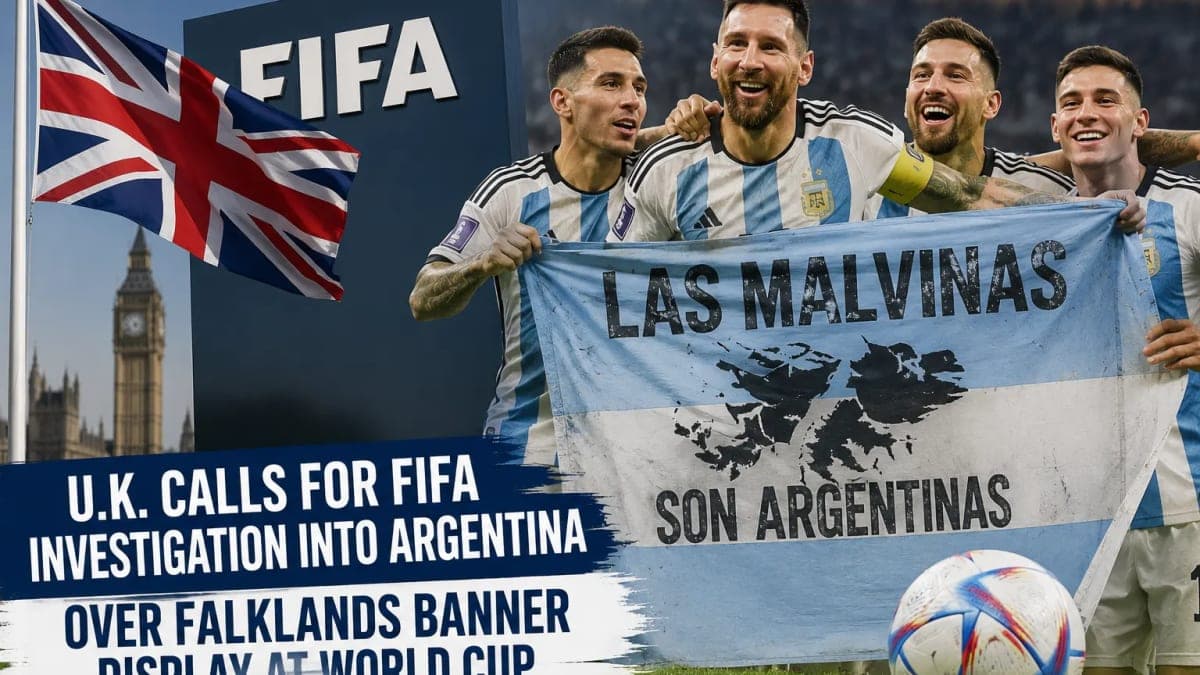
Political Banner Overshadows Argentina's Semifinal Celebration
Argentina's dramatic 2-1 victory over England secured a place in the FIFA World Cup final, but post-match celebrations quickly became the center of controversy.
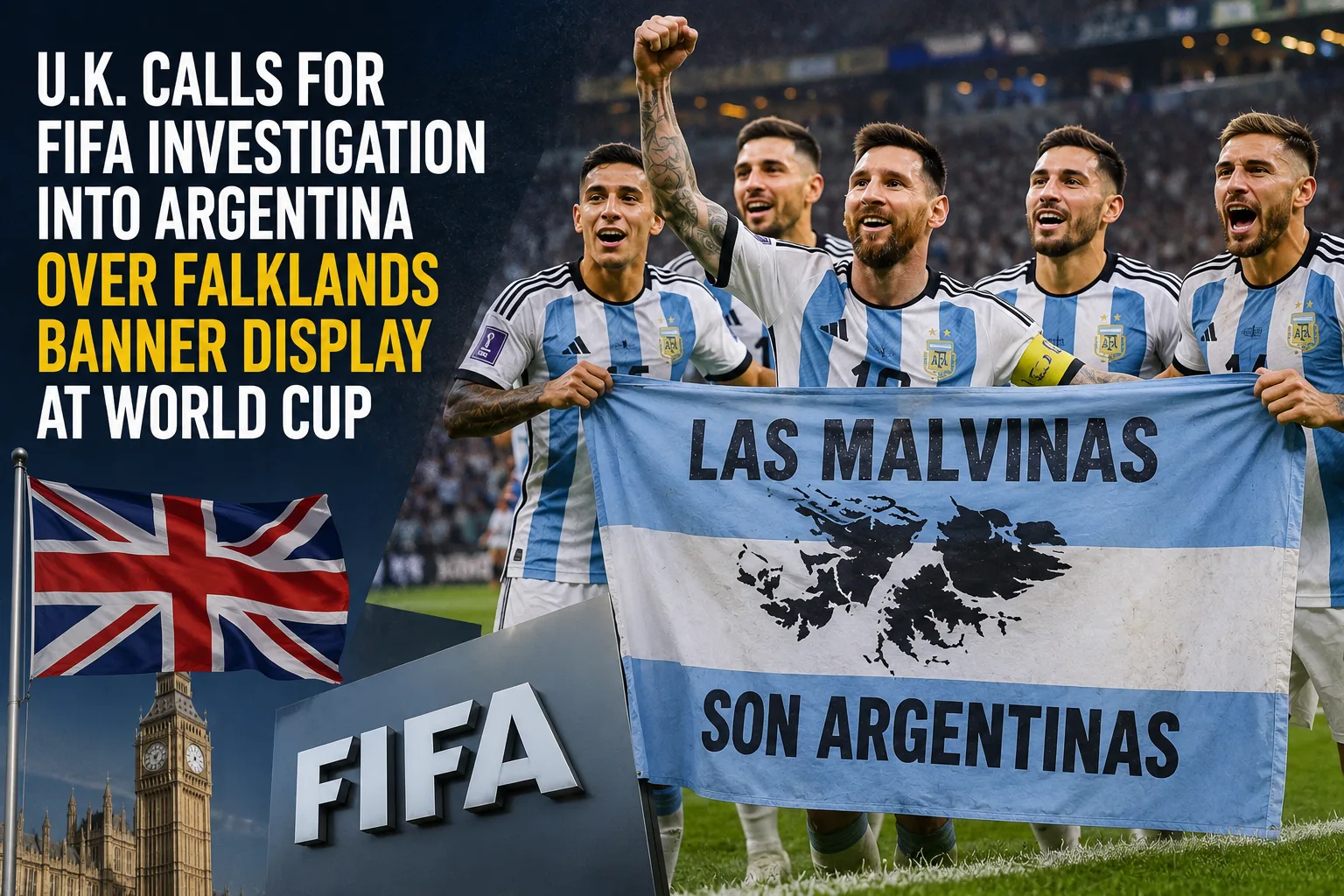
During the celebrations, several Argentine players posed with a banner reading "Las Malvinas son Argentinas" ("The Malvinas are Argentine"), a reference to Argentina's long-standing sovereignty claim over the Falkland Islands. The banner, reportedly handed to players by supporters, immediately drew criticism from British officials.
British Government Requests FIFA Review
Following the incident, the U.K. government called on FIFA to examine whether Argentina's actions violated the governing body's disciplinary rules.
British officials argued that political messages have no place in international football and pointed to FIFA regulations that prohibit political, ideological, or religious displays during official competitions. Downing Street supported the request for an investigation, stressing Britain's position that the Falkland Islanders have the right to determine their own political future.
Argentina Defends National Sentiment
The banner reflects Argentina's long-held claim over the islands, which are known domestically as the Islas Malvinas.
Argentine political leaders defended the players' actions as an expression of national identity rather than an attempt to provoke controversy. However, some officials also acknowledged that FIFA could decide to review the matter under its disciplinary framework.
FIFA Rules on Political Messages
FIFA's disciplinary code generally prohibits political or ideological messaging at tournaments in an effort to maintain neutrality during international competitions.
Previous cases involving national teams displaying political symbols or messages have resulted in disciplinary reviews and, in some instances, financial penalties. Whether FIFA decides to take formal action against Argentina remains uncertain.
Background: The Falklands Dispute
The Falkland Islands are a British Overseas Territory located in the South Atlantic Ocean. Argentina refers to them as the Malvinas and has maintained a sovereignty claim for decades.
The dispute intensified in 1982 when Argentina invaded the islands, leading to a brief but deadly conflict with the United Kingdom. British forces regained control after approximately ten weeks of fighting, but the sovereignty dispute continues to influence diplomatic relations between the two countries.
Why This Story Matters
The controversy highlights the challenge FIFA faces in keeping politics separate from global sporting events.
International football often carries strong national symbolism, and incidents involving territorial disputes can quickly become diplomatic issues. FIFA's response may also influence how future political displays at major tournaments are handled.
Balanced Analysis
Supporters of the British government's position argue that FIFA must consistently enforce its rules against political messaging to preserve the sport's neutrality. They believe allowing such displays could encourage similar incidents involving other geopolitical disputes.
On the other hand, many in Argentina view the Malvinas issue as part of their national identity and historical narrative rather than a purely political statement. From that perspective, the banner represented patriotism following an emotional victory rather than an attempt to politicize the tournament.
The episode illustrates how international sporting success can intersect with unresolved historical disputes, placing governing bodies like FIFA in a difficult position as they seek to balance freedom of expression with tournament regulations.
Conclusion
Argentina's World Cup celebrations have evolved into an international diplomatic issue after the display of a Falklands-related banner prompted the United Kingdom to seek FIFA intervention. As football's governing body considers the matter, the incident serves as another reminder of the complex relationship between sport, national identity, and international politics.


