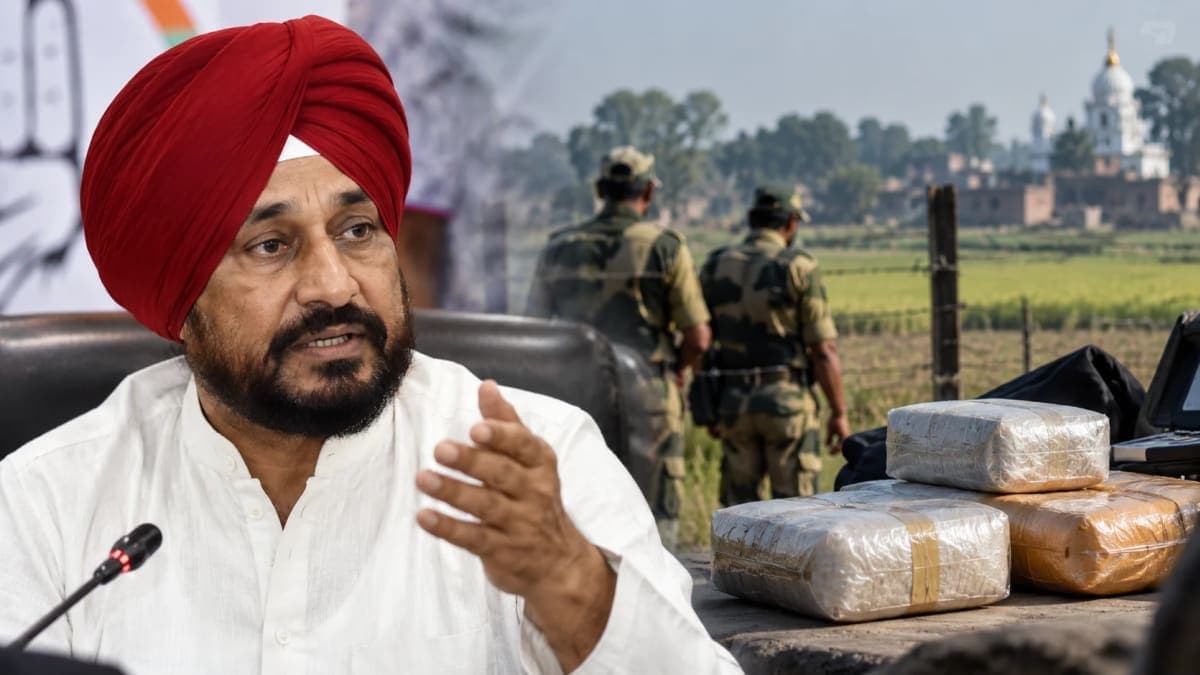
Former Punjab Chief Minister and Congress MP Charanjit Singh Channi has questioned both the Centre and the Aam Aadmi Party-led Punjab government over the continuing availability of drugs in the state, arguing that seizures and arrests alone cannot be treated as evidence that the problem has been brought under control.
In an interview with The Indian Express published on September 20, Channi said the focus should move beyond the number of FIRs and drug seizures to the networks responsible for keeping narcotics in circulation. He also called for greater coordination between the Centre and Punjab, stronger police accountability and a combined strategy of enforcement, prevention and rehabilitation.
His comments come as Punjab's drug problem again becomes a major political issue ahead of the 2027 Assembly election, with the ruling AAP, Congress and BJP trading accusations over responsibility and the effectiveness of anti-drug measures.
Channi Questions Whether Seizures Alone Show Success
Responding to Punjab Police claims about large-scale action against narcotics, Channi acknowledged the importance of seizures but argued that they do not, by themselves, demonstrate that the underlying problem has been solved.
He said continuing seizures raise a more fundamental question about where the drugs are coming from and why trafficking networks remain operational.
Channi cited the death of a 32-year-old man from a village near Chamkaur Sahib after consuming drugs, saying the human consequences of addiction should remain at the centre of the debate.
He also criticised the Punjab government's Yudh Nashian Virudh campaign, saying its effectiveness should ultimately be judged by changes visible on the ground rather than publicity campaigns and political messaging. These are Channi's assessments; the Punjab government, for its part, has pointed to police enforcement and its anti-drug campaign as evidence of action against trafficking.
‘Centre and State Keep Blaming Each Other’
A central part of Channi's argument concerned the division of responsibility between Punjab and the Union government.
Asked about Amritsar, Gurdaspur, Tarn Taran, Ferozepur, Fazilka and Ludhiana being identified by the Centre as highly sensitive drug-affected areas, Channi agreed that the districts deserved special attention but said their identification also raised questions about responsibility.
Several of these districts lie along Punjab's international border with Pakistan.
Channi argued that the Centre has a responsibility to prevent narcotics from crossing the international border, while the Punjab government remains responsible for enforcement and law and order within the state. He also pointed to trafficking routes involving neighbouring states and said central and state agencies need to coordinate their response.
“What we have is a situation where the Centre and state keep blaming each other while drugs continue to percolate into our villages,” Channi said.
The institutional picture is more complex than responsibility resting with only one government. Border security falls under central agencies, while policing and public order are primarily state responsibilities, making coordination important when trafficking networks operate across borders and state boundaries.
BSF's Punjab Jurisdiction Was Expanded in 2021
Channi also referred to the Centre's decision to expand the Border Security Force's jurisdiction in Punjab.
In October 2021, the Union government extended the BSF's territorial jurisdiction from 15 km to 50 km from the international border in Punjab, Assam and West Bengal. The Union Home Ministry said the change was intended to improve the control of trans-border crimes in coordination with state authorities.
Channi argued that the Centre should explain what further steps are being taken to prevent drugs from entering through the international border.
At the same time, he said this did not absolve the Punjab government of responsibility.
Punjab's Drug Networks Have Changed
The debate comes against a changing trafficking landscape.
Recent reporting on Punjab's narcotics problem indicates that trafficking networks have increasingly used drones to move drugs and weapons across the international border. Pharmaceutical drugs have also emerged as another component of substance abuse in the state.
Punjab Police's Yudh Nashian Virudh campaign has produced substantial enforcement figures. According to figures reported earlier this month, between March 1, 2025 and September 2, 2026, police registered 59,293 FIRs under the NDPS Act, arrested 696 major traffickers, seized 3,757 kg of heroin and 62 lakh tablets, and recovered approximately ₹22 crore in drug money.
A separate operation reported on September 20 saw Faridkot Police say they had dismantled a cross-border heroin network and recovered 47.3 kg of heroin, three pistols, three magazines, 15 cartridges and two vehicles, with four alleged operatives apprehended.
Those enforcement figures document the scale of police action, but they do not on their own establish how much the overall availability or consumption of illegal drugs has changed.
What Would Channi Change in Policing?
Asked what a Congress government would change, Channi proposed what he described as professional, accountable and politically insulated policing.
He argued that police transfers should not be used for political management and that officers should receive reasonable stability in their postings. He also called for stronger intelligence gathering and investigations focused on identifying and dismantling organised drug networks.
“The ultimate objective is not more arrests and FIRs but to break the criminal ecosystem,” Channi said.
His proposals represent the Congress leader's policy position rather than measures currently in force.
Channi Outlines a 100-Day Anti-Drug Approach
Channi also set out what he said would form the basis of an initial 100-day strategy if Congress returned to power in Punjab.
He said the immediate priorities should include disrupting supply chains and acting against those profiting from the narcotics trade.
But he argued that enforcement alone would not be sufficient.
According to Channi, people already dealing with addiction should have access to treatment, counselling and rehabilitation, while prevention should focus on education, employment opportunities, sports and other avenues for young people.
He described the first 100 days as a period for establishing accountability and direction rather than a deadline by which Punjab's drug problem could realistically be eliminated.
Gangsterism Also Enters the Debate
Channi linked the drug issue with wider concerns about organised crime and gangster culture in Punjab.
He argued that governments should not allow individuals associated with gangsterism to acquire political or social legitimacy while police agencies are simultaneously attempting to dismantle criminal networks.
“Gangsterism must never be allowed to acquire political legitimacy,” he said.
Channi specifically referred to Gurpreet Singh Sekhon, who has joined AAP and whom Channi described in the interview as having multiple criminal cases and an association with a jailbreak. Channi questioned the message sent by giving such individuals a political platform. These were allegations and political criticisms made by Channi in the interview and should not be read as an independent determination of criminal guilt.
BJP's ‘Nasha Mukt Punjab Yatra’ Adds to Political Battle
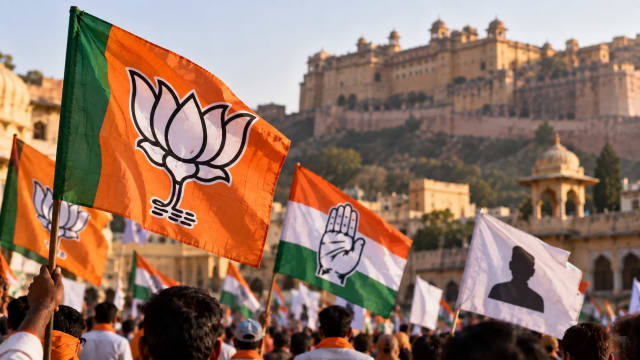
The BJP has meanwhile launched a 13-day Nasha Mukt Punjab Yatra, with four parallel routes planned to cover nearly 4,000 km and most Punjab Assembly constituencies before converging in Jalandhar on September 30.
The campaign has triggered another exchange between the BJP and AAP. Chief Minister Bhagwant Mann has questioned the BJP's record during its 2007-2017 alliance government with the Shiromani Akali Dal, while the BJP has criticised the AAP government over its earlier promises and deadlines on eliminating drugs.
Asked about the BJP campaign, Channi said any genuine anti-drug initiative should be welcomed but argued that a political yatra could not substitute for measurable government action.
He said both the Centre and Punjab government must answer for their respective responsibilities.
Drug Crisis Returns to Centre of Punjab Politics
Punjab has seen repeated promises from successive governments to tackle narcotics.
The SAD-BJP government launched an anti-drug campaign during its tenure. Congress leader Captain Amarinder Singh made eliminating drugs a central pledge before taking power in 2017, while AAP came to government in 2022 promising decisive action against the problem. The current government subsequently launched Yudh Nashian Virudh in March 2025.
As Punjab moves closer to the 2027 Assembly election, drugs are once again becoming a major point of political contestation.
The enforcement statistics demonstrate extensive police activity, while continuing seizures and reports of availability have kept questions about supply networks, addiction treatment and prevention alive.
Channi's intervention adds Congress's argument to that debate: that the drug crisis requires simultaneous responsibility from border agencies, the state police, political leaders and rehabilitation systems rather than another cycle of competing claims between governments.