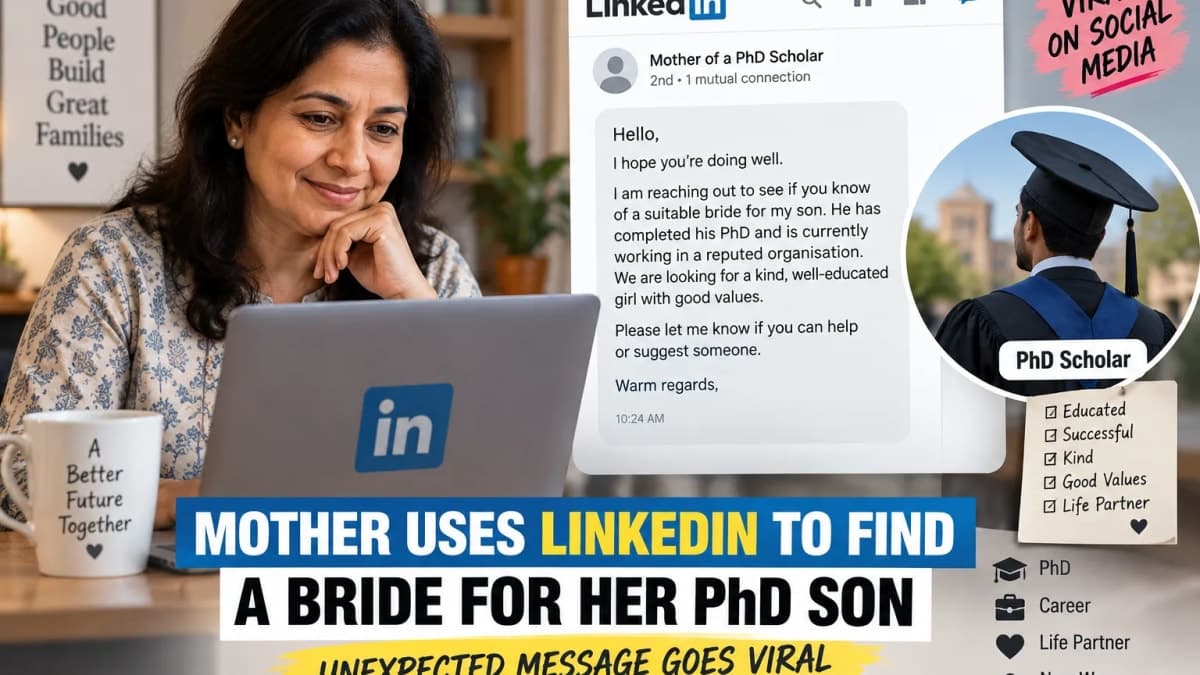
A message that would look perfectly ordinary on a matrimonial platform attracted a very different reaction when it appeared on LinkedIn.
A mother reportedly contacted a LinkedIn user while searching for a prospective bride for her son, whose PhD qualification formed part of her introduction. The recipient shared the unexpected exchange online, where it quickly became a talking point.
The reason was less about the marriage search itself than the choice of platform. LinkedIn is built around careers, recruitment and professional connections. Using it for matchmaking blurred a boundary most users still expect the platform to maintain.
A Professional Profile Becomes a Matrimonial Lead
According to the exchange shared online, the mother approached the LinkedIn user about finding a suitable match for her son.
His academic background, including his PhD, featured in the introduction. That detail would hardly be unusual in an Indian matrimonial profile, where education and occupation often receive considerable attention.
On LinkedIn, however, the same information serves a different purpose. Degrees, employment history, professional achievements and career progression are displayed primarily to help people build professional connections.
The mother's approach effectively repurposed that information for a marriage search.
After the recipient posted the interaction, screenshots travelled beyond the original conversation and attracted attention across social media.
Why LinkedIn Made the Story Different
Families helping their children find prospective partners is hardly a new phenomenon in India. The methods have simply evolved.
Introductions once driven largely by relatives, community networks and matrimonial advertisements have expanded to dedicated websites, apps and social media. LinkedIn offers something those channels do not necessarily provide in the same format: a detailed professional identity.
For someone interested in a prospective partner's education and career, a LinkedIn profile can provide a substantial amount of information before any conversation takes place.
That may explain the practical logic behind the mother's approach, even if it collided with expectations about how the platform is normally used.
Social Media Finds the Funny Side
Much of the online reaction focused on the incongruity of receiving a matrimonial inquiry on a website associated with jobs and business.
The episode naturally lent itself to jokes about networking taking on a new meaning, with users amused by the idea that a platform for finding professional opportunities could also become a place to search for a spouse.
But the humour also points to a genuine change in online behaviour. People no longer maintain completely separate digital identities for work, family and social life. Information posted for one purpose can easily become useful for another.
LinkedIn is an especially interesting example because users are encouraged to publish exactly the details — education, occupation and professional standing — that can also matter in some traditional matchmaking decisions.
There Is Also a Question of Boundaries
The practicality of using a professional profile for matchmaking does not automatically make an unsolicited matrimonial approach welcome.
People join LinkedIn with an expectation that most direct messages will relate to jobs, professional networking, recruitment, business or their field of work. A personal proposal arriving through the same channel can therefore feel intrusive, regardless of the sender's intentions.
That distinction matters when interpreting the viral story. The publicly circulated exchange can show what was reportedly said, but it does not provide a basis for broader conclusions about the family or the son's involvement in the approach.
Nor does one viral message establish LinkedIn as a new matrimonial trend.
What it does show is how easily the conventions surrounding a digital platform can be tested once users discover another purpose for the information available there.
From Matrimonial Profiles to Professional Profiles
Indian matchmaking has been moving online for years, but digital platforms have not simply replaced older methods. They have widened the pool of information families and individuals can consult.
A potential match might now be encountered through a matrimonial service, social network or professional profile, with each platform revealing a different part of that person's public identity.
The LinkedIn message became viral because it brought those worlds together unusually clearly. A platform designed to showcase a person's career suddenly became part of a family's marriage search.
For LinkedIn users accustomed to recruiters appearing in their inbox, it was an unexpected reminder that not everyone looking at a professional profile is necessarily thinking about the next job.