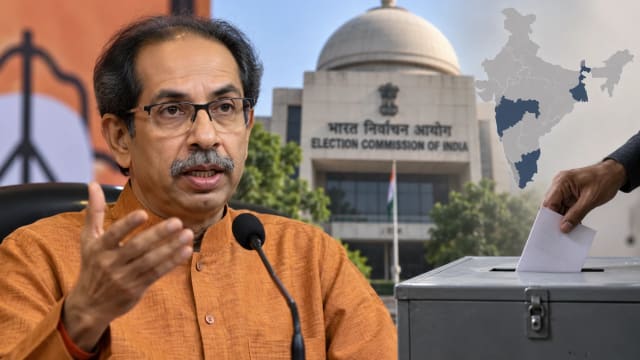
CEC Selection Row Revives Questions Over December 2023 Lok Sabha Debate
The controversy surrounding the appointment process for India's Chief Election Commissioner and Election Commissioners has brought renewed attention to a consequential day in Parliament: December 21, 2023.
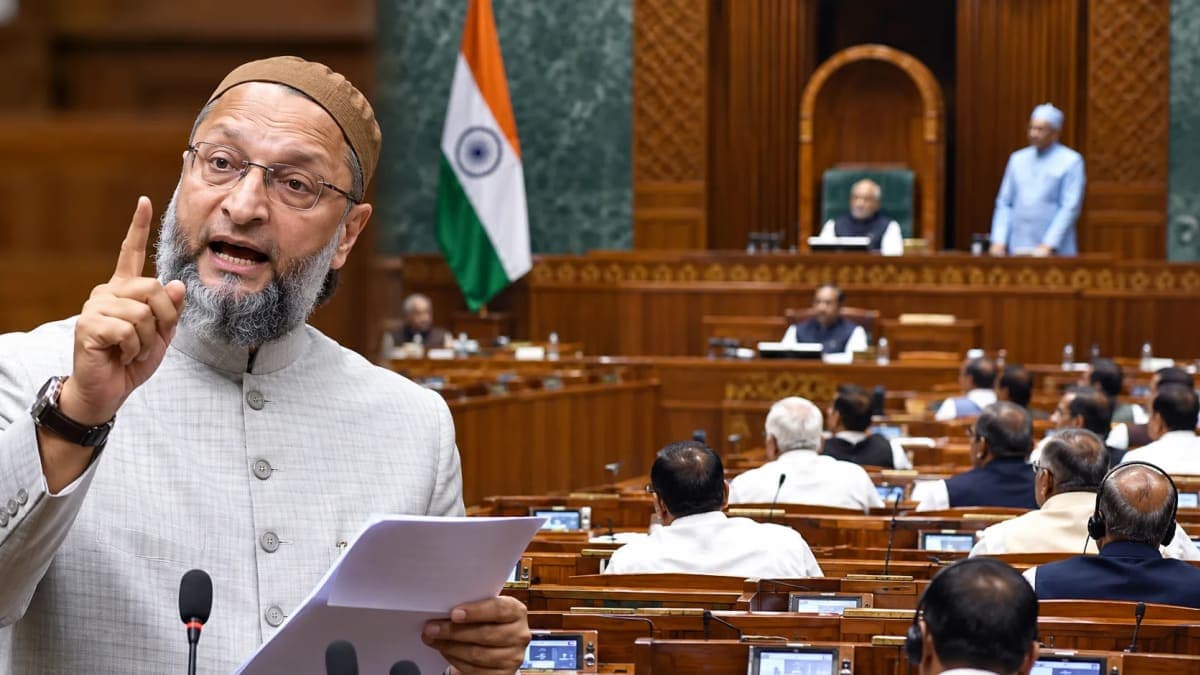
That day, the Lok Sabha passed the Chief Election Commissioner and Other Election Commissioners (Appointment, Conditions of Service and Term of Office) Bill, 2023. AIMIM MP Asaduddin Owaisi emerged as the only Opposition speaker in the Lok Sabha debate to explicitly oppose the legislation.
But simply saying that the rest of the Opposition did not oppose the Bill on the floor leaves out crucial context.
The legislation was considered during an extraordinary Winter Session in which scores of Opposition MPs had already been suspended following protests over the December 13 Parliament security breach. Contemporary reporting described the Opposition benches as nearly empty after the suspensions.
What Owaisi Said in the Lok Sabha
The official Lok Sabha debate record confirms that Owaisi directly opposed the legislation.
Opening his intervention, the Hyderabad MP described the Bill as "arbitrary and biased" and argued that the independence and perceived impartiality of the Election Commission were at stake.
Owaisi questioned why the Chief Justice of India had been removed from the selection mechanism and argued that giving the executive a dominant role could create doubts about the Election Commission's independence.
His criticism was political and constitutional in nature; it represented his position on the legislation rather than an established finding that the Election Commission would lose its independence.
Where Was the Rest of the Opposition?
The answer is closely connected to the extraordinary parliamentary circumstances of December 2023.
Following the December 13 security breach in Parliament, Opposition parties demanded a statement from then Union Home Minister Amit Shah and sought a discussion on the incident.
Repeated protests inside Parliament were followed by mass suspensions.
By December 19, 141 MPs had been suspended from the two Houses — 95 from the Lok Sabha and 46 from the Rajya Sabha. Contemporary reporting said this left the Opposition benches in the Lok Sabha almost empty.
Three more Congress MPs — Nakul Nath, Deepak Baij and D K Suresh — were suspended from the Lok Sabha on December 21.
By the end of the episode, 146 Opposition MPs had been suspended across Parliament during the Winter Session.
Therefore, the limited Opposition participation in the CEC Bill debate cannot be viewed separately from the mass suspensions that had dramatically reduced Opposition strength inside the House.
Rahul Gandhi Was Not Among the Suspended MPs
One detail adds another layer to the debate.
Rahul Gandhi, who was a Congress MP at the time and later became Leader of the Opposition following the 2024 general election, was not among the Lok Sabha MPs suspended when the Bill was considered.
However, he did not speak during the Lok Sabha debate on the legislation.
His political activity during that period was focused heavily on the Opposition protests surrounding the Parliament security breach and the suspension of MPs.
The available parliamentary record establishes who participated in the CEC Bill debate, but it does not by itself establish the reason every individual Opposition MP who remained eligible to attend did not speak. Claims about their motives should therefore be distinguished from the documented record.
What Did the 2023 Law Change?
The significance of the legislation becomes clearer when compared with the system immediately preceding it.
In March 2023, a five-judge Constitution Bench of the Supreme Court ruled in Anoop Baranwal v. Union of India that, until Parliament enacted a law, appointments of the Chief Election Commissioner and Election Commissioners should be recommended by a three-member committee consisting of:
the Prime Minister;
the Leader of the Opposition in the Lok Sabha, or leader of the largest Opposition party where no recognised LoP existed; and
the Chief Justice of India.
Importantly, the Supreme Court expressly framed this arrangement as an interim mechanism that would operate until Parliament enacted legislation under Article 324(2).
Parliament subsequently did so.
Under the 2023 law, the selection committee consists of the Prime Minister as chairperson, the Leader of the Opposition in the Lok Sabha, and a Union Cabinet minister nominated by the Prime Minister.
The Chief Justice of India is therefore no longer part of the statutory selection committee.
Why the Change Became Politically Controversial
Critics argued that replacing the CJI with a Cabinet minister nominated by the Prime Minister gave the executive an effective numerical advantage in the three-member selection panel.
The government defended the legislation.
During the parliamentary debate, Law Minister Arjun Ram Meghwal argued that the Supreme Court's arrangement involving the CJI was temporary and was intended to operate only until Parliament enacted a law. He also invoked the separation of powers while defending the government's proposed appointment mechanism.
That distinction is important: the Supreme Court had not permanently mandated the CJI's inclusion. Its March 2023 judgment specifically said its selection mechanism would remain in effect until Parliament legislated on the issue.
The Bill Cleared Parliament Amid an Unusual Political Situation
The Rajya Sabha had already passed the Bill on December 12, 2023.
The Lok Sabha approved it on December 21 by voice vote, completing its passage through Parliament. President Droupadi Murmu gave assent on December 28, and the legislation became the Chief Election Commissioner and Other Election Commissioners (Appointment, Conditions of Service and Term of Office) Act, 2023.
Its passage therefore occurred at the intersection of two major developments: a significant change to the institutional process for choosing India's top election officials and an unusually disrupted parliamentary session marked by mass Opposition suspensions.
Was Owaisi Really the Only Opposition Voice?
In the Lok Sabha debate on December 21, Owaisi was the only Opposition MP who spoke explicitly against the Bill.
That fact, however, should not be interpreted as proof that other Opposition parties supported the legislation.
Opposition parties had criticised the proposed appointment mechanism, including during the Bill's consideration in the Rajya Sabha. In the Lok Sabha, most Opposition MPs were absent because they had been suspended, while some who were not suspended did not participate in the debate.
Those are separate facts — and keeping them separate provides a more accurate picture of what happened.
Why the 2023 Debate Matters Again
The parliamentary history has gained fresh relevance as political scrutiny of the Election Commission and the process used to select its members has intensified.
The December 2023 record shows that Owaisi made a direct objection on the Lok Sabha floor. It also shows why portraying the episode simply as the rest of the Opposition remaining silent risks missing the unusual circumstances in which the legislation was passed.
The larger institutional question remains the same one that animated the Supreme Court proceedings and the parliamentary debate: how should India balance Parliament's constitutional authority to establish an appointment mechanism with safeguards intended to maintain public confidence in the independence of the Election Commission?
The political arguments over that question continue, but the historical record is clearer: Owaisi was the lone Opposition speaker against the Bill in that Lok Sabha debate, while most of the Opposition was outside the chamber amid mass suspensions.