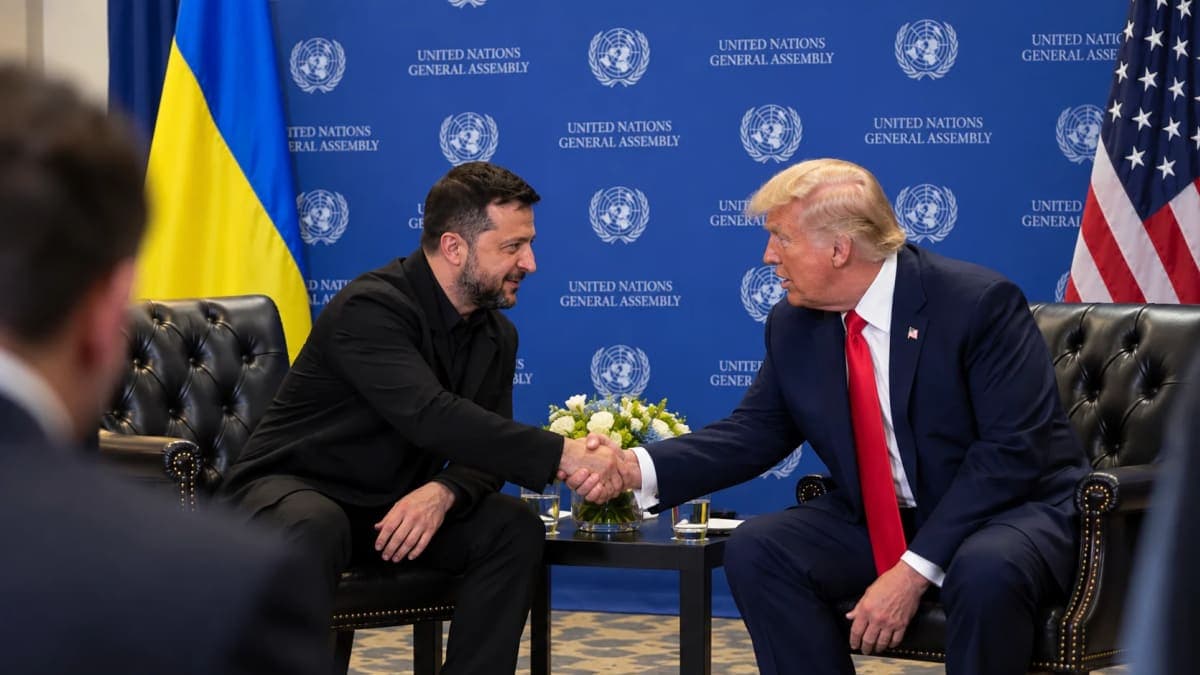
Ukrainian President Volodymyr Zelenskyy says Kyiv is prepared to enter an “energy ceasefire” with Russia, under which both countries would halt attacks on each other’s energy infrastructure, as diplomatic efforts to find a path toward ending the more than four-and-a-half-year war regain attention.
Zelenskyy made the comments after a roughly 40-minute meeting with US President Donald Trump on September 22 on the sidelines of the 81st United Nations General Assembly in New York. He stressed that Ukraine’s proposal is reciprocal: Kyiv would stop targeting Russian energy facilities only if Moscow stopped attacking Ukraine’s electricity, heating and other energy systems.
The Ukrainian president also renewed his offer to meet Russian President Vladimir Putin together with Trump, saying he hoped Washington could bring Moscow back to direct negotiations.
What Zelenskyy Means by an ‘Energy Ceasefire’
The proposal is narrower than a comprehensive ceasefire across the battlefield.
Instead, it would involve reciprocal restrictions on strikes against energy infrastructure. Ukraine has repeatedly targeted Russian oil refineries, while Russia has conducted extensive attacks against Ukraine’s power and energy network.
After meeting Trump, Zelenskyy said:
“We are ready for any kind of format of energy ceasefire.”
He made clear that Kyiv’s willingness depended on Russian reciprocity, saying Ukraine could refrain from striking Russian diesel and refinery infrastructure if Moscow stopped attacks on Ukraine’s electricity, heating and water systems.
That distinction is important: Zelenskyy did not announce that Ukraine would unilaterally stop attacking Russian refineries. Reuters reported that no such unilateral halt was agreed during the Trump meeting.
No Agreement With Russia Yet
Zelenskyy’s remarks represent Ukraine’s stated willingness to accept an energy truce, rather than an agreement already reached between Kyiv and Moscow.
The Ukrainian president acknowledged that Russia’s position on the latest proposal remained uncertain and said the US side would communicate with Moscow.
That leaves a major diplomatic gap between a Ukrainian offer and an enforceable bilateral ceasefire.
The Kremlin, meanwhile, said on September 23 that there were still no grounds for Ukraine peace negotiations to take place, although Moscow remained open to talks. The statement came ahead of a planned meeting between Russian Foreign Minister Sergey Lavrov and US Secretary of State Marco Rubio in New York.
Zelenskyy Ready for Trilateral Meeting With Putin and Trump
Beyond an energy truce, Zelenskyy again pushed for direct talks involving the three presidents.
Reuters reported that he reiterated his readiness for a trilateral meeting with Putin and Trump, while expressing hope that the United States could find a way to bring Russia into negotiations.
Zelenskyy described securing Putin’s participation in face-to-face talks as one of the most important steps Trump could facilitate.
“I’m ready [to sit down with Putin] any time,”
Zelenskyy said, adding that the parties needed to move quickly.
No such three-way presidential meeting has been confirmed.
Trump Says He Believes a Deal Is Possible
Ahead of their private discussion, Trump said the US-Ukraine relationship was strong and expressed confidence that an agreement could eventually be reached.
“I think we’re gonna make a deal,” Trump said, without publicly detailing what such an agreement would contain.
In his UN speech, Trump also said he believed progress toward ending the conflict could come sooner than many expected.
Those comments represent Trump’s assessment rather than confirmation of an imminent settlement. Previous US-led diplomatic efforts have not produced a comprehensive ceasefire.
Energy Infrastructure Has Become a Major Front in the War
The energy-ceasefire proposal comes against a backdrop of continuing attacks by both sides.
Russian missiles and drones struck several Ukrainian regions ahead of the Zelenskyy-Trump meeting, while Ukraine reported strikes against Russian oil refineries in Samara and Bashkortostan.
Ukraine has increasingly used long-range drones and other weapons to target Russia’s oil-processing infrastructure, viewing the sector as important to Moscow’s ability to finance and sustain the war.
Russia, meanwhile, has repeatedly attacked Ukraine’s power infrastructure, creating particular concern as colder weather approaches.
The proposed energy truce would therefore not by itself end fighting along the front line. Instead, it could serve as a more limited de-escalation measure aimed at protecting critical infrastructure.
Winter Raises the Stakes for Ukraine
The timing is particularly significant for Kyiv because another winter of Russian attacks on Ukraine’s power system could leave civilian infrastructure under intense pressure.
Zelenskyy said he and Trump discussed support for Ukraine during the winter and warned that continuing the war through the cold months would be difficult.
The Ukrainian government is also seeking additional Patriot air-defence interceptors from the United States.
Zelenskyy said Washington had responded positively to requests for assistance but that he had not received a concrete commitment for additional interceptors.
Ukraine Also Seeks Patriot Production Licences
The Trump-Zelenskyy discussions extended beyond ceasefire diplomacy.
The two presidents also discussed potential licences that could allow Ukraine to manufacture Patriot-related equipment domestically. Zelenskyy characterised such production as a longer-term security requirement rather than an immediate solution for this winter.
For the short term, Kyiv's priority remains obtaining enough interceptors to defend cities and infrastructure against Russian ballistic missile attacks.
The distinction matters because a future production arrangement would not immediately solve Ukraine's current air-defence shortages.
Diplomatic Push Comes After Earlier Talks Stalled
The latest proposal follows renewed US efforts to restart negotiations between Russia and Ukraine.
Earlier in September, US envoys Steve Witkoff and Jared Kushner travelled to both Moscow and Kyiv. They held three hours of talks with Putin before meeting Zelenskyy, but the Moscow discussions did not appear to produce a breakthrough.
The latest Trump-Zelenskyy meeting therefore represents another attempt to establish a framework that could move the parties toward negotiations.
An energy ceasefire could potentially function as an initial confidence-building measure, but whether it becomes one depends on Moscow’s response and on the two sides agreeing to terms, monitoring and implementation.
What Happens Next?
Three issues now bear watching.
First is Russia’s response to the energy-ceasefire proposal. Ukraine says it is prepared to participate, but only reciprocally.
Second is whether Washington can restart direct negotiations between Kyiv and Moscow and eventually arrange the trilateral presidential meeting Zelenskyy is seeking.
Third is Ukraine’s immediate security situation ahead of winter, particularly its ability to protect electricity and heating infrastructure from Russian missile and drone attacks.
For now, there is no confirmed Russia-Ukraine energy ceasefire and no confirmed Zelenskyy-Putin-Trump meeting. What has changed is Kyiv’s explicit declaration that it is prepared to enter such an energy agreement—and Zelenskyy’s renewed public willingness to meet Putin face-to-face with Trump involved.