Rajasthan Civic Battle Intensifies as Fight Shifts From Wards to Control of Municipal Boards
The political contest over Rajasthan’s urban local bodies has moved beyond ward-level results into an intense struggle for control of municipal corporations, councils and municipalities, with independents holding considerable influence in several closely divided bodies.
The Bharatiya Janata Party emerged ahead of the Congress in the ward results, but the numbers left many local bodies without a straightforward majority. That has made the subsequent elections for mayors, chairpersons and presidents especially important—and politically contentious.
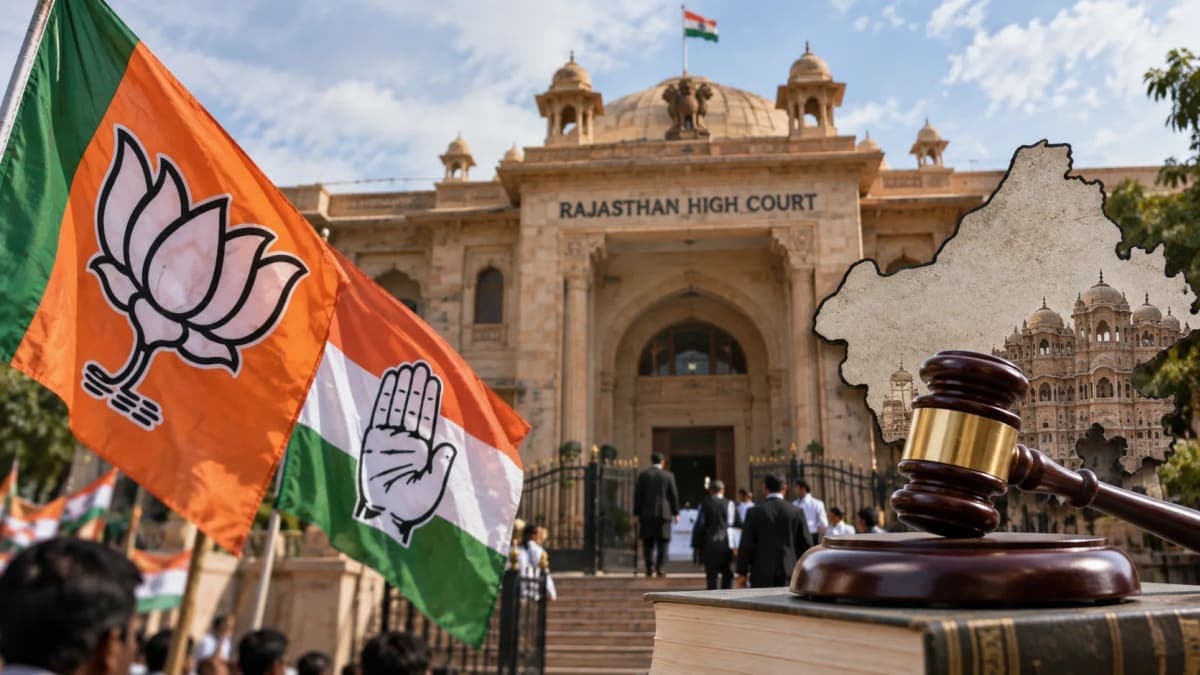
The dispute took an unusual legal turn over the weekend when the Rajasthan High Court conducted special late-night hearings involving councillors and candidates facing the prospect of arrest shortly before voting for civic leadership positions.
What Did the Rajasthan High Court Do?
The High Court heard a series of urgent petitions on Sunday night in cases involving police action and potential arrests ahead of Monday's elections for heads of urban local bodies.
Proceedings in the politically sensitive cases extended late into the night, with hearings reportedly continuing until around 2 am in the broader set of matters.
Among those receiving interim protection were nine councillors from Hanumangarh and one councillor from Bikaner. Other election-related cases involving councillors and candidates from different districts were also considered.
The timing was significant because the affected representatives were due to participate in elections determining control of their respective civic bodies.
Petitioners argued that criminal proceedings initiated shortly before voting were politically motivated and could prevent elected representatives from exercising their voting rights. Those were allegations presented to the court, rather than established findings of political wrongdoing.
The High Court provided interim protection against arrest or coercive action in several cases, allowing the affected representatives to participate in the electoral process.
Hanumangarh Becomes a Major Flashpoint
Hanumangarh emerged as one of the most closely watched contests.
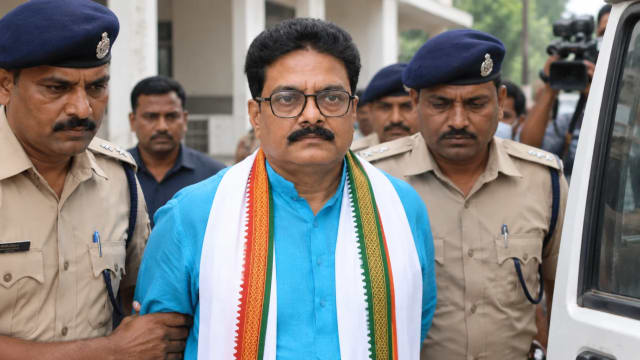
Independent MLA Ganeshraj Bansal was arrested by the CID-CB on the eve of the election for the municipal council chairperson. Candidates backed by Bansal had won 32 of the council's 60 wards, giving his group a potentially decisive position.
The BJP had 15 councillors and the Congress 10, according to reported results.
Police officials maintained that the action against Bansal was connected with pending criminal cases. His supporters and sections of the local political establishment, however, alleged that the timing was intended to affect the municipal leadership contest.
Those claims have not been established as fact.
The arrest triggered protests involving Bansal's supporters, including independent councillors and local traders.
Congress Accuses BJP of Using Police and Administrative Machinery
The political confrontation intensified as senior Congress leaders, including former Rajasthan Chief Minister Ashok Gehlot and state Congress president Govind Singh Dotasra, accused the BJP government of using police, administrative machinery and money power to influence newly elected councillors.
Congress leaders described the alleged activity as an attempt to “steal” the public mandate.
These remain Congress allegations, not judicial findings.
The BJP has rejected opposition allegations of improper interference and has continued efforts to secure control of municipal boards following its stronger statewide showing in the ward elections.
The distinction is important: the High Court's interim orders protected councillors and candidates from immediate coercive action, but they do not by themselves establish the broader Congress allegation that the BJP systematically manipulated the election.
BJP Finished Ahead in Ward Elections, but Independents Became Crucial
The numbers explain why the post-election battle became so intense.
Of 10,235 wards for which results had been declared, the BJP won 4,179, while Congress secured 3,613.
Independents won a substantial 2,273 wards.
The vote-share gap between the two main parties was considerably narrower than the difference in seats.
The BJP received 35.19% of the votes compared with 34.25% for Congress, a difference of just 0.94 percentage points. Independents accounted for 27.38%.
Those figures help explain why negotiations with independents and concerns about cross-voting became central to the next stage of the election.
BJP Did Not Have Clear Majorities Everywhere
Rajasthan held elections across 309 urban local bodies, comprising 10 municipal corporations, 47 municipal councils and 252 municipalities.
Despite finishing ahead statewide, the BJP crossed the halfway mark in only four of the 10 municipal corporations based on the ward results.
In the 47 municipal councils, it obtained clear majorities in 12, compared with six for Congress and one for the Aam Aadmi Party.
Among the 252 municipalities, BJP secured clear majorities in 70 and Congress in 39. Independents and smaller parties consequently became important to board formation in many of the remaining bodies.
That fragmentation transformed what could have been a straightforward follow-up to the ward elections into a second political contest over who would actually control local governments.
BJP Wins Six of Seven Mayor Posts Decided Monday
The subsequent mayoral elections demonstrated how significantly the political arithmetic could change between winning wards and securing control of a corporation.
On Monday, the BJP captured six of the seven mayoral posts decided, including unopposed victories in Bhilwara and Bharatpur and wins through voting in Ajmer, Alwar, Pali and Udaipur.
Congress retained Bikaner Municipal Corporation, where its candidate Anil Kalla defeated BJP candidate Surendra Singh Shekhawat 50-30.
Notably, Kalla received eight more votes than Congress's original strength in the 80-member corporation, indicating support from councillors outside the party.
The results illustrate why ward totals alone were not sufficient to determine control of Rajasthan's civic institutions.
Why Independents Matter So Much
Independents are arguably the most important structural feature of Rajasthan's 2026 urban elections.
With more than 2,200 ward victories statewide, they represent a substantial bloc outside the BJP-Congress contest. In municipalities where neither major party secured a majority, even a relatively small group of independent councillors can determine who becomes mayor or chairperson.
That dynamic creates incentives for negotiations, alliances and shifting support between the ward election and leadership vote.
It also helps explain why both parties have closely guarded councillors and why allegations of political pressure have become such a prominent part of the post-election debate.
More Key Civic Contests Still Ahead
The battle for Rajasthan's major urban centres is not finished.
While several mayoral contests were decided on September 21, elections for the leadership of the Jaipur, Jodhpur and Kota municipal corporations are scheduled for September 25.
Those contests will complete another important stage in determining how the ward results translate into actual control of Rajasthan's urban governments.
The broader picture is therefore more complex than simply comparing the BJP's 4,179 ward victories with Congress's 3,613.
The BJP entered the board-formation stage with the larger statewide tally and has subsequently secured several important mayoral posts. Congress nevertheless retains significant pockets of strength, while the exceptionally large independent bloc has made local political arithmetic decisive in many municipalities.
At the same time, the High Court's intervention has introduced a legal dimension to a political contest already marked by allegations over police action, cross-voting and attempts to influence councillors.
The remaining civic leadership elections will determine how much of the BJP's ward-level advantage ultimately translates into control of Rajasthan's urban local governments.