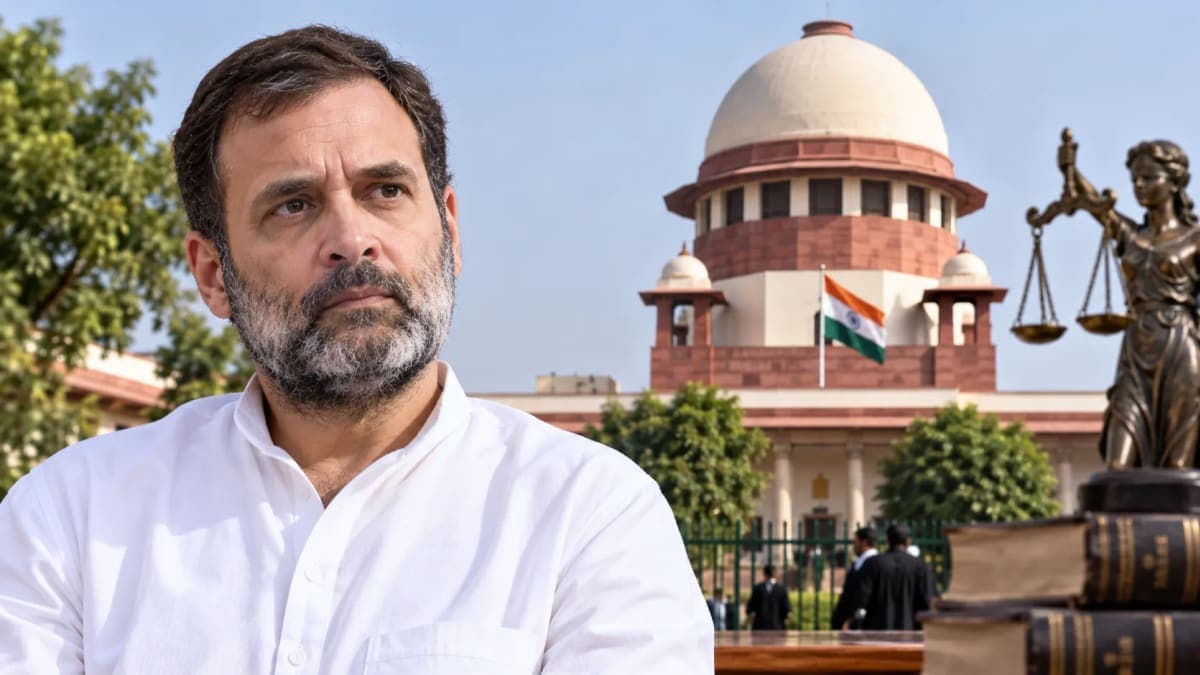
The Supreme Court on September 21, 2026, continued its interim order in a case arising from allegations that Leader of Opposition in the Lok Sabha Rahul Gandhi possesses assets disproportionate to his known sources of income.
A bench comprising Chief Justice of India Surya Kant and Justices Joymalya Bagchi and V Mohana gave the parties three weeks to complete pleadings and directed that the matter be listed thereafter. Until then, the court's existing interim directions will continue.
Those directions had earlier halted proceedings before the Allahabad High Court and restrained the Central Bureau of Investigation (CBI) and Enforcement Directorate (ED) from submitting reports pursuant to the High Court's directions in the matter.
Importantly, the underlying disproportionate-assets assertions remain allegations. The Supreme Court's proceedings concern Gandhi's challenge to the High Court process and should not be interpreted as a judicial finding that the allegations are either established or disproved.
What the Supreme Court Ordered on September 21
At Monday's hearing, the Supreme Court allowed three weeks for completion of pleadings in Gandhi's challenge to the proceedings initiated before the Allahabad High Court.
The bench ordered that the case be listed again after that period and said its existing interim direction would continue.
This means the protection originally granted by the Supreme Court in August remains operative while Gandhi's challenge is pending.
The latest order does not amount to a final decision on Gandhi's challenge or on the underlying allegations.
Why the Supreme Court Intervened Earlier
The dispute reached the Supreme Court after Gandhi challenged directions issued during proceedings before the Lucknow Bench of the Allahabad High Court.
On August 17, the Supreme Court directed the High Court not to proceed with the matter until further orders. It also restrained the CBI and ED from submitting any probe report to the High Court pursuant to the directions being challenged.
The Supreme Court also issued notices to the petitioner before the High Court, S Vignesh Shishir, as well as the CBI and ED.
The bench raised questions during that hearing about the process through which directions to investigating agencies had been issued.
Justice Bagchi asked the agencies' representative:
“If it is so serious, why has your agency kept quiet?”
The court also focused on whether principles of natural justice had been followed before directions affecting Gandhi were issued.
How the Case Began
The proceedings originated from a petition filed before the Allahabad High Court by Karnataka-based S Vignesh Shishir, who alleged that Gandhi held assets disproportionate to his known sources of income. Reports have identified Shishir as a BJP worker.
The allegations have not been established by a court.
The High Court sought responses from investigating agencies and other government authorities. In May, the Lucknow Bench directed the CBI, ED and other authorities to respond to the petition.
The proceedings subsequently developed into a dispute over how the agencies were responding to the complaint.
Allahabad High Court Had Sought Fresh CBI Affidavit
On July 20, the Allahabad High Court expressed dissatisfaction with an affidavit submitted by the CBI.
The court said the response did not adequately explain the progress made and directed the Joint Director or Head of Zone at the CBI's Anti-Corruption headquarters in New Delhi to personally submit a fresh affidavit detailing the progress in the matter.
Regarding the ED, the High Court said that if the agency discovered relevant information supported by material and documents indicating wrongdoing or an illegal act, it could proceed further in accordance with law and due procedure.
The High Court's directions were among the developments subsequently challenged by Gandhi before the Supreme Court.
Gandhi's Lawyers Challenged the Process
During the August Supreme Court hearing, senior advocate Kapil Sibal, appearing for Gandhi, questioned the legal basis of the proceedings and Shishir's standing to initiate them.
Sibal described the process as a:
“witch-hunt process which is not recognised by law.”
He also argued that the proceedings were “unknown to law” and questioned the manner in which the investigative process had developed from the petition.
Those comments represent Gandhi's counsel's arguments, not findings made by the Supreme Court.
Additional Solicitor General SV Raju, representing the central agencies during the August hearing, submitted that the CBI and ED had not played a role in initiating the proceedings and argued that allegations disclosing cognisable offences would be serious.
What the Extended Stay Actually Means
The September 21 development is procedural but significant.
The Supreme Court has not decided whether the disproportionate-assets allegations are true or false, nor has it delivered its final judgment on Gandhi's challenge.
Instead, it has preserved the status quo while the parties complete their pleadings.
For now:
The Supreme Court's interim protection remains in force.
The Allahabad High Court proceedings covered by the order remain deferred.
The CBI and ED remain restrained from submitting reports pursuant to the challenged High Court directions.
The parties have three weeks to complete pleadings.
The Supreme Court is expected to take up the matter after that period.
The distinction is important: an interim stay concerns what may happen while litigation is pending; it is not a ruling on the merits of the underlying allegations.
What Happens Next?
The immediate next stage is completion of pleadings within the three-week period granted by the Supreme Court.
After that, the matter is to be listed again before the apex court. The central legal questions include Gandhi's challenge to the manner in which the Allahabad High Court proceedings developed and the directions issued to investigative agencies.
Until the Supreme Court modifies its interim order or decides the challenge, the protections it previously granted will continue.
The next hearing could therefore provide greater clarity on whether the High Court proceedings can resume and what, if any, further steps the investigative agencies may take under the challenged directions.